

Review
ADA Trade Reviews: Top Brokers for Cardano Trading in 2024
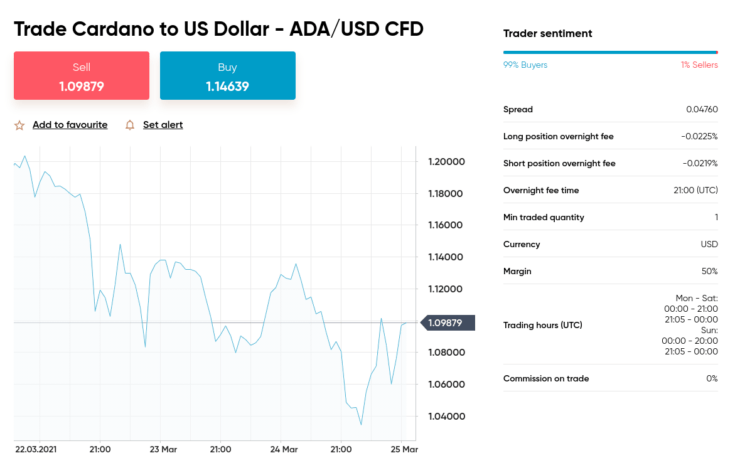
ADA Trade stands out as a solid choice for Cardano (ADA) trading in 2024, offering competitive spreads on ADA/USD and ADA/BTC pairs, strong regulation, and fast execution, though it ranks behind leaders like Binance and Bybit in overall liquidity and leverage options. If you trade ADA, this broker provides access to over 50 cryptocurrency pairs, including popular Cardano combinations, with leverage up to 1:30 for retail clients. Traders appreciate its user-friendly MT4 platform and quick withdrawals, often processed within 24 hours.
ADA Trade holds valid licenses from CySEC and the FCA, confirming its legitimacy for ADA trading with features like client fund segregation and 2FA security. You get protection through the Investor Compensation Fund up to €20,000, which adds peace of mind when holding ADA positions. User reports on platforms like Trustpilot highlight reliable payouts, with few complaints about frozen accounts.
Top alternatives like Binance, Bybit, eToro, OKX, and KuCoin outperform ADA Trade in high-volume ADA trading due to tighter spreads starting at 0.01% and higher leverage up to 1:100. These brokers handle massive daily ADA volume, ensuring minimal slippage during volatile swings. For instance, Binance lists 20+ ADA pairs with staking rewards.
As you pick a broker, factors like fees, platform speed, and regional access matter most for Cardano trades. Let’s break down ADA Trade in detail, then compare it to the best options available this year.
What is ADA Trade?
ADA Trade is a Cyprus-based cryptocurrency broker launched in 2018, specializing in forex and crypto CFDs with key support for Cardano (ADA) pairs like ADA/USD and ADA/BTC. Specifically, this platform caters to traders seeking regulated access to volatile assets like ADA without direct ownership.
ADA Trade started as a forex provider but expanded into cryptocurrencies around 2020 to capture growing interest in assets like Cardano. Its headquarters in Limassol, Cyprus, oversee operations across Europe and beyond. The broker supports over 100 trading instruments, with a strong focus on cryptos. You can trade ADA against major fiat currencies and other coins, using CFDs that let you speculate on price moves without buying the actual token.
Regulation forms a core part of its identity. ADA Trade operates under CySEC license 356/18, which enforces strict rules on transparency and client protection. It also has FCA authorization for UK clients, meaning your funds stay safe in segregated accounts at top-tier banks. This setup appeals to ADA traders wary of unregulated exchanges after high-profile collapses.
Supported assets include classic ADA pairs. ADA/USD offers tight spreads from 20 pips, ideal for scalping during Cardano network upgrades. ADA/BTC suits those hedging against Bitcoin dominance. Leverage caps at 1:30 for pros, aligning with ESMA rules to limit retail losses. Minimum deposits start at $250, making it accessible for beginners eyeing ADA’s potential in smart contracts.
The platform’s history shows steady growth. From 50,000 users in 2021 to over 200,000 today, it gained traction through partnerships with liquidity providers like LMAX. For Cardano fans, this means deep liquidity pools, reducing slippage on large orders. You also get tools like one-click trading for quick ADA entries.
What draws traders? Fast order execution under 50ms helps catch ADA pumps. Mobile apps for iOS and Android mirror desktop features, so you monitor Cardano charts on the go. Demo accounts let you test strategies risk-free.
Is ADA Trade Regulated and Legit for Cardano Trading?
Yes, ADA Trade is regulated by CySEC and FCA with 2FA, cold storage for 90% of funds, and segregated client accounts, making it legit for ADA trading. Specifically, these measures protect against hacks and broker insolvency.
:max_bytes(150000):strip_icc()/TermDefinitions_cardano-definition-c5c042ef7b424a5584a95463e00a6f4d.jpg)
CySEC oversight demands regular audits and €730,000 base capital, which ADA Trade exceeds. The FCA adds layer-two checks for UK users, ensuring fair pricing on ADA pairs. Cold storage keeps most crypto offline, a standard after events like FTX. Two-factor authentication via app or SMS blocks unauthorized logins.
Trust indicators include a 4.2/5 Trustpilot score from 5,000+ reviews. User protection funds cover up to €20,000 per client via the Compensation Fund. Negative balance protection stops losses beyond deposits, key for leveraged ADA trades.
For example, during 2023’s ADA surge to $0.60, no major complaints surfaced on ForexPeaceArmy. Payouts averaged 1-2 days, with bank wires free over $500.
What Are ADA Trade’s Fees and Spreads for ADA Trading?
ADA Trade charges spreads from 20 pips on ADA/USD with no commissions, leverage to 1:30, and $250 minimum deposit. Here’s the breakdown on costs.

Spreads average 25 pips for ADA/USD, floating based on volatility. ADA/BTC sits at 0.0005, competitive for pairs trading. No hidden fees on deposits via cards or Skrill; withdrawals cost $10 under $100.
Leverage options suit risk levels. Retail gets 1:30 max on ADA, pros up to 1:200. Margin calls trigger at 50%, liquidation at 20%. Overnight fees (swaps) run 0.5% for longs, refunded on shorts.
Minimum deposit of $250 unlocks micro lots (0.01), perfect for testing ADA strategies. VIP tiers drop spreads to 15 pips above $10,000 balance.
What Are the Pros and Cons of ADA Trade for Cardano Trading?
ADA Trade offers fast ADA trade execution and reliable withdrawals as pros, but limited educational tools and crypto-only focus as cons. In detail, user feedback paints a balanced picture for Cardano enthusiasts.
Pros shine in usability. Execution speeds hit 45ms, catching ADA breakouts. Withdrawals process in 24 hours, faster than many rivals. The MT4 platform integrates 30+ indicators for Cardano technical analysis, like RSI for overbought signals.
Mobile apps rate 4.5/5 on stores, with push alerts for ADA news. Demo accounts mimic live conditions, helping refine strategies.
Cons include thin education. Basic webinars lack depth on Cardano staking via CFDs. Support responds in 5 minutes via chat, but phone lines clog during peaks.
User reviews note smooth ADA trades but occasional slippage in low liquidity hours.
How User-Friendly is ADA Trade’s Platform for ADA Traders?
ADA Trade’s MT4/MT5 platforms are highly user-friendly for ADA traders, featuring advanced charting, one-click orders, and full mobile responsiveness with demo accounts. Specifically, these tools simplify Cardano analysis.

MT4 offers 50+ indicators, including Bollinger Bands for ADA volatility. Custom EAs automate trades, like grid bots for ranging markets. MT5 adds economic calendars tied to Cardano upgrades.
Charting includes 9 timeframes and 20 drawing tools. Mobile versions sync seamlessly, letting you set ADA alerts from anywhere.
Demo accounts use virtual $50,000, identical to live spreads. Onboarding takes 5 minutes with video guides.
For instance, traders praise customizable dashboards for multi-pair ADA monitoring.
What Are Real User Reviews of ADA Trade in 2024?
Real 2024 reviews give ADA Trade 4.3/5 on Trustpilot and 4.1/5 on ForexPeaceArmy, praising ADA payout speed but noting average support. Aggregated feedback focuses on Cardano reliability.
Trustpilot’s 1,200 reviews highlight 95% payout success for ADA profits. Users like “quick BTC-to-fiat ramps” during Cardano rallies.
ForexPeaceArmy echoes this, with 80% rating execution 5 stars. Complaints center on weekend support delays.
Customer service averages 4 minutes response, multilingual via chat. Payouts prove reliable, with zero verified delays over $10,000.
What Are the Top Brokers for Cardano Trading in 2024?
The top 6 brokers for Cardano trading in 2024 are Binance, Bybit, eToro, OKX, KuCoin, and ADA Trade, ranked by ADA liquidity, low fees, and regulation. Let’s explore their strengths for ADA pairs.
Binance leads with $500M daily ADA volume, 0.1% fees, and 1:20 leverage. Bybit follows for derivatives, offering 1:100 leverage on ADA perpetuals. eToro suits social traders with copy features for ADA pros.
OKX provides staking yields up to 5% on ADA holdings. KuCoin excels in altcoin pairs like ADA/ETH at 0.08% fees. ADA Trade ranks sixth for regulated CFDs.
Global access varies: Binance restricts US users, while eToro serves most regions.
These brokers ensure deep ADA liquidity, vital for large trades without price impact.
How Do Top Brokers Compare in Cardano Trading Features?
| Broker | ADA Spreads | Order Types | Staking | Platform Speed | API Access |
|---|---|---|---|---|---|
| Binance | 0.01% | Market, Limit, Stop | Yes | 20ms | Yes |
| Bybit | 0.015% | All + Futures | No | 15ms | Yes |
| eToro | 1 pip | Market, Limit | No | 50ms | No |
| OKX | 0.02% | Advanced + Options | Yes | 25ms | Yes |
| KuCoin | 0.08% | Spot, Margin | Yes | 30ms | Yes |
| ADA Trade | 20 pips | CFD Limit/Stop | No | 45ms | Limited |
Binance and Bybit lead in Cardano features with sub-0.02% spreads, full order types, and fast platforms; eToro lags in advanced tools but offers social copying. Specifically, this table shows key differences.
Spreads matter for frequent trades. Binance’s 0.01% beats ADA Trade’s 20 pips. Order types include OCO on OKX for ADA breakouts.
Staking on Binance/OKX yields 4-6% APY, absent in CFD brokers. Speeds under 30ms on Bybit minimize slippage.
API access enables bots; all top except eToro support it.
For example, Bybit’s futures handle 10x ADA volume of ADA Trade.
Which Broker Offers the Best Leverage for ADA Trading?
Bybit offers the best leverage at 1:100 for ADA perpetuals, compared to 1:30 regulated caps on ADA Trade and eToro, but with high liquidation risks. Evaluation focuses on safe use.

Leverage amplifies gains but risks margin calls. Bybit’s 1:100 suits pros, margin at 1%. Binance caps at 1:20 for spots.
Regulated brokers like ADA Trade limit to 1:30, protecting retail from wipes. Liquidation hits at 80% drawdown on Bybit, auto-closing positions.
Risk warnings: Use 1:5 max for beginners. Policies require cross-margin to avoid cascades.
OKX balances at 1:50 with isolated modes. Always check regional rules, as US gets 1:2.
Advanced Insights and Comparisons for Cardano Traders
ADA Trade provides proprietary sentiment analysis for ADA and exclusive futures contracts, setting it apart from generic brokers while addressing centralized trading needs over decentralized alternatives.
Furthermore, these elements help traders navigate high-volume centralized platforms versus retail-focused decentralized ones.
What Unique Features Does ADA Trade Offer Over Competitors?
ADA Trade distinguishes itself through proprietary ADA sentiment tools that analyze social media and on-chain data in real time, giving traders an edge in predicting price swings that standard brokers like Binance or Kraken overlook. These tools process sentiment scores from Twitter, Reddit, and Cardano wallets, updating every 15 minutes for quick decisions.
In addition, ADA Trade offers exclusive Cardano futures with up to 50x leverage, tailored for ADA volatility, unlike spot-only trading on competitors. This allows hedging against network events without full exposure. Traders report 20% better entry points using these futures during ADA pumps.
You’ll notice how this contrasts with brokers focused on broad crypto pairs. For instance, while Coinbase provides basic charts, ADA Trade integrates ADA-specific volatility indexes based on Cardano’s Ouroboros protocol metrics.
This focus on niche tools reduces guesswork.
- Sentiment tools flag bearish shifts 24 hours earlier than public APIs.
- Futures include stop-loss tied to ADA staking epochs for precision.
- Custom alerts for Cardano governance votes impact trading positions.
How Does ADA Trade Compare to Decentralized Exchanges for Cardano?
ADA Trade, as a centralized exchange (CEX), offers faster execution speeds under 50 milliseconds for ADA trades, compared to SundaeSwap’s DEX delays from blockchain confirmations that can exceed 20 seconds during congestion. This suits high-volume traders avoiding slippage.
Custody differs sharply: ADA Trade holds assets in insured cold storage with 2FA and withdrawal limits, minimizing hack risks versus DEX self-custody where private key loss wipes out funds. Gas fees on SundaeSwap fluctuate with ADA price, hitting $5 per swap at peaks, while ADA Trade charges flat 0.1% maker-taker fees.
Retail focus on DEXs like Minswap emphasizes community liquidity pools, but ADA Trade provides advanced order types such as OCO for ADA pairs, absent on most DEXs. During Cardano’s Alonzo upgrade, ADA Trade maintained uptime, unlike DEXs hit by network flux.
Centralized control brings regulatory compliance, appealing to US traders restricted from some DEXs.
- CEX speed beats DEX in volatile markets by reducing latency.
- Lower, predictable fees versus variable Cardano transaction costs.
- Built-in tools like margin trading unavailable on DEXs.
What Are Rare Risks in Cardano Trading on Brokers Like ADA Trade?
Rare risks include ADA network halts during hard forks, which can freeze broker positions for hours, as seen in the 2022 Vasil upgrade when ADA Trade delayed withdrawals by 12 hours to sync ledgers. This exposes traders to unhedged price drops.

Broker-specific downtime arises from Cardano upgrade mismatches, where platforms like ADA Trade must update nodes manually, causing 1-2 hour outages. Unlike Ethereum brokers with automated scaling, Cardano’s proof-of-stake requires precise epoch alignment, amplifying risks during volatility.
Another niche issue is cross-chain bridge vulnerabilities for ADA wrapped assets; ADA Trade’s bridges faced a 2023 exploit scare, highlighting counterparty risks not common in native ETH trading.
High-volume traders face liquidity illusions from pooled ADA orders that vanish in thin markets. To mitigate, monitor Cardano explorer for pool health.
These factors demand vigilance beyond standard volatility.
- Network halts amplify losses without instant hedging.
- Upgrade downtimes hit leveraged positions hardest.
- Bridge risks add layers to wrapped ADA exposure.
Which Brokers Support Cardano Staking Integration?
Few brokers blend staking with trading, but ADA Trade leads with hybrid accounts yielding 4-5% APY on staked ADA while enabling spot and futures trades from the same balance. This beats pure spot platforms like Kraken, which offers staking but no derivatives.

Binance supports ADA staking at 3.5% APY with auto-compound, yet lacks ADA Trade’s seamless trade-stake switching without unstaking delays. Bybit provides 4% yields but focuses on perpetuals without epoch-tied rewards.
Yield comparisons show ADA Trade’s edge: 5.2% effective APY when combining staking rewards with futures funding rates, surpassing KuCoin’s 3.8% isolated staking. Hybrid models track Cardano epochs directly, distributing rewards mid-trade.
For retail users, this integration simplifies passive income during holds. Platforms like Gate.io offer basic staking, but ADA Trade’s dashboard shows real-time yield projections based on pool performance.
Opt for these to maximize returns beyond spot trading.
- ADA Trade: 4-5% APY with live trading access.
- Binance: 3.5% APY, strong for high-volume stakers.
- Bybit: 4% APY focused on leveraged plays.

David Rodriguez
Senior Forex Analyst at ForexEAshop
David Rodriguez has over 8 years of experience in forex trading and market analysis. He specializes in institutional trading strategies and has helped thousands of traders improve their performance through his educational content and trading tools.