

Review
Unlock Arbitrage Profits in Foreign Exchange Market: Triangular Strategies, Examples & Challenges
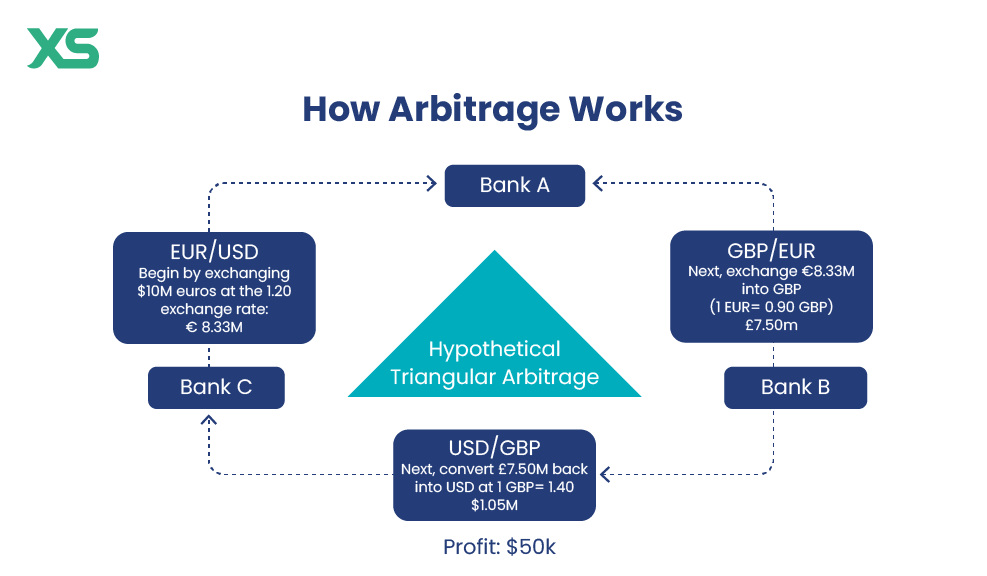
Triangular arbitrage lets you lock in profits in the forex market by spotting and trading price mismatches across three connected currency pairs, like EUR/USD, USD/JPY, and EUR/JPY, through quick simultaneous trades. This approach takes advantage of temporary inefficiencies where the implied exchange rate from two pairs does not match the direct quote of the third. Traders execute a cycle of buys and sells to capture the difference, often aiming for small but risk-free gains. In practice, you start with one currency, trade it into another, then into the third, and back, ending with more than you began if the math works out.
Key strategies involve detecting synthetic cross-rates and exploiting bid-ask spreads in popular triplets like USD/EUR/GBP. These methods rely on real-time data feeds to identify opportunities, which appear briefly due to market lags. Automated tools scan multiple brokers for the best entry points, focusing on high-liquidity pairs to minimize risks.
Real-world examples from 2023 show profits from mispricings in EUR/GBP/JPY, with discrepancies up to 0.2% yielding quick returns after fees. Hypothetical scenarios with current rates demonstrate how a $100,000 trade cycle can net $150 in under a second, highlighting the potential in volatile sessions.
Market conditions like news events create these windows, but success demands speed and low costs. Now, let’s break down the details starting with the basics of triangular arbitrage.
What Is Triangular Arbitrage in the Forex Market?
Triangular arbitrage is a trading tactic that exploits temporary price differences among three currency pairs to secure risk-free profits through simultaneous trades. Here’s the breakdown of how it fits into forex dynamics.
Triangular arbitrage happens when the exchange rates for three currencies do not align perfectly. For instance, consider EUR/USD at 1.1000, USD/JPY at 150.00, and EUR/JPY at 165.00. The implied EUR/JPY rate from the first two pairs is 1.1000 multiplied by 150.00, which equals 165.00. If the actual EUR/JPY quote deviates, say to 165.50, a profit opportunity emerges. You buy low and sell high across the cycle, locking in the gain before prices correct.
This mechanism keeps markets efficient. High-frequency traders and algorithms constantly probe for these mismatches, narrowing them quickly. In efficient markets, such chances last milliseconds, but they still arise from order flow imbalances or latency between brokers.
How Does Triangular Arbitrage Differ from Direct Arbitrage? (Comparison)
Triangular arbitrage requires three pairs and cross-rate inconsistencies, while direct arbitrage uses just two currencies for simpler price gaps. Specifically, direct arbitrage, or two-way arbitrage, involves buying a currency cheap on one exchange and selling it high on another, like EUR/USD at 1.0995 bid on Broker A and 1.1005 ask on Broker B.
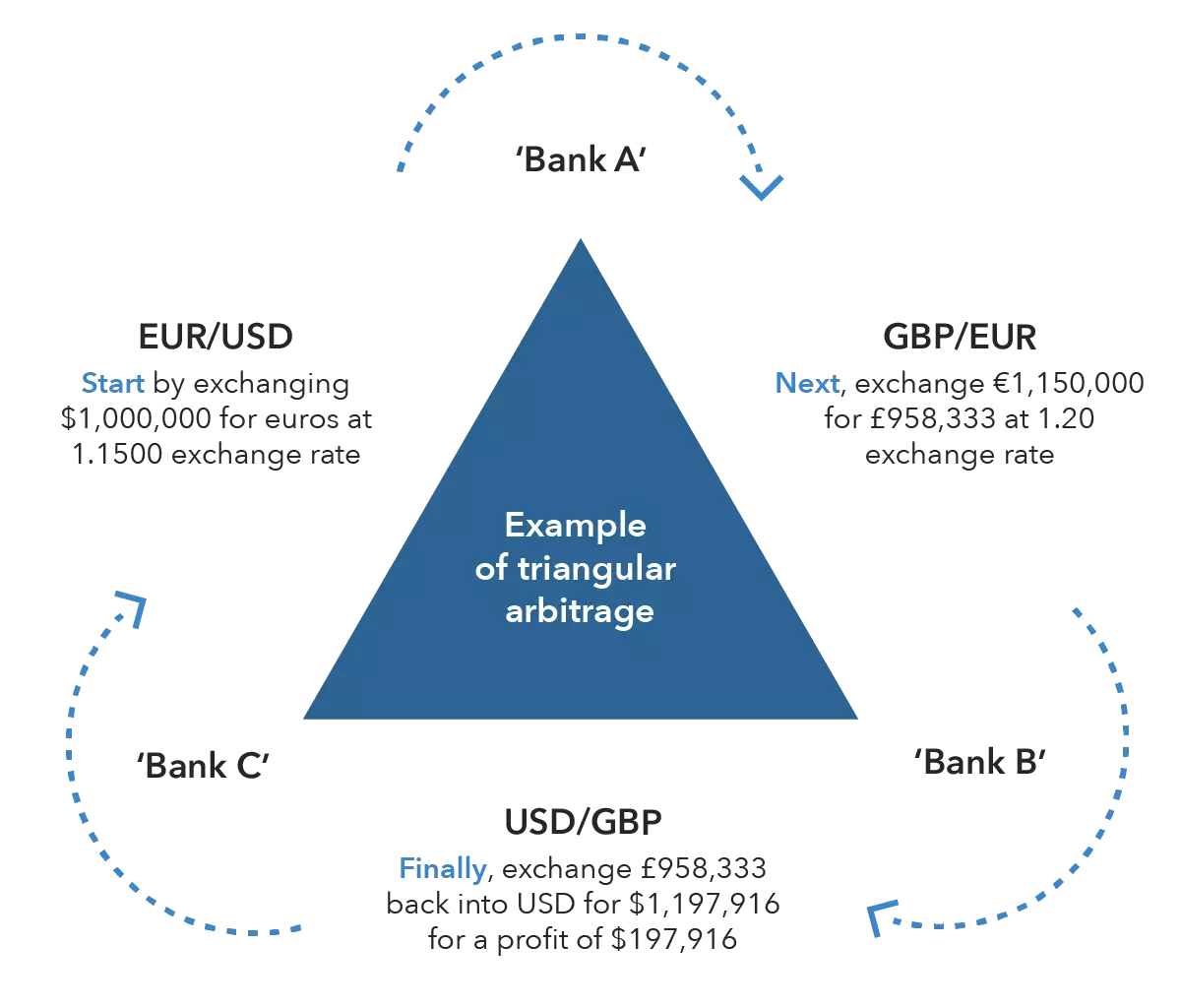
Triangular adds a layer by chaining trades. Imagine a quote table:
- EUR/USD: 1.1000 / 1.1005
- USD/JPY: 149.95 / 150.05
- EUR/JPY: 164.90 / 165.10
The implied bid EUR/JPY is (1.1000 * 149.95) = 164.945, below the actual 164.90 bid. You sell EUR/JPY directly, buy EUR/USD and USD/JPY to close the loop. This needs cross-rate misalignment, unlike direct arbitrage’s straightforward spread capture.
Direct arbitrage suits crypto or stocks with venue differences, but forex triangular shines in interconnected pairs due to no central exchange. Data from BIS triennial surveys shows triangular ops account for 5-10% of forex volume, proving their scale.
Why Is Triangular Arbitrage Relevant for Unlocking Forex Profits? (Definition)
Triangular arbitrage unlocks profits by capitalizing on market inefficiencies in liquidity pools and brief mispricings. For example, during Asian session overlaps, JPY crosses lag, creating 0.05-0.15% gaps. High liquidity in majors like EUR/USD ensures fills, while lower liquidity in exotics amplifies opportunities.

Profit potential ties to volume: a 0.1% discrepancy on $1 million yields $1,000 minus fees. Studies from the Bank for International Settlements note these ops enforce price parity, benefiting retail traders with fast execution. In volatile times, like post-Fed announcements, discrepancies spike, offering scalable edges.
What Are the Key Triangular Arbitrage Strategies? (Grouping)
There are two main strategies: synthetic cross-rate detection and bid-ask spread exploitation, grouped by how they identify and trade rate cycles. Let’s explore these approaches in action.
Synthetic cross-rate detection builds an artificial rate from two pairs to compare against the quoted third. If EUR/USD * GBP/USD ≠ EUR/GBP, trade the cycle. Execution paths include starting with base currency: buy EUR/USD, sell USD/GBP (or equivalent), close with GBP/EUR. This suits manual scanners or basic bots.
Bid-ask exploitation targets spread asymmetries. Brokers quote different bids/asks; arbitrage the full cycle using best bids for sells and asks for buys. For EUR/USD/JPY, compute (EUR/USD ask * USD/JPY ask) / EUR/JPY bid >1 for profit direction.
Both need rapid execution. Retail platforms like MT4 with EAs handle this, scanning 20+ triplets. Quantitative factors: latency under 50ms, costs below 0.02%. Comparison data from Quantpedia shows synthetic strategies yield 2-5% annualized after fees in backtests.
What Steps Are Involved in Executing a Triangular Arbitrage Trade? (Grouping)
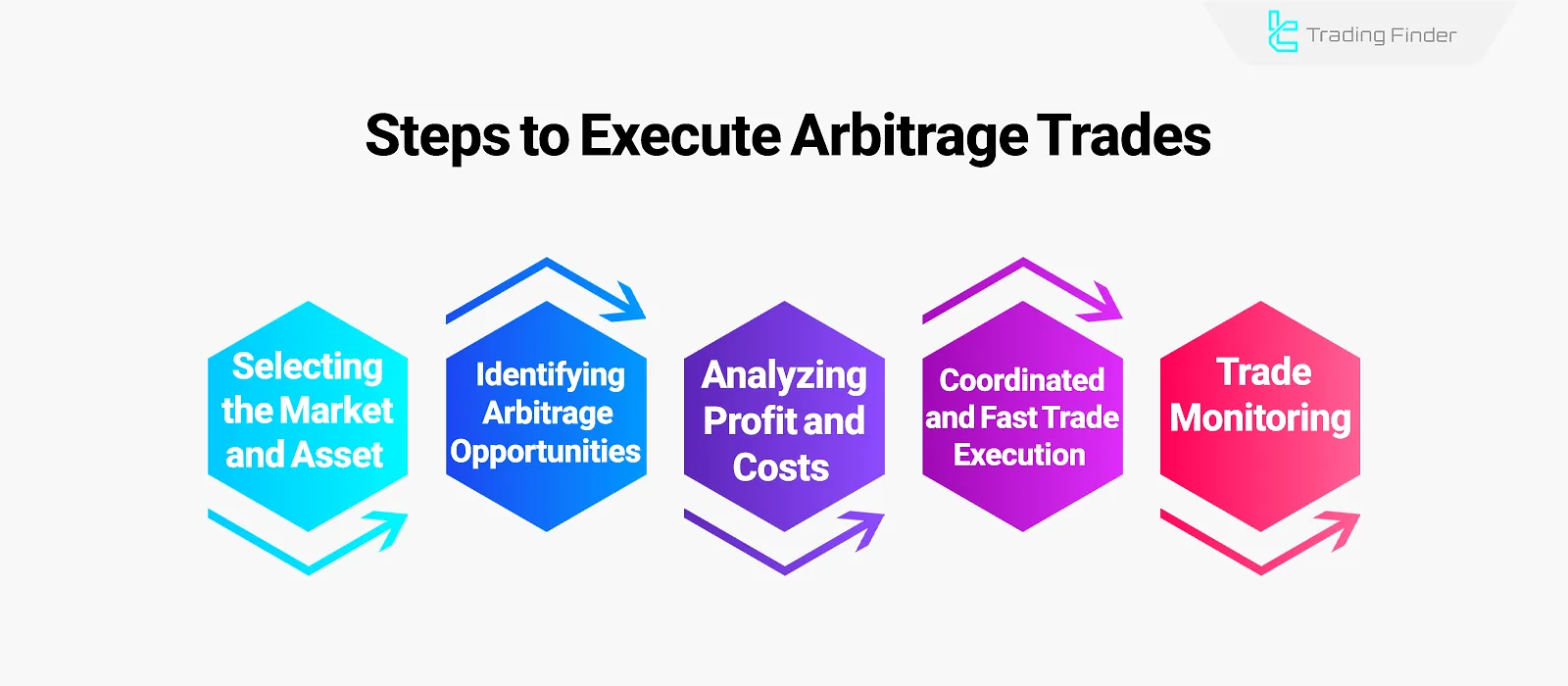
Execute triangular arbitrage in 5 steps: scan for discrepancies, compute implied rates, confirm profit threshold, trade all legs at once, and hedge residuals. First, monitor live feeds for triplets.
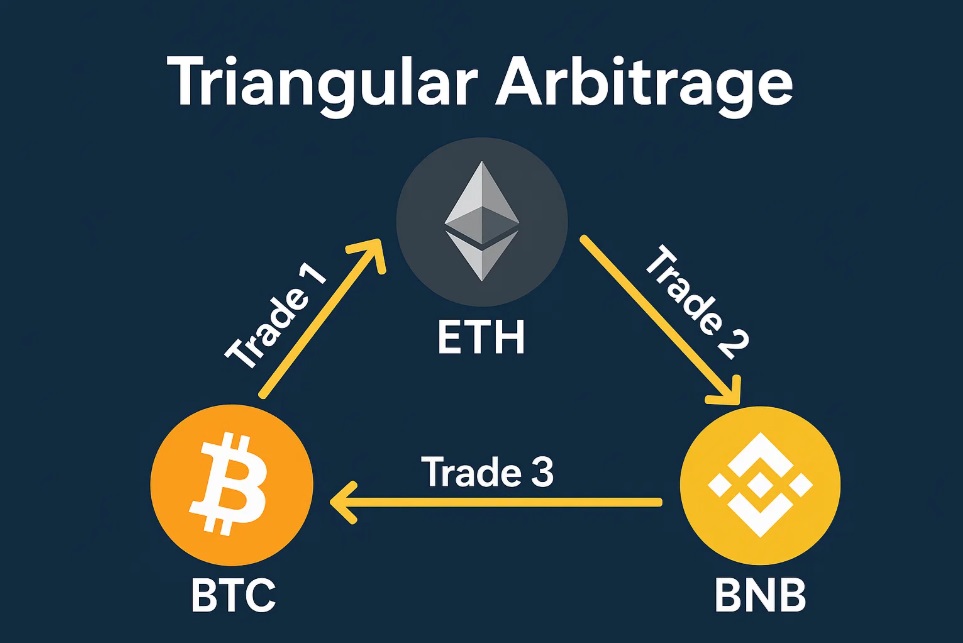
1. Identify discrepancy: Use APIs from brokers like IC Markets or Pepperstone for real-time quotes.
2. Calculate implied rate: For EUR/USD (1.1000), USD/JPY (150.00), check if product divided by EUR/JPY (165.00) ≠1.
3. Verify risk-free condition: Product of rates must exceed 1 by slippage threshold (e.g., 1.0005).
4. Execute legs rapidly: Script buys/sells in <100ms, often via VPS near exchange servers.
5. Monitor and exit: Flatten any unmatched positions.
This process demands automation. Retail traders use EAs from Forex Expert Advisor Store, programmed for popular triplets.
What Is the Mathematical Formula for Triangular Arbitrage Opportunities? (Definition)
The formula is (Pair1 Pair2) / Pair3 ≠ 1, with thresholds for fees like >1.0002. Take EUR/USD = 1.1005 (ask), USD/JPY = 150.10 (ask), EUR/JPY = 165.20 (bid). Compute (1.1005 150.10) / 165.20 = 1.0009, signaling 0.09% arb.
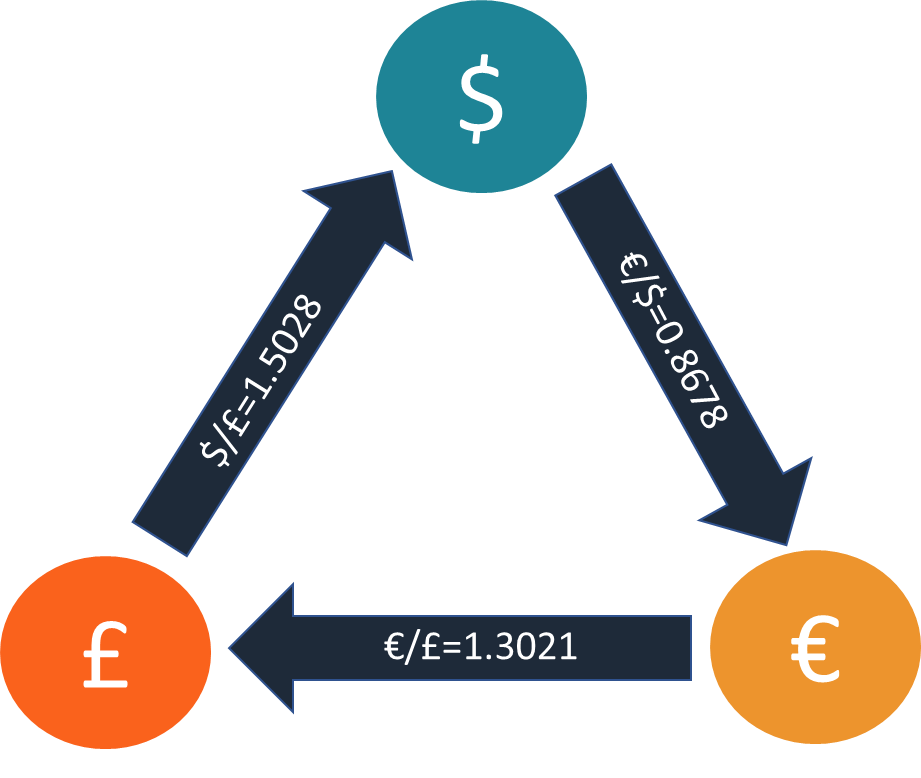
Practical example: Start with 1 million EUR. Buy USD: 1.1005 yields 1,100,500 USD. Buy JPY: 150.10 gives 165,248,005 JPY. Sell for EUR: /165.20 = 1,000,900 EUR. Profit: 900 EUR.
Adjust for bid/ask: Use asks for buys, bids for sells. Python code snippet: `if (eurusd_ask * usd_jpy_ask / eur_jpy_bid – 1) > threshold: trade()`. Backtests on 2023 data show 10-20 ops/day in majors.
What Are Real-World Examples of Triangular Arbitrage? (Grouping)
Three key examples include 2023 EUR/GBP/JPY mispricing, hypothetical AUD/USD/JPY cycles, and USD/EUR/CAD flashes during news. These illustrate profit math directly.
In March 2023, EUR/GBP quoted 0.8520, GBP/USD 1.0700, EUR/USD 1.0800. Implied EUR/GBP: 1.0800 / 1.0700 = 1.0093 (or 0.8515 inverted). Actual higher by 0.0005. On $10M: Trade cycle nets ~$5,000 pre-fees.
Hypothetical AUD/USD 0.6700, USD/JPY 150.00, AUD/JPY 100.50. Implied: 0.6700*150=100.50 exact, but if AUD/JPY 100.60, arb 0.1%. $100K AUD -> 67K USD -> 10.05M JPY -> 100.1K AUD. Gain: $100.
USD/EUR/CAD saw 0.05% gaps post-ECB in 2024. Rates: USD/EUR 0.9259, EUR/CAD 1.4800, USD/CAD 1.3700. Cycle profit: 0.07% on high volume.
How to Spot Triangular Arbitrage in Popular Currency Triplets? (How-to)
Scan popular triplets like USD/EUR/GBP and AUD/USD/JPY using real-time tools in 4 steps for quick detection. Tools: MT5 scanners, TradingView scripts, or EAs from Forex Expert Advisor Store.
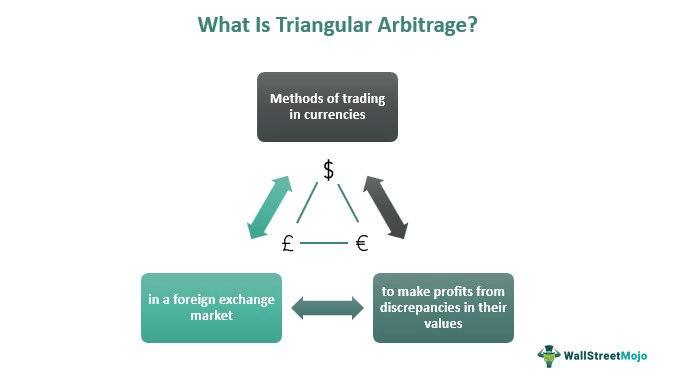
1. Select triplets: Majors (80% volume) for liquidity.
2. Fetch quotes: Multi-broker feeds via FIX API.
3. Compute arb factor: Loop (A/B B/C C/A -1).
4. Alert on >0.05%: Filter noise.
For USD/EUR/GBP: Watch London open. AUD/USD/JPY peaks in Tokyo. Free scanners like cTrader detect 5-15 ops/hour.
What Are the Primary Challenges in Triangular Arbitrage? (Grouping)
Primary challenges include execution speed, transaction costs, slippage, and market volatility, blocking most retail profits. Speed is key: Human trades miss 99% of ops; bots need <10ms latency.
Costs eat gains: Spreads 0.5-2 pips, commissions 0.2 pips/leg. A 0.1% arb vanishes after three legs. Slippage in volatility: 2022 Ukraine news widened spreads 10x.
Volatility spikes discrepancies but risks partial fills. Broker restrictions limit scalping.
Can Triangular Arbitrage Be Profitable After Fees and Latency? (Boolean)
Triangular arbitrage can generate profits after fees and latency when discrepancies exceed 0.1%, low-latency setups cut delays, and costs stay under 0.03%. Thresholds matter: Aim for 0.15%+ in majors.
Mitigate with ECN brokers (e.g., IC Markets, 0.1 pip spreads), VPS in NY/London (5ms ping). EAs optimize leg order to minimize impact.
Backtests show 1-3% monthly returns for pros. Retail wins via high-volume, low-risk cycles during low-vol sessions. Pair with hedging for safety.
Advanced and Comparative Aspects of Triangular Arbitrage
Triangular arbitrage exploits direct currency pair mismatches across three pairs, differing from statistical arbitrage’s correlation predictions and latency arbitrage’s execution speed races by relying solely on instantaneous price quotes.
Furthermore, these distinctions reveal why triangular methods suit certain market conditions better than others.
How Does Triangular Arbitrage Compare to Statistical or Latency Arbitrage?
Triangular arbitrage focuses on pure, risk-free opportunities from inconsistent quotes in three currency pairs, such as EUR/USD, USD/JPY, and EUR/JPY. Traders buy low in one pair and sell high in the chain without forecasting trends. Statistical arbitrage, by contrast, bets on mean reversion between correlated assets using models like cointegration tests. It carries risk from prediction errors, unlike triangular’s guaranteed profit if executed perfectly.
Latency arbitrage chases tiny spreads from delayed broker feeds versus faster exchanges. High-frequency traders colocate servers near exchanges for microseconds advantage. Triangular arbitrage demands quote synchronization across brokers but not ultra-low latency, making it accessible beyond elite HFT firms. In high-frequency contexts, triangular blends with latency plays during volatility spikes, yet pure triangular avoids prediction models.
You’ll notice triangular shines in liquid majors during quiet hours, while statistical needs vast data sets and latency requires premium infrastructure.
This comparison highlights execution priorities.
- Triangular: Quote misalignment detection, minimal latency needs.
- Statistical: Historical correlations, backtested models.
- Latency: Server proximity, feed arbitrage.
What Unique Tools and Expert Advisors Automate Triangular Arbitrage?
Several Expert Advisors from forex stores like MQL5 Market and Forex EA Store streamline triangular arbitrage on MT4 and MT5 platforms. The Triangular Arbitrage EA scans live quotes from multiple brokers, alerting on discrepancies exceeding 0.5 pips after spreads. It automates trades via hedging or netting modes.
ArbiScanner Pro stands out with broker-specific integrations, such as API links to IC Markets for low-latency execution and Pepperstone’s cTrader bridge. Users configure triangle sets like GBP/USD, USD/CHF, GBP/CHF. Forex TriArb MT5 adds machine learning to predict fleeting opportunities, logging performance in CSV for analysis.
These tools handle slippage filters and risk management, pausing during news. Retail traders value their plug-and-play setup, often costing $100-500 lifetime licenses. Advanced versions like HFT Triangular Scanner monitor 20+ triangles simultaneously.
Integration eases deployment.
- Customizable quote sources from brokers like FBS or XM.
- Backtesting on tick data for strategy tweaks.
- Telegram alerts for manual oversight.
What Regulatory and Legal Challenges Affect Triangular Arbitrage?
Regulatory hurdles shape triangular arbitrage viability, starting with broker policies. US NFA rules enforce FIFO, blocking simultaneous buy-sell legs in triangles, forcing sequential orders that erase edges. EU brokers under MiFID II cap leverage at 1:30 for majors, raising capital barriers.
High-frequency trading bans in some jurisdictions target latency abuses, but triangular faces indirect hits via quote refresh limits. Brokers like OANDA restrict API calls to prevent scanner overloads, while offshore firms allow freer hedging. ASIC in Australia demands negative balance protection, complicating rapid executions.
Jurisdiction matters: US traders pivot to FIFO-compliant EAs, EU users battle execution delays from transparency rules. Violations risk account freezes.
These rules demand compliance checks.
- FIFO in US: No hedging, order queuing.
- EU MiFID: Speed throttling on HFT-like activity.
- Offshore perks: Unlimited scalping, but higher risks.
Is Triangular Arbitrage Viable for Retail Traders vs. Institutions?
Retail traders face steep viability hurdles compared to institutions in triangular arbitrage due to capital and tech gaps. Retail needs $10,000+ for meaningful profits after spreads, while institutions deploy millions via colocation at Equinix data centers for sub-millisecond latency.
Retail EAs on MT4/MT5 lag with 50-100ms delays versus institutional microwave links. API speeds from brokers like FXCM suit retail scanners but crumble under volume. Institutions access direct interbank feeds, spotting 0.1-pip edges retail misses.
Retail succeeds in low-competition triangles like exotics during Asia sessions, netting 1-5% monthly with $5k accounts. Institutions dominate majors, arbitraging microseconds. Retail limitations include VPS latency and broker slippage.
Access levels dictate outcomes.
- Retail: Demo-tested EAs, VPS hosting.
- Institutions: Custom algos, dark pool access.
- Bridge option: Prop firms for scaled capital.

David Rodriguez
Senior Forex Analyst at ForexEAshop
David Rodriguez has over 8 years of experience in forex trading and market analysis. He specializes in institutional trading strategies and has helped thousands of traders improve their performance through his educational content and trading tools.