

Review
Unlock Basics of Forex Trading: Beginner’s Fast-Track to Success
Forex trading basics unlock a path to success for beginners through accessible markets, key terms, step-by-step starts, and risk awareness, allowing you to trade currencies confidently from home. The foreign exchange market, or Forex, operates around the clock, letting you buy and sell currencies like EUR/USD pairs with small starting capital. This guide covers everything from core definitions to practical steps, so you can build skills fast without overwhelm.
Essential terms like pips, leverage, and currency pairs form the foundation for reading quotes and placing trades. Once you grasp these, you’ll spot opportunities in major pairs such as GBP/USD. Brokers provide free tools to practice, making it easier to understand spreads and positions right away.
Starting Forex involves selecting a regulated broker, practicing on a demo account, and using platforms like MT4 or MT5. This process takes you from zero to live trading in weeks. You’ll learn analysis types and simple strategies to enter and exit trades wisely.
Ready to move forward? The sections below break down each part in detail. You’ll find clear explanations, examples, and tips tailored for newcomers.
What is Forex Trading?
Forex trading is the global exchange of currencies in a decentralized, over-the-counter market open 24 hours a day, five days a week, involving banks, institutions, and retail traders. Let’s explore the core elements that make this market unique.
How Does the Forex Market Work?
The Forex market functions through buying one currency while selling another in pairs, like trading euros for US dollars. At its heart, you deal with bid and ask prices: the bid is what buyers pay, and the ask is what sellers receive. The difference, called the spread, is how brokers earn.
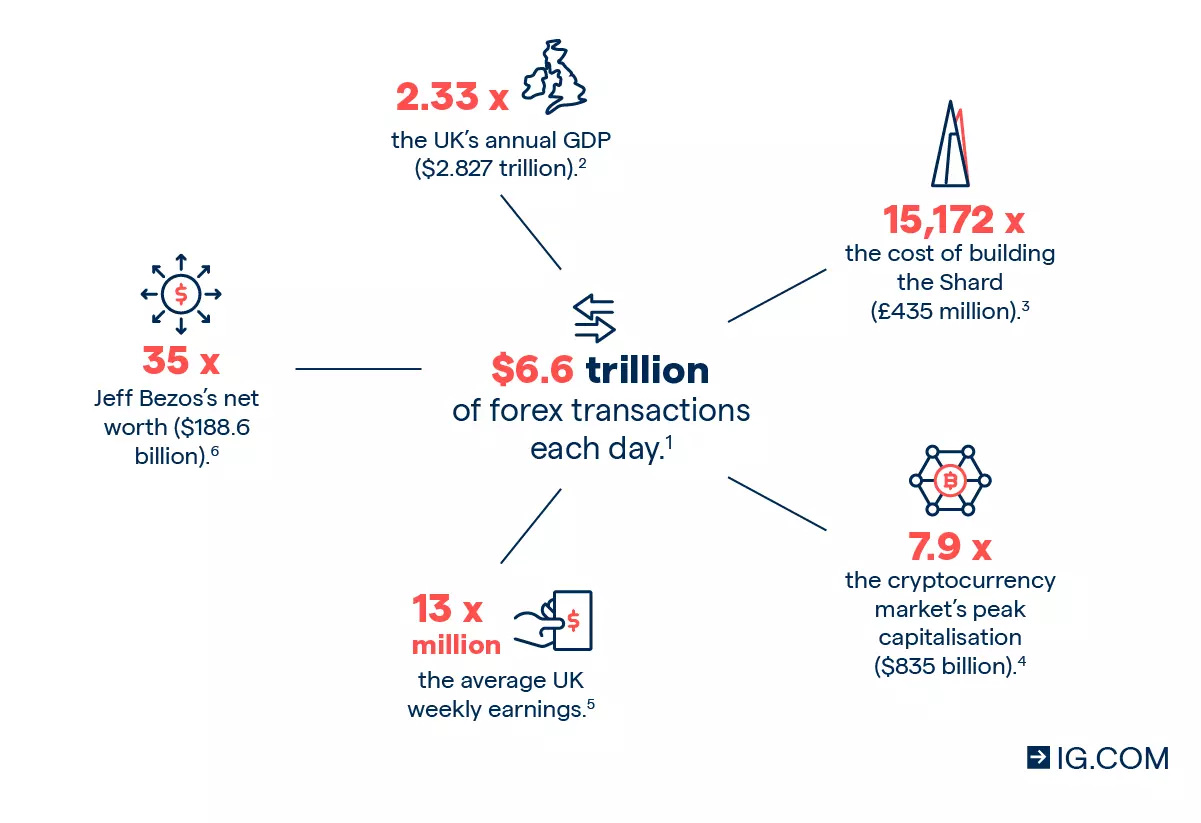
Spot trading, the most common for beginners, settles trades almost instantly, usually within two business days. For example, if EUR/USD quotes at 1.1000 bid and 1.1002 ask, you buy euros at 1.1002 or sell at 1.1000. Volume comes from trillions daily, driven by banks adjusting reserves and companies hedging costs.
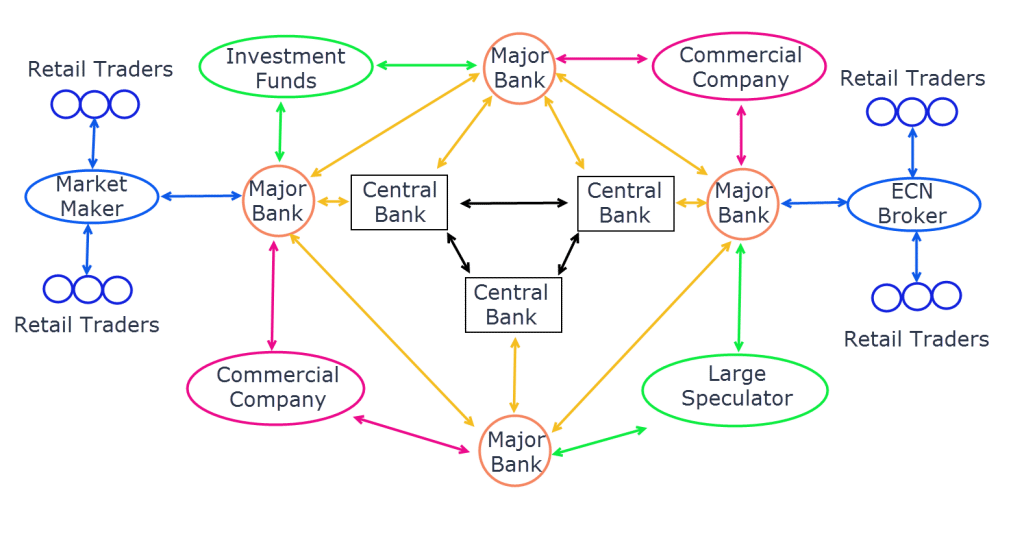
Major players include central banks influencing rates, commercial banks facilitating 50% of volume, hedge funds speculating, and retail traders like you using online platforms. Decentralization means no single exchange; trades happen via electronic networks.
This setup offers flexibility. Imagine a US trader buying AUD/USD at night because Australia’s market is active. Liquidity ensures tight spreads, but weekends close the market.
Why is Forex Suitable for Beginners?
Forex draws newcomers with online brokers offering low minimum deposits, often $100 or less, and free demo accounts. Platforms like MT4 provide user-friendly interfaces with one-click trading.
Educational resources abound: free webinars, e-books, and YouTube channels from brokers such as XM or IC Markets explain basics without cost. Low barriers mean no need for stock approvals or high fees.
Global access 24/5 fits any schedule. A student in Asia can trade during US sessions. Data from the Bank for International Settlements shows retail participation grew 20% yearly, proving its appeal.
What are the Essential Terms in Forex Trading?
Essential Forex terms include pip, lot size, leverage, margin, spread, and long/short positions, forming the vocabulary to execute and track trades. Here’s the breakdown of these fundamentals.
A pip, or percentage in point, measures price moves, typically the fourth decimal in pairs like EUR/USD (0.0001). If EUR/USD rises from 1.1050 to 1.1055, that’s 5 pips. It quantifies profit or loss.
Lot size sets trade volume: a standard lot is 100,000 units, mini is 10,000, micro is 1,000. Beginners start with micros to control risk. For a micro lot in EUR/USD at 1.1000, one pip equals $0.10.
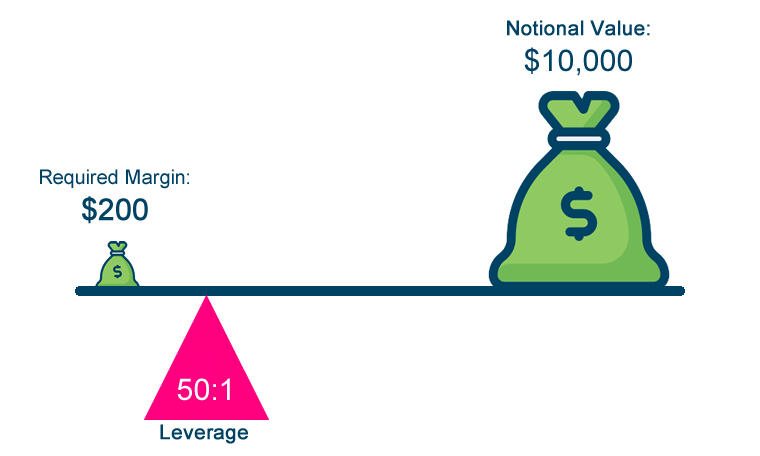
Leverage lets you control large positions with small capital, like 1:100 meaning $1,000 controls $100,000. It amplifies gains but losses too.
Margin is the deposit required, say 1% for 1:100 leverage on a $100,000 lot ($1,000). Free margin tracks available funds.
Spread is the bid-ask gap, often 1 pip for majors. Long positions bet on price rises (buy low, sell high); short on falls (sell high, buy low).
Master these, and you’ll read quotes easily. For instance, a long EUR/USD at 1.1000 with 1:50 leverage and 1-pip stop-loss risks little.
What are Major Currency Pairs?
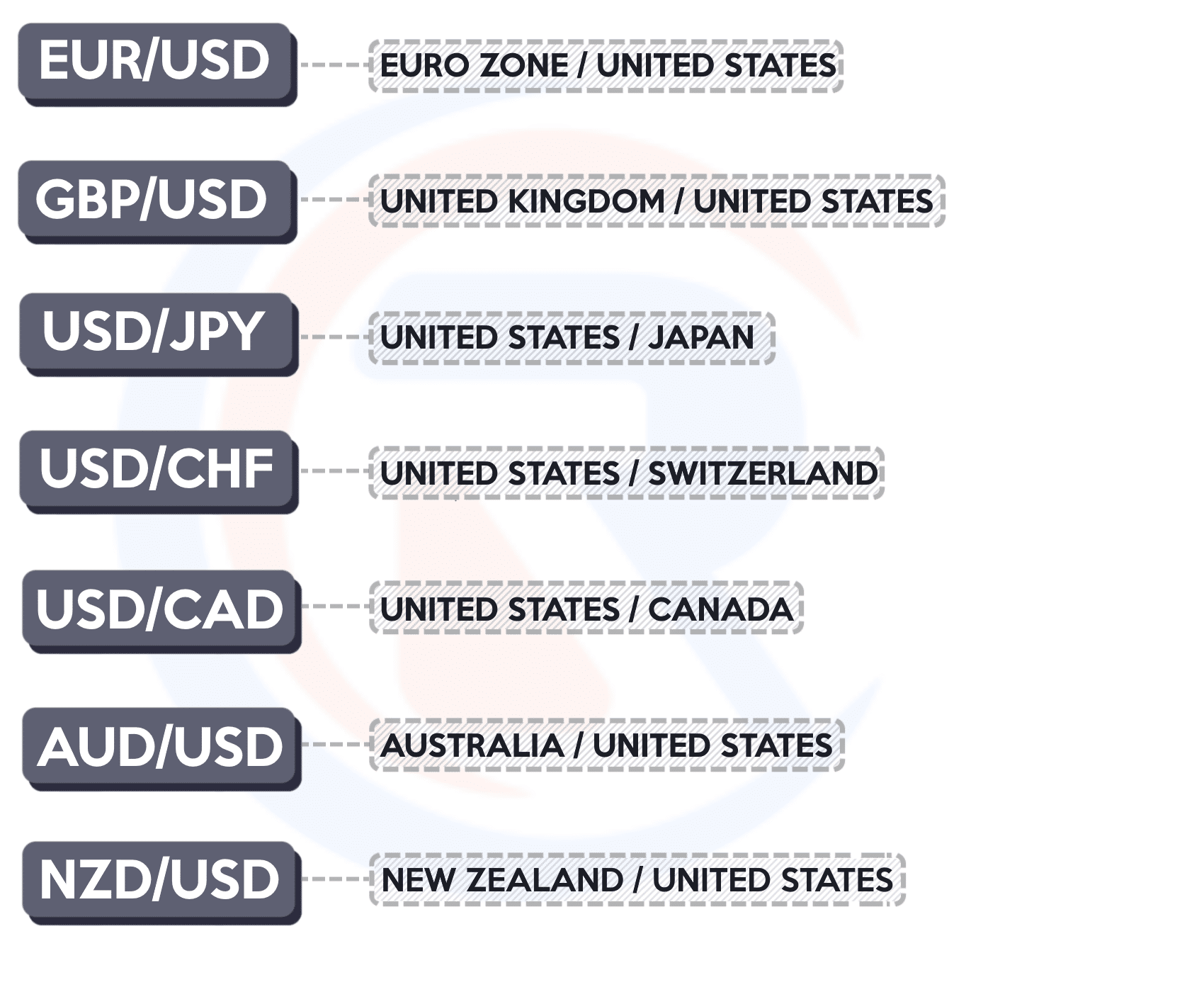
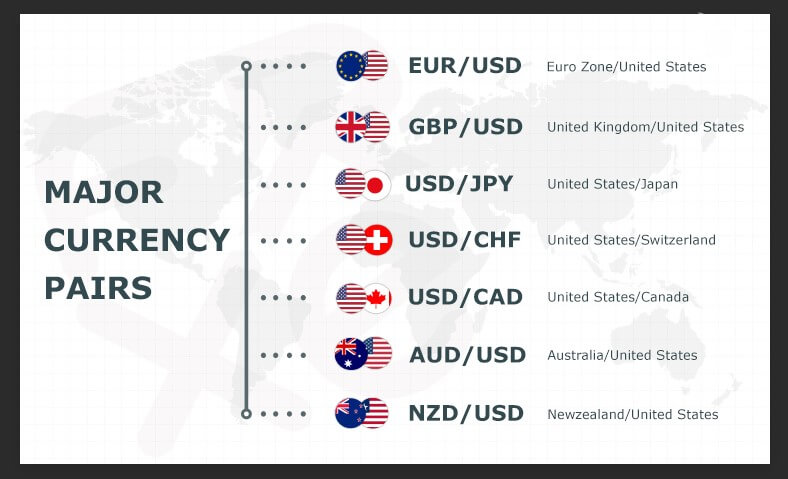
Major currency pairs are the most traded like EUR/USD, GBP/USD, USD/JPY, USD/CHF, AUD/USD, USD/CAD, and NZD/USD, grouped by high liquidity and US dollar base. Minors exclude USD, like EUR/GBP; exotics involve emerging currencies, such as USD/TRY.
Majors dominate 75% of volume per BIS data, with tight spreads under 1 pip. EUR/USD, the king, sees $1.5 trillion daily due to Eurozone and US economies.
Minors, or crosses, like EUR/JPY suit intermediate traders with slightly wider spreads. Exotics like USD/ZAR carry higher volatility from political risks, best avoided initially.
Group by liquidity: majors for stability, minors for variety, exotics for high-reward potential. Trade majors first to build confidence.
What is Leverage and Margin in Forex?
Leverage multiplies trading power, like 1:500 letting $200 control $100,000, while margin is the required deposit to open positions. For a 0.01 lot EUR/USD ($1,000 value) at 1:100 leverage, margin is $10.
Calculate: Margin = (lot size × contract size × price) / leverage. Risks amplify; a 100-pip loss on leveraged trade wipes small accounts. Regulators cap retail leverage at 1:30 in Europe for safety.
Beginners face margin calls if losses eat free margin, auto-closing trades. Example: $500 account, 1% risk ($5) per trade limits position size.
Use low leverage like 1:10 initially to learn without wipeouts.
How Do You Start Forex Trading as a Beginner?
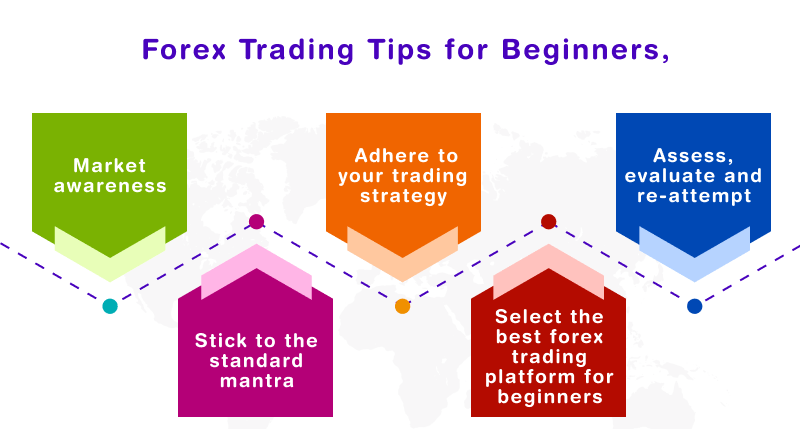
Start Forex trading by choosing a regulated broker, opening a demo account, learning MT4/MT5, and practicing strategies over 1-3 months for confident live trades. To understand this better, follow these steps.
1. Research brokers: Pick ones regulated by FCA, ASIC, or CySEC, with low spreads and MT4/MT5 support. Examples: Pepperstone or FBS.
2. Open demo account: Fund virtually with $10,000 to test without risk.
3. Learn the platform: Master charts, orders, and indicators in MT4/MT5 tutorials.
4. Practice daily: Trade 20-50 demos, track in a journal.
5. Go live small: Start with $200-500, micro lots.
This builds habits. Most succeed after 100 demo hours.
What Types of Forex Analysis Should Beginners Use?
Beginners should use technical analysis with charts and indicators, fundamental with news and data, and sentiment for crowd mood. Technical spots patterns like moving averages on EUR/USD hourly charts.

Fundamental tracks non-farm payrolls or interest rates; a Fed hike strengthens USD. Tools like Forex Factory calendars help.
Sentiment gauges via COT reports showing trader bets. Combine: technical for timing, fundamental for direction.
Start with technical on demos; 80% of short-term trades rely on it per surveys.
What are Basic Entry and Exit Strategies?
Basic strategies include trend following with moving averages, support/resistance bounces, and stop-loss/take-profit orders. For trend following, buy when price crosses 50-period MA upward on 1-hour charts.
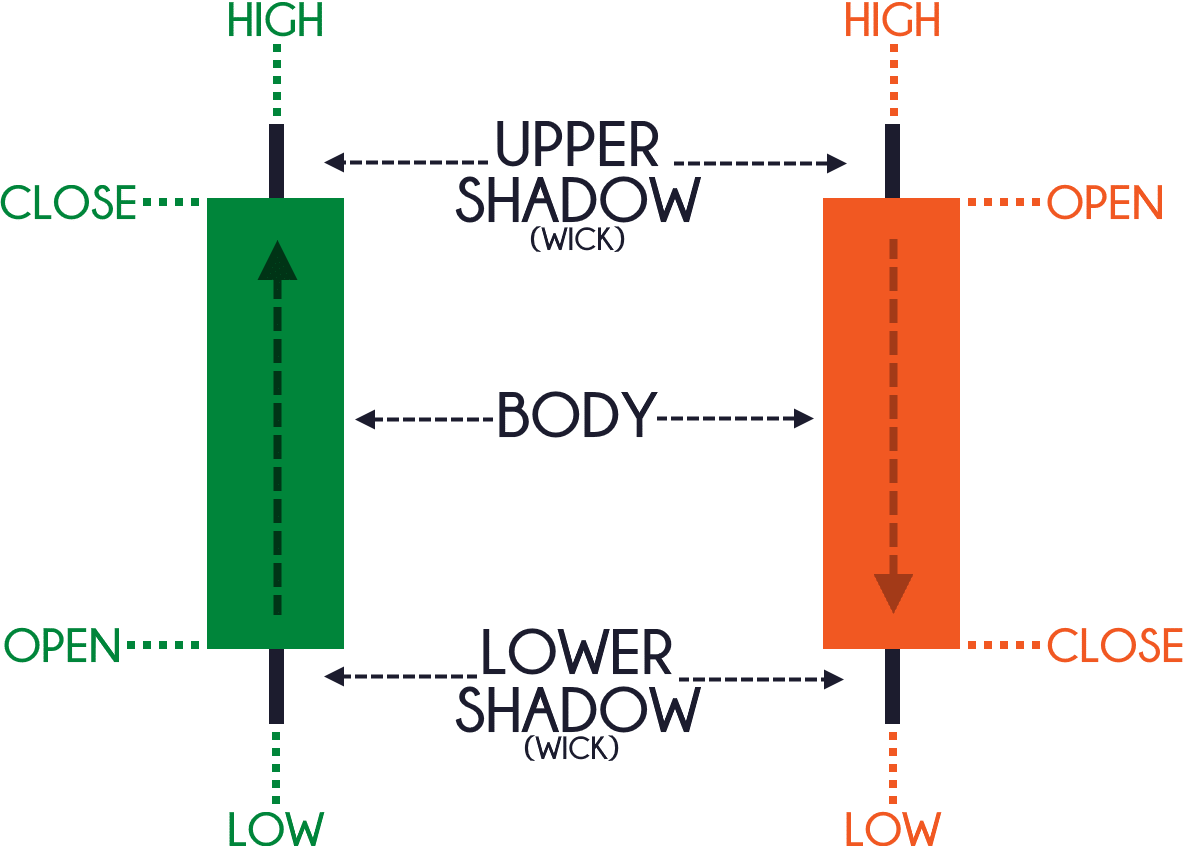
Support/resistance: enter long at prior lows, exit at highs. Set stop-loss 20 pips below, take-profit at 40 pips for 1:2 risk-reward.
Example: GBP/USD at support 1.2500, long with stop 1.2480, target 1.2580. Track win rate over 50 trades.
These keep trading mechanical, reducing emotion.
What are the Key Risks in Forex Trading?
Key Forex risks include amplified losses from leverage, emotional decisions leading to overtrading, and scams from unregulated brokers. Specifically, high leverage turns small moves against you into account blowouts.
Emotional trading chases losses, ignoring plans. Scams promise 100% returns; verify regulation always.
Other pitfalls: slippage in news, over-reliance on indicators without context. BIS notes 70-80% retail traders lose money.
Is Forex Trading Profitable for Beginners?
Forex profitability for beginners comes from disciplined practice, with only 10-20% succeeding long-term per broker stats, stressing education over quick wins. Realistic gains start at 1-5% monthly after months of demos.
Discipline via journals and rules separates winners. Track metrics: aim 60% win rate, 1:1.5 reward-risk.
Many fail from greed; consistent small profits compound. Data shows educated traders outperform by 30%.
How Can Beginners Manage Risks Effectively?
Beginners manage risks with position sizing to 1-2% account per trade, stop-losses, and diversification across pairs. For $1,000 account, risk $10-20 max.

Calculate size: Risk amount / (stop-loss pips × pip value). Diversify: no more than 3 open trades, majors only.
Use 50% drawdown rule: pause if account halves. Tools like MT4 calculators automate.
This preserves capital, letting you trade longer. Studies show risk-managed accounts survive 5x longer.
Advanced Beginner Tools and Comparisons
Advanced beginner tools in Forex trading involve selecting regulated brokers with EA support, testing Expert Advisors via backtesting, mastering demo-to-live shifts, contrasting Forex with stocks, and spotting scams for safer progress.
Furthermore, these tools bridge basic knowledge to practical application, helping you avoid pitfalls while accelerating skill-building.
How Do You Choose the Right Forex Broker?
Choosing the right Forex broker starts with verifying strong regulation from bodies like the Financial Conduct Authority (FCA) in the UK, Australian Securities and Investments Commission (ASIC), or Commodity Futures Trading Commission (CFTC) in the US. These ensure client funds are segregated and disputes resolved fairly. Next, examine spreads, the difference between bid and ask prices, as tight spreads (under 1 pip on majors like EUR/USD) lower trading costs. Demo accounts let you practice risk-free, so pick brokers offering unlimited time and real market conditions.
EA compatibility matters too, especially for automation. Brokers supporting MetaTrader 4 (MT4) or MetaTrader 5 (MT5) allow seamless Expert Advisor integration, often with VPS hosting for 24/7 operation. Check execution speeds and minimum deposits; beginners benefit from $100-500 starts.
You’ll notice deposit/withdrawal fees vary, so favor those with free options via bank wires or e-wallets like Skrill. Customer support in your language, available 24/5, resolves issues quickly.
To narrow options effectively, follow these steps:
- Research regulation on official regulator websites, avoiding offshore entities without oversight.
- Compare live spreads during London-New York overlap using tools like broker comparison sites.
- Test demo accounts for at least two weeks, confirming EA installs work smoothly.
- Read independent reviews on forums like Forex Factory, ignoring paid promotions.
This approach minimizes risks and aligns tools with your strategy.
What are Expert Advisors (EAs) and Should Beginners Use Them?
Expert Advisors (EAs) are automated trading programs written in MQL4 or MQL5 for MT4/MT5 platforms, executing trades based on predefined rules like moving average crossovers or RSI signals. They run continuously, removing emotional decisions. Backtesting simulates performance on historical data, revealing win rates and drawdowns before live use.
For beginners, EAs offer fast-track benefits by enforcing discipline and enabling 24/5 trading without constant monitoring. Yet risks include curve-fitting, where EAs excel in tests but fail live due to overfitting past data. Market shifts, like news events, can trigger losses if stops aren’t set.
Should beginners use them? Yes, after manual practice, as they teach strategy logic. Start with free EAs from trusted sources, customizing via strategy tester. Automation contrasts manual trading by prioritizing consistency over intuition.
Picture this: manual trading relies on your screen time, while EAs handle volume, ideal for learning.
Key considerations for safe EA adoption include:
- Backtest across multiple years and pairs, targeting profit factors over 1.2.
- Forward test on demo for 1-3 months to validate real conditions.
- Use low risk per trade (1-2% of account) and monitor for slippage.
- Source EAs from reputable developers, avoiding “holy grail” claims.
This balances automation perks against beginner vulnerabilities.
What is the Difference Between Demo and Live Forex Trading?
Demo trading uses virtual funds on real-time data, mimicking platforms without financial risk. Live trading involves real money, where every pip counts. The core gap lies in psychology: demos lack fear of loss or greed-driven overtrading, leading many to overestimate skills.

Transition challenges hit hard. Live accounts face slippage (delayed fills during volatility), wider spreads under load, and commissions absent in demos. Leverage amplifies this; a 1% move wipes demo practice but devastates real capital.
Data shows 70-80% of retail traders lose money live, often from untested emotions. Demos build technical skills, but live demands risk management like position sizing.
Why does the shift feel abrupt? Demos ignore overnight gaps or requotes.
To ease the jump, prepare with these differences in mind:
- Scale demo lot sizes gradually to match live risk tolerance.
- Track emotional journals in demo, then apply live.
- Simulate live costs by adding manual spreads/commissions in demo stats.
- Start live micro-lots (0.01) for psychological adaptation.
Mastering this prepares you for sustained success.
How Does Forex Trading Compare to Stock Trading?
Forex trading outpaces stocks in liquidity, with daily volumes over $7 trillion versus $500 billion in stocks, ensuring tighter spreads and instant fills. Leverage differs sharply: Forex offers 1:30 to 1:500, magnifying gains/losses, while stocks cap at 1:2 or 1:4 in margin accounts.

Hours contrast too; Forex runs 24/5 across Sydney-Tokyo-London-New York, suiting global schedules, unlike stocks tied to exchange hours (e.g., NYSE 9:30 AM-4 PM ET). Volatility varies: Forex pairs swing 0.5-2% daily on news, stocks less unless earnings-driven.
Forex uses pairs (EUR/USD), profiting both ways without owning assets, while stocks require buying low/selling high. No central exchange means OTC broker execution.
Ever traded stocks and felt limited? Forex’s flexibility appeals to short-term traders.
Spot these contrasts for strategy fit:
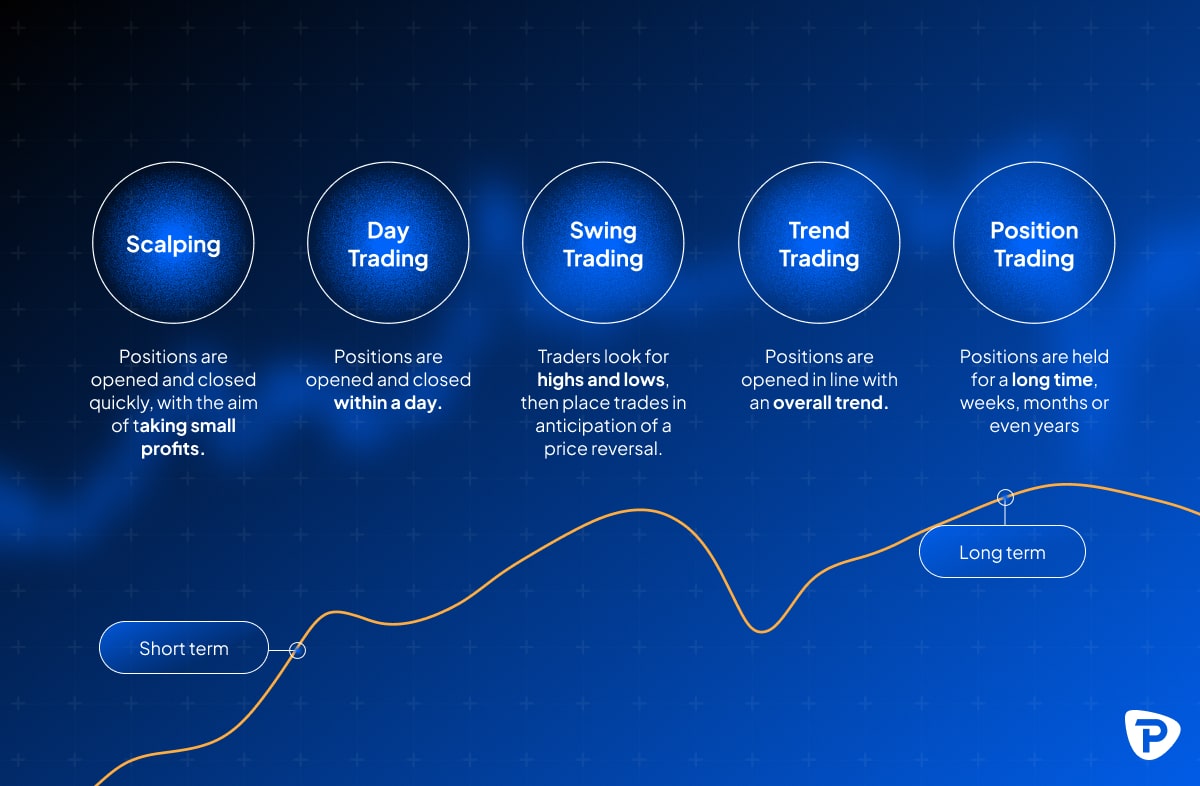
- Prioritize liquidity for scalping in Forex, swing trades in stocks.
- Manage higher Forex leverage with tighter stops.
- Adapt to Forex’s constant access versus stock downtime.
- Compare volatility: use Forex for news plays, stocks for fundamentals.
These insights guide market choice.
What are Common Forex Scams and How to Avoid Them?
Common Forex scams include pump-and-dump signals, where groups hype trades on Telegram for quick pumps then dumps, leaving followers holding losses. Unregulated brokers promise high returns without FCA/ASIC oversight, vanishing funds post-deposit. Rare red flags: guaranteed profits (impossible in markets), pressure tactics like “limited spots,” or fake celebrity endorsements.
Signal services often show cherry-picked results, hiding drawdowns. Binary options scams mimic Forex but pay fixed or nothing.
Avoidance starts with verification. Check broker licenses directly on regulator sites, not broker claims.
Rhetorical question: Why rush deposits when scams prey on FOMO?
Protect yourself through vigilance:
- Demand verified Myfxbook or FXBlue stats for signals/EAs, over 6 months.
- Use segregated accounts and test withdrawals small first.
- Report suspicions to authorities like CFTC via website.
- Stick to established platforms, ignoring unsolicited offers.
These steps safeguard your capital.

David Rodriguez
Senior Forex Analyst at ForexEAshop
David Rodriguez has over 8 years of experience in forex trading and market analysis. He specializes in institutional trading strategies and has helped thousands of traders improve their performance through his educational content and trading tools.