

Review
Master Forex Trading Basics: Essential Guide for Beginners in 2025
Forex trading basics involve exchanging one currency for another to profit from price changes in the global foreign exchange market. This guide covers everything a beginner needs in 2025, from core concepts to practical steps. You start by learning what forex is, key terms like pips and leverage, and how to analyze markets. Then, you pick a broker, practice on a demo account, and apply risk rules to protect your money.
To get started, open a demo account with a regulated broker like those offering MT4 or MT5 platforms. These tools let you trade virtual funds first. In 2025, mobile apps make it easy to monitor trades anywhere. Brokers with low spreads and strong regulation, such as those overseen by the FCA or ASIC, keep things safe.
Risk management sets successful traders apart, using rules like risking only 1-2% per trade. Tools like stop-loss orders limit losses automatically. Beginners often skip this and lose big, but following these basics builds steady habits. You’ll avoid common mistakes like overtrading.
This sets the foundation. Now, let’s break down each part in detail, starting with what forex trading really means.
What Is Forex Trading?
Forex trading is the act of buying and selling currencies in the foreign exchange market to profit from exchange rate fluctuations. Here’s the breakdown of its core elements.
How Does the Forex Market Work?
The forex market works by traders buying one currency while selling another in pairs, profiting from the difference in exchange rates through bid/ask prices measured in pips. Specifically, every trade involves a currency pair, like EUR/USD. The bid price is what buyers pay to sell the base currency, and the ask price is what sellers receive to buy it. The spread, or gap between bid and ask, is the broker’s fee.
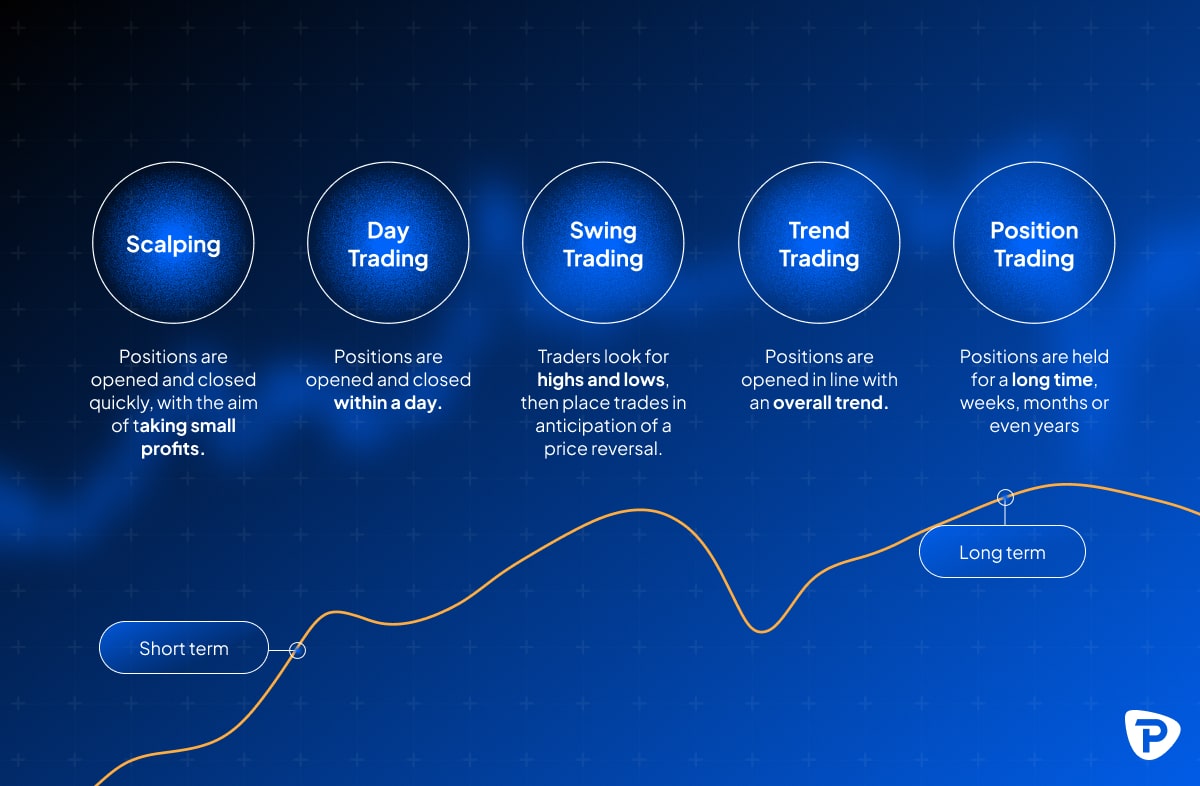
For beginners, picture this: if you think the euro will strengthen against the US dollar, you buy EUR/USD at 1.1000 (ask) hoping it rises to 1.1050. That’s a 50-pip gain, where one pip equals 0.0001 for most pairs. A standard lot (100,000 units) turns that into $500 profit, minus spread.
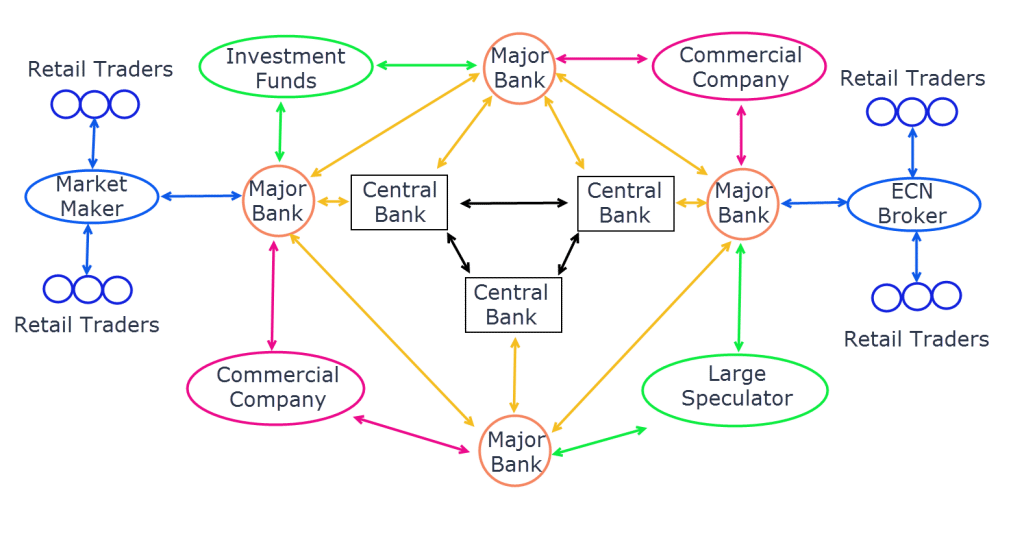
Core mechanics include constant matching of buy and sell orders worldwide. Banks, companies, and retail traders participate. No central exchange exists; it’s over-the-counter via electronic networks. Major sessions overlap in London, New York, Tokyo, and Sydney, driving volume peaks.
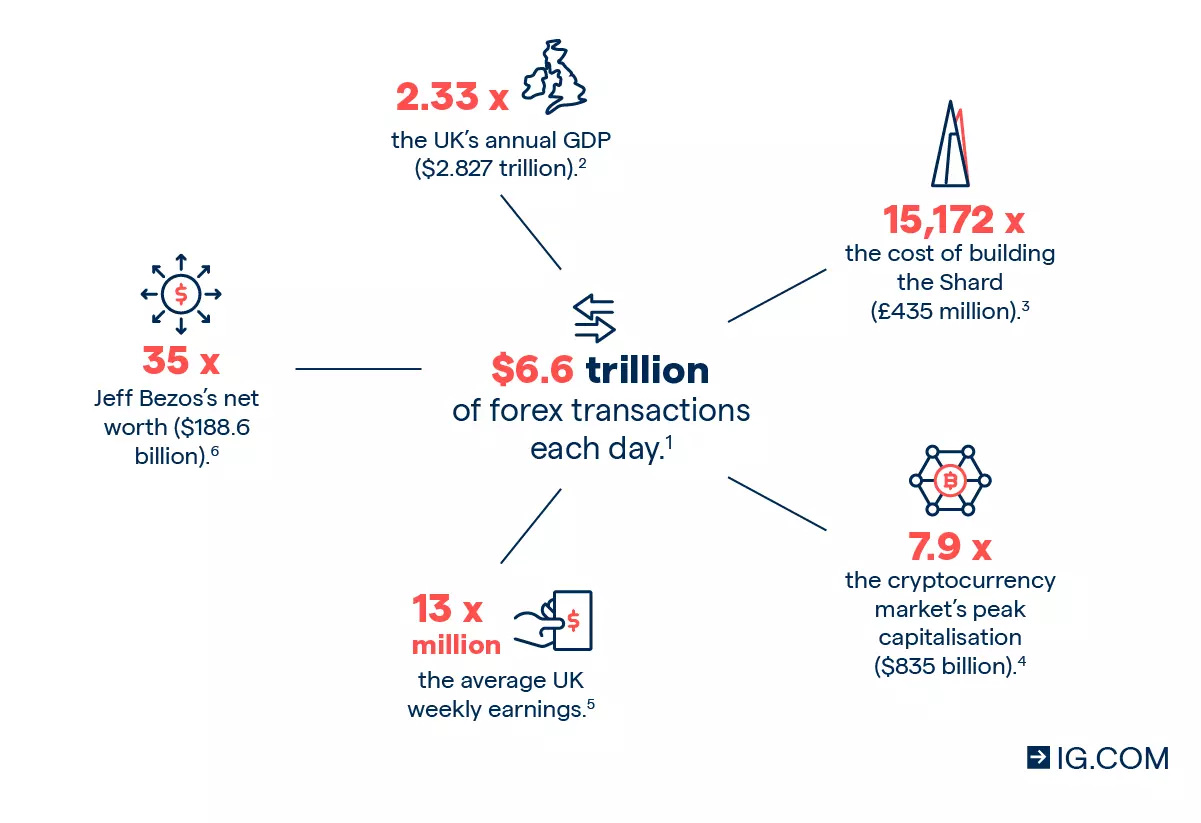
Liquidity stays high, with over $7.5 trillion traded daily. This means tight spreads and fast execution. Beginners benefit from this, as orders fill quickly without slippage in normal conditions.
Pips matter most. For JPY pairs like USD/JPY, a pip is 0.01. Track them on platforms to see tiny moves add up.
Why Trade Forex in 2025?
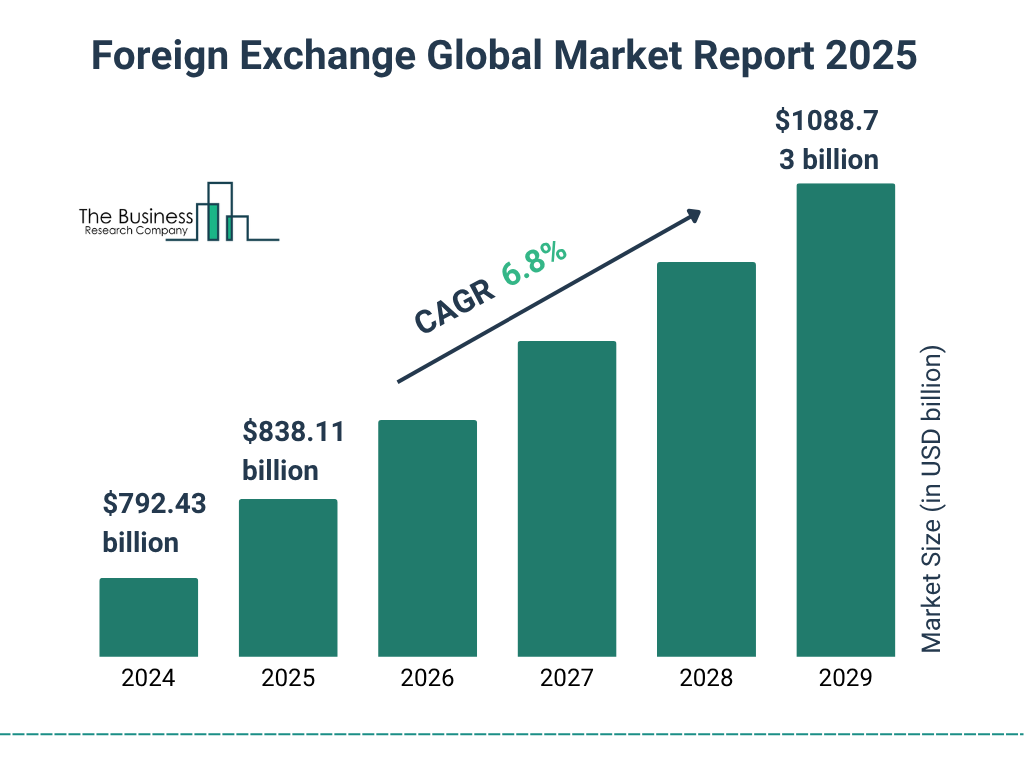
Trade forex in 2025 for its 24/5 access, massive liquidity, and low entry barriers starting at $100 with brokers offering micro lots. Accessibility comes from online platforms anyone with internet can use. Smartphones run full trading apps now, fitting busy schedules.
Liquidity tops all markets. Major pairs like GBP/USD move smoothly, letting you enter or exit positions anytime. No stock-like halts happen.
Low barriers shine. Demo accounts let you start free. Real accounts need little capital thanks to leverage, though use it carefully. In 2025, AI tools on platforms predict trends, helping new traders.
Trends favor forex: rising crypto interest pushes forex as a stable alternative. Central banks cut rates, sparking volatility in pairs like AUD/USD. Geopolitical shifts, such as US elections, create opportunities.
Retail growth surges with education apps and social trading. Copy pros via platforms like ZuluTrade. Overall, forex suits beginners seeking flexibility without huge upfront costs.
Forex runs 24 hours from Monday Sydney open to Friday New York close. Weekends pause it, but gaps can occur. This global nature means news from anywhere impacts prices instantly.
Leverage basics amplify trades, but we’ll cover risks later. For now, know it lets small accounts control big positions, like 1:100 turning $1,000 into $100,000 exposure.
What Are the Essential Forex Terms for Beginners?
Essential forex terms for beginners include pip, lot size, margin, leverage, and long/short positions, forming the language of trades. Let’s explore these grouped by function.
Pip measures price change, the smallest unit like 0.0001 in EUR/USD. Lot size sets trade volume: micro (1,000 units), mini (10,000), standard (100,000). Margin is deposit to open leveraged trades. Leverage multiplies funds, say 1:500. Long means buy expecting rise; short means sell expecting fall.
What Is a Currency Pair?
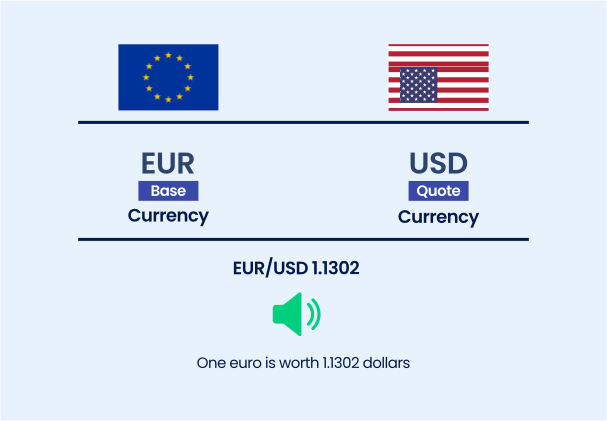
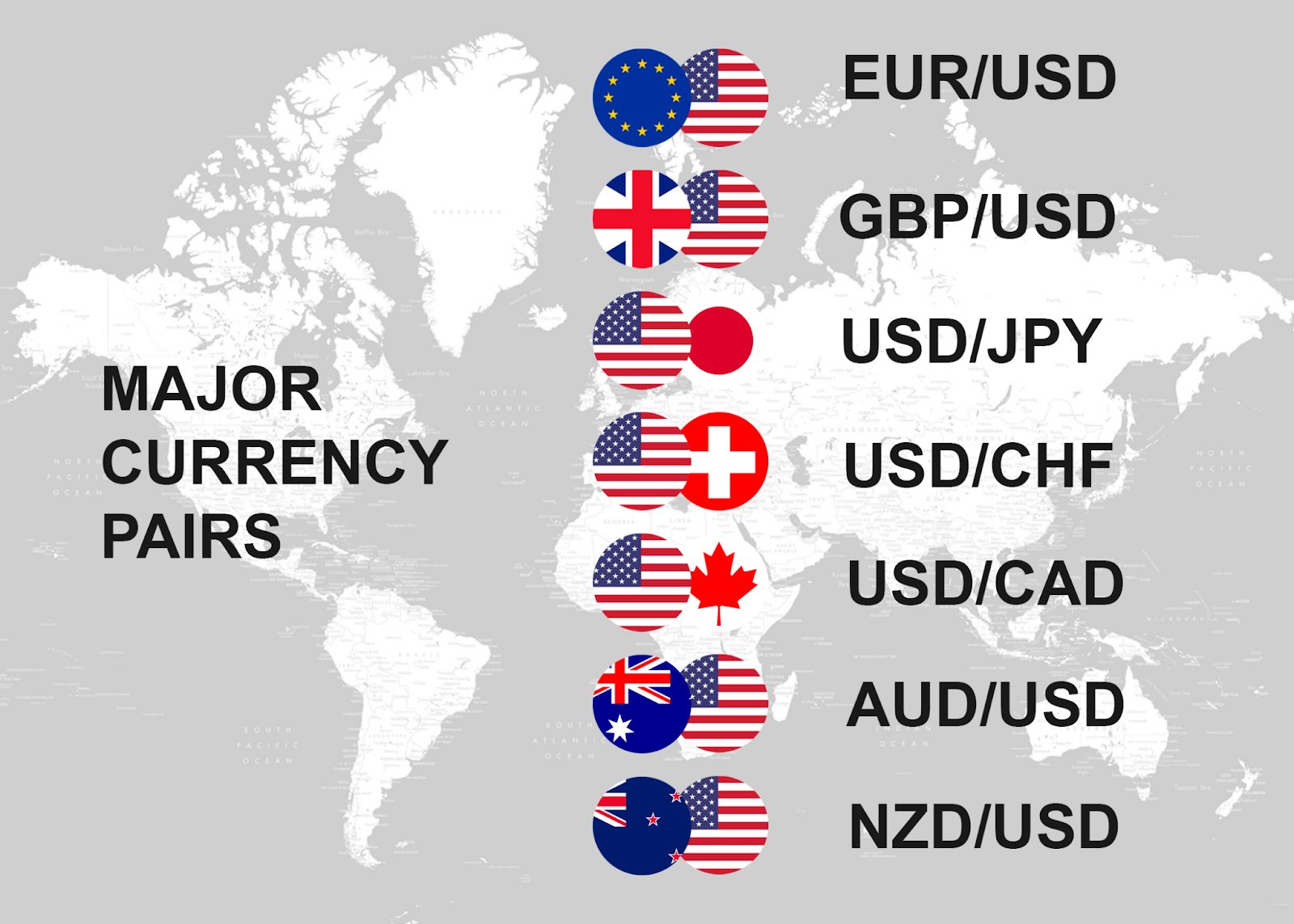
A currency pair is two currencies traded against each other, quoted as base/quote like EUR/USD showing euros per dollar. Major pairs involve USD: EUR/USD, USD/JPY, GBP/USD, USD/CHF, AUD/USD, USD/CAD, NZD/USD. Minors exclude USD, like EUR/GBP. Exotics pair majors with emerging currencies, such as USD/TRY.
Majors dominate 80% volume, offering tight spreads under 1 pip. For example, EUR/USD trades billions daily, ensuring smooth execution. Minors suit regional focus, like EUR/GBP for Europe watchers. Exotics have wider spreads, higher risk from low liquidity.
Beginners stick to majors. EUR/USD trends clearly on news. Track via charts: if above 1.1000, euro strengthens.
Pairs move inversely sometimes. USD strength weakens EUR/USD but boosts USD/JPY.
What Is Leverage and Margin in Forex?
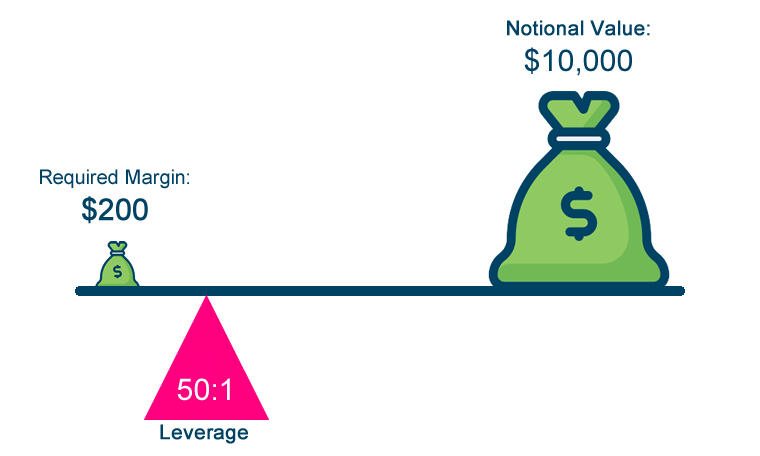
Leverage is borrowed capital from brokers to control larger positions, while margin is the required deposit to open them. Leverage like 1:100 means $1,000 controls $100,000. Margin for that is $1,000.
Beginners face risks: gains multiply, but losses too. A 1% drop wipes your margin. Regulators cap it at 1:30 in Europe for safety.
For instance, with $5,000 account and 1:50 leverage, trade 0.5 lots EUR/USD ($50,000). Margin used: $1,000. 20-pip win profits $100; loss costs the same.
Margin call happens if losses eat free margin below maintenance level, forcing closure. Always calculate: position size / leverage = margin.
Risks include over-leveraging, common newbie error. Start low, like 1:10.
How Do Beginners Get Started with Forex Trading?
Beginners get started with forex by selecting a regulated broker, downloading MT4 or MT5, opening a demo account, and practicing strategies over 1-3 months before live trading. To understand this better, follow these steps.
1. Research brokers.
2. Verify regulation.
3. Install platform.
4. Demo trade.
5. Go live small.
How to Choose a Reliable Forex Broker?
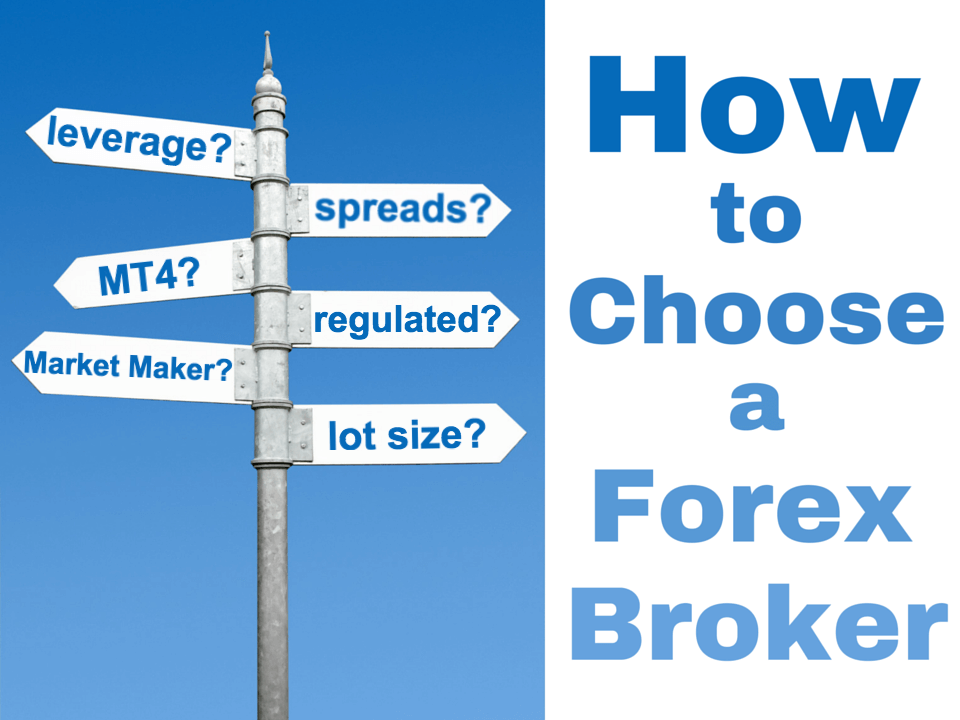
Choose a reliable forex broker based on regulation by bodies like FCA, ASIC, or CySEC, competitive spreads under 1 pip on majors, and free demo accounts. Regulation ensures fund protection up to $100,000 via segregation. FCA oversight means client money stays separate from broker funds.
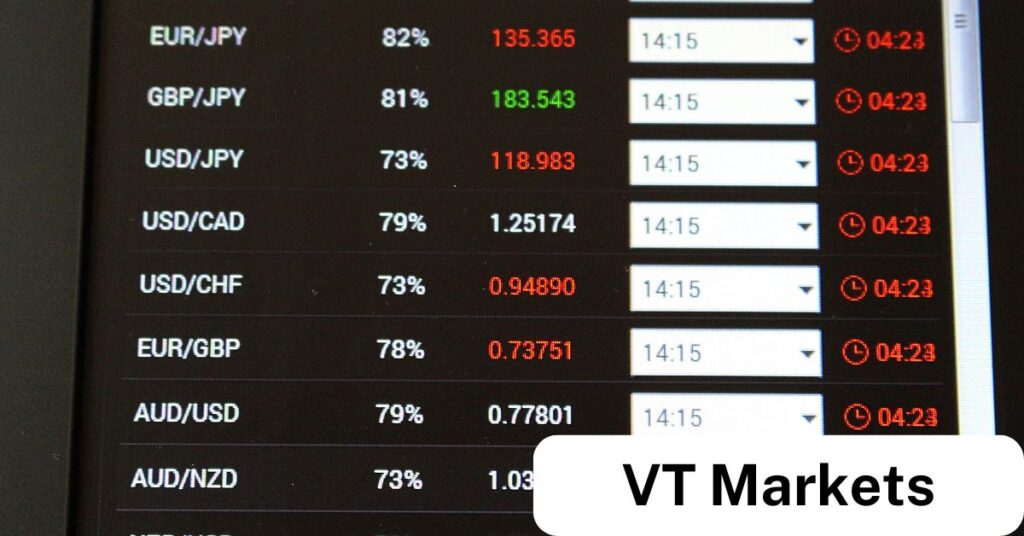
Spreads matter: fixed or variable, aim for ECN types with raw spreads plus small commission. Test on demo.
Other criteria: execution speed under 100ms, 50+ instruments, 24/7 support via chat. Platforms like MT4/MT5 offer automation via Expert Advisors from stores like Forex Expert Advisor Store.
Withdrawals process in 24 hours without fees. Read reviews on Trustpilot.
Examples: IC Markets for low spreads, Pepperstone for regulation.
What Is a Demo Account and Why Use It?
A demo account is a risk-free simulator with virtual money mimicking real trading conditions on platforms like MT4. Use it to test strategies, learn interfaces, and build confidence without losses.

It mirrors live markets: same prices, spreads, leverage. Practice placing orders, reading charts.
Why essential? 90% of beginners lose initially; demo cuts that by gaining experience. Spend 1,000 hours trading fake $10,000.
Switch to live when profitable consistently. Many brokers offer unlimited demos.
How to Manage Risk in Forex Trading?
Manage risk in forex by using stop-loss orders, position sizing to risk 1-2% per trade, and avoiding over-leverage. Here’s the breakdown of core rules.
What Is Technical Analysis for Forex Beginners?
Technical analysis for forex beginners uses price charts, patterns, and indicators to predict future moves based on past data. Candlesticks show open, high, low, close in colors: green up, red down. Trends form up (higher highs/lows) or down.
:max_bytes(150000):strip_icc()/currencypair.asp-final-dc06deceae3b4bc29a3a80915e45ce61.png)
Support is price floor buyers defend; resistance ceiling sellers hit. Breakouts signal entries.
Indicators: moving averages (50/200-day cross for trends), RSI (over 70 sell, under 30 buy), MACD for momentum.
For example, EUR/USD bouncing off 1.0800 support with bullish engulfing candle suggests long.
Practice on demo charts.
What Is Fundamental Analysis in Forex?
Fundamental analysis in forex examines economic data, interest rates, GDP, and news to gauge currency strength. Interest rates: higher attracts capital, strengthening currency. Fed hikes boost USD.
GDP growth signals health; beats lift pairs. News like NFP jobs report spikes volatility.
Central banks: ECB dovish weakens EUR. Geopolitics, inflation matter.
Combine with calendar: avoid trading pre-news.
What Is a Stop-Loss Order?
A stop-loss order automatically closes a trade at a set price to cap losses. Place it 20-50 pips from entry based on analysis.
For long EUR/USD at 1.1000, set stop at 1.0950. Trailing stops follow profits.
Importance: prevents emotion-driven holds. One bad trade without it ruins accounts.
Why Is Risk Management Crucial for Beginners?
Risk management is crucial for beginners to survive losses and grow accounts steadily, avoiding wipeouts from over-leveraging or no stops. Common pitfalls: revenge trading after loss, sizing too big.
1-2% rule: $10,000 account risks $100-200 max per trade. Position size = risk / (stop distance in pips * pip value).
Example: 50-pip stop, $100 risk: trade 0.2 lots ($10/pip).
Over-leveraging burns fast in volatility. Journals track adherence.
This preserves capital for learning. Consistent 1% wins compound to 20% monthly safely.
What Are Advanced Tools and Trends for Forex Beginners in 2025?
Advanced tools and trends for Forex beginners in 2025 feature AI-integrated Expert Advisors, backtesting platforms on MT4/MT5, low-spread regulated brokers, and regulatory shifts toward stronger investor safeguards.
Furthermore, these elements help newcomers automate trades, test strategies without risk, and select trustworthy platforms amid evolving rules.
What Are the Best Forex Brokers for Beginners in 2025?
Regulated brokers stand out for beginners in 2025 due to their low spreads, user-friendly interfaces, and compliance with strict oversight like FCA or ASIC standards, reducing risks from scams. Platforms such as eToro, IG, and Pepperstone lead the pack. eToro offers copy trading, where users mimic experienced traders, ideal for those learning market dynamics. IG provides spreads from 0.6 pips on major pairs like EUR/USD, paired with robust educational resources. Pepperstone excels with ECN pricing, averaging 0.0 pips on raw accounts, and fast execution under 30ms.

You’ll notice these brokers prioritize demo accounts with real-time data, essential for practice. Why choose regulated ones? They segregate client funds and offer negative balance protection, key after 2024’s regulatory push for transparency under ESMA updates.
To pick the right one, compare fees and tools first.
- Check minimum deposits: eToro starts at $50, IG at $250, suiting varied budgets.
- Review platform support: All integrate MT4/MT5, but eToro adds proprietary social features.
- Evaluate customer service: 24/5 live chat, with IG scoring highest in Trustpilot reviews at 4.2/5.
This setup builds confidence before live trading.
How Do Expert Advisors (EAs) Enhance Beginner Trading?
Expert Advisors, or EAs, are automated scripts on MetaTrader 4 (MT4) or MetaTrader 5 (MT5) platforms that execute trades based on predefined algorithms, freeing beginners from constant monitoring. In 2025, AI enhancements make EAs smarter, incorporating machine learning to adapt to market shifts like volatility spikes. A basic EA might scalp small pips on news events, while advanced ones use neural networks for pattern recognition.

Backtesting is a game-changer: simulate strategies on historical data over years, revealing win rates before risking capital. For instance, test a moving average crossover EA on MT5’s Strategy Tester, optimizing parameters for 60% profitability.
Beginners benefit by avoiding emotional decisions, a common pitfall. Load an EA from the Forex Expert Advisor Store, attach to a chart, and set risk limits like 1-2% per trade.
How do you start? Download MT5, install an EA, and backtest rigorously.
- Select EAs with verified Myfxbook stats for real performance.
- Customize lot sizes to match account balance, preventing overexposure.
- Monitor drawdowns during live runs, adjusting for 2025’s AI-driven trends.
This automation levels the playing field.
What Is the Difference Between Forex Trading and Stock Trading?
Forex trading involves currency pairs like EUR/USD, operating 24 hours a day from Monday to Friday, with exceptional liquidity from a $7.5 trillion daily volume, unlike stock trading confined to exchange hours such as NYSE’s 9:30 AM to 4 PM ET. Leverage in Forex reaches 1:30 under EU rules or 1:500 elsewhere, amplifying small moves, while stocks cap at 1:2 or 1:4 for retail traders.
Liquidity means tighter spreads in Forex, often 0.1 pips, versus stocks’ wider bid-ask gaps during off-hours. Stocks tie to company performance and earnings reports; Forex reacts to economic data like interest rates or GDP.
Why does this matter for beginners? Forex suits flexible schedules, but demands quick decisions due to leverage risks.
Key contrasts shape your choice.
- Trading hours: Forex’s global sessions allow anytime entry; stocks limit to market open.
- Leverage and margin: Forex offers higher ratios, boosting potential but raising wipeout risks.
- Instruments: Forex pairs number 50+ majors/minors; stocks span thousands with dividends.
Master these to align with your style.
How Does Forex Compare to Crypto Trading in 2025?
Forex trading features lower volatility, with major pairs fluctuating 0.5-1% daily, compared to crypto’s wild swings like Bitcoin’s 5-10% moves, making Forex safer for beginners building strategies. Regulation differs sharply: Forex brokers adhere to bodies like CFTC or CySEC, mandating fund protection, while crypto exchanges face lighter oversight, though 2025 sees U.S. SEC approvals for spot ETFs tightening rules.

Forex runs 24/5 with centralized liquidity from banks; crypto trades 24/7 on decentralized exchanges, exposing it to flash crashes. Leverage in Forex is standardized; crypto can hit 1:100 on platforms like Binance, heightening risks.
In 2025, AI tools bridge gaps, but Forex’s stability aids consistent learning. Crypto tempts with high rewards, yet 80% of retail traders lose money there versus Forex’s 70-75%.
Which suits you better? Assess risk tolerance.
- Volatility: Forex’s predictability aids backtesting; crypto demands constant vigilance.
- Regulation: Forex’s protections build trust; crypto improves but lags.
- Accessibility: Both use apps, but Forex integrates EAs seamlessly for automation.
Opt for Forex to gain experience steadily.

David Rodriguez
Senior Forex Analyst at ForexEAshop
David Rodriguez has over 8 years of experience in forex trading and market analysis. He specializes in institutional trading strategies and has helped thousands of traders improve their performance through his educational content and trading tools.