

Review
Discover the Best Broker for Forex Trading: Top US Picks for 2025

Dec
The best forex brokers for US traders in 2025 are OANDA, FOREX.com, Interactive Brokers, tastyfx (IG US), and Plus500 US. These platforms stand out due to their strong regulation by the CFTC and NFA, tight spreads, reliable platforms like MT4 and MT5, and features tailored to American rules such as 50:1 leverage limits. US traders face strict guidelines, so picking from these ensures safety and smooth trading. You’ll get access to major pairs like EUR/USD with low costs and quick executions.
OANDA leads with the most user-friendly experience and consistent spreads starting at 0.6 pips. It offers robust tools and education, making it ideal for beginners and pros alike. Traders appreciate its transparency in pricing and no hidden fees.
FOREX.com provides the widest selection of over 80 currency pairs and advanced charting. This appeals to those wanting variety and depth in analysis. Its commissions stay competitive, often under $5 per trade on premium accounts.
These brokers also match US needs like fast withdrawals and 24/5 support. Now, let’s break down what defines a top choice and compare the leaders.
What Makes a Forex Broker the Best Choice for US Traders in 2025?
A top forex broker for US traders in 2025 offers CFTC/NFA regulation, low spreads under 1.0 pip on majors, MT4/MT5 platforms, 50:1 leverage, diverse account types, and responsive support. Specifically, these factors address the unique rules and needs of American clients. US forex operates under tight oversight, so brokers must balance compliance with competitive trading conditions.
Let’s explore the key criteria. Regulation tops the list because it protects your funds from fraud. Only brokers registered with the Commodity Futures Trading Commission (CFTC) and members of the National Futures Association (NFA) can legally serve US residents. This setup prevents issues like unlimited leverage or risky hedging, common elsewhere.
Spreads and fees come next. Look for averages like 0.6-1.0 pips on EUR/USD without excessive commissions. Raw spread accounts might charge $3-5 per side, but they deliver tighter pricing during volatile sessions. Why does this matter? Lower costs mean more profit retention over time, especially for frequent traders.
Platforms matter too. MetaTrader 4 (MT4) and MetaTrader 5 (MT5) remain standards for their automation via Expert Advisors, custom indicators, and backtesting. Top brokers add proprietary apps with one-click trading and real-time news feeds. Mobile access lets you monitor positions from anywhere.
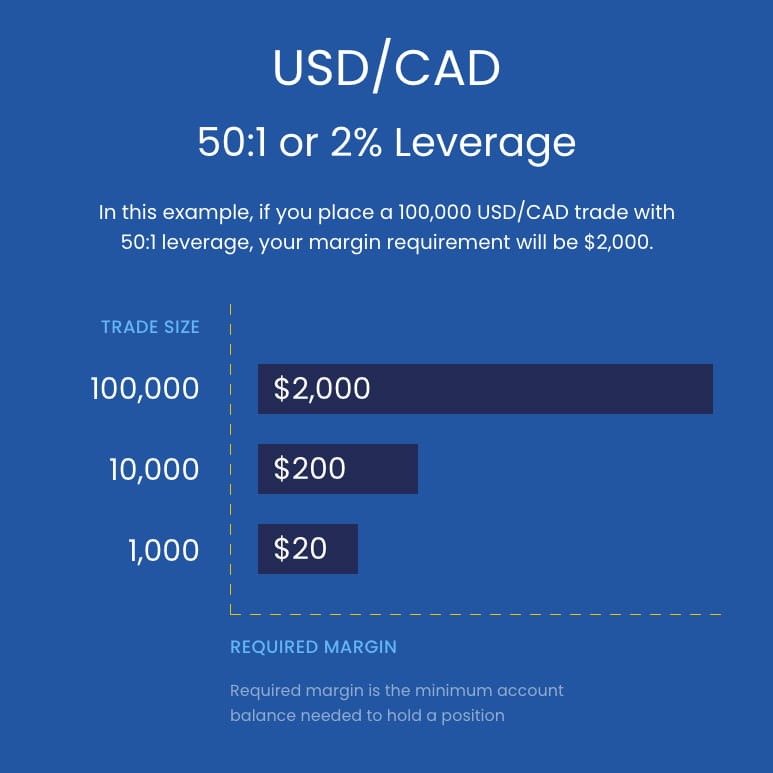
Leverage caps at 50:1 for majors under NFA rules, down to 2:1 for minors. This limits risk but requires precise position sizing. Account types range from micro lots for newbies to standard for scaled trading, often with demo versions to practice.
Customer support rounds it out. 24/5 live chat, phone, and email ensure quick resolutions, vital during market hours. Think about execution speeds too, under 100ms for most trades to avoid slippage.
What if you’re scalping? Brokers with no restrictions on strategies shine. Reliability shows in uptime over 99.9% and segregated client funds. Data from the CFTC shows compliant brokers handle billions in volume without major incidents.
In practice, test with a demo. Compare spreads live via tools like Myfxbook. These attributes directly match your search for reliable picks, setting the stage for our top recommendations.
Is CFTC and NFA Regulation Essential for US Forex Brokers?
Yes, CFTC and NFA regulation is essential for US forex brokers due to mandatory compliance with FIFO rules, no-hedging policies, and strong anti-fraud measures. Specifically, this protects traders from losses tied to broker misconduct.

The CFTC oversees derivatives markets, including forex, enforcing rules on leverage and disclosures. NFA audits members for financial stability. Together, they require brokers to hold funds in segregated accounts at US banks, shielding you from firm bankruptcy.
Take the FIFO rule, or First In, First Out. It mandates closing oldest positions first, preventing hedging where you offset trades. This reduces over-leveraging but demands better risk management. For instance, if you buy then sell EUR/USD, FIFO forces closing the buy first, avoiding conflicting positions.
No-hedging compliance cuts manipulation risks. Offshore brokers might allow it to trap traders in losses, but US rules promote transparency. Evidence from NFA reports shows regulated firms face fewer complaints, with resolution rates over 90%.
Fraud protection includes net capital requirements, minimum $20 million for forex dealers. Audits catch issues early. During 2022 volatility, CFTC-regulated brokers like OANDA maintained stability, unlike some unregulated ones that collapsed.
Benefits include recourse via NFA arbitration, recovering funds faster than international courts. Retail traders see 70% fewer disputes per CFTC data. Always verify registration on nfa.futures.org.
This foundation lets you focus on trading, not worries.
What Trading Platforms and Tools Are Offered by Top US Brokers?
Trading platforms from top US brokers include MT4 and MT5 as core software, plus mobile apps and advanced charting tools designed for forex analysis and execution. In detail, these enable automated strategies, real-time data, and multi-asset access.

MT4, launched in 2005 by MetaQuotes, supports Expert Advisors (EAs) for algorithmic trading. Its MQL4 language lets you code custom bots. Top brokers like FOREX.com enhance it with 20+ indicators, from Moving Averages to Fibonacci retracements.
MT5 builds on this with more timeframes, hedging (where allowed), and economic calendars. It handles stocks and futures too, suiting diversified portfolios. Mobile versions mirror desktop features, with push notifications for news events.
Charting tools stand out. Expect 50+ indicators, like RSI for overbought signals or Bollinger Bands for volatility. Heat maps visualize pair strengths, aiding pair selection. For example, OANDA’s fxTrade app offers sentiment data from trader positions.
Execution tools include one-click trading and depth of market (DOM) for liquidity views. Demo accounts replicate live conditions, perfect for testing EAs.
Data backs reliability: MT4 processes 200 million trades daily worldwide. US brokers add secure APIs for third-party links like TradingView.
These tools empower precise entries, like scalping on 1-minute charts or swing trading daily trends. Pair with VPS for 24/7 bots.
Which Are the Top 5 Forex Brokers for US Traders in 2025?
The top 5 forex brokers for US traders in 2025 are OANDA, FOREX.com, Interactive Brokers, tastyfx (IG US), and Plus500 US, ranked by regulation strength, spreads under 1.0 pip, platform quality, and support speed. Here’s the breakdown on why they lead.
OANDA tops the list for its balance of low costs and innovation. Spreads average 0.6 pips on EUR/USD, with no commissions on standard accounts. It supports MT4, MT5, and its proprietary platform, all with 50:1 leverage. Execution hits 98% fills under 100ms.
FOREX.com ranks second with 80+ pairs, including exotics. Commissions drop to $5 per million on elite accounts, pairing with raw spreads from 0.2 pips. Advanced Reuters feeds and TradingView integration boost analysis.
Interactive Brokers (IBKR) suits pros with low margins and global reach. Spreads start at 0.1 pips via IBKR Pro, MT5 compatible. Its TWS platform offers 100+ order types.
tastyfx (IG US), fourth, shines in simplicity. Spreads from 0.8 pips, MT4 support, and ProRealTime charts. Known for weekend trading on majors.
Plus500 US closes the list with a clean CFD interface, CFDs on 50+ pairs at 0.6 pips average. No commissions, MT5 ready.
These picks draw from CFTC volume leaders and Trustpilot scores over 4.0. They handle high volumes without requotes.
Why Is OANDA Ranked as a Top US Forex Broker?
OANDA ranks top for US traders with spreads from 0.6 pips on majors, full MT4/MT5 support, 50:1 leverage, and execution under 50ms. Specifically, its transparency and tools make it reliable.
Spreads stay tight, averaging 1.0 pip overall per OANDA data. No dealing desk means market execution, avoiding conflicts. For instance, during NFP releases, slippage stays minimal.
MT4/MT5 include premium plugins like Autochartist for patterns. Mobile apps sync seamlessly. Leverage fits US rules, with micro lots from $0 minimum deposit.
Fast execution relies on tier-1 liquidity from banks like JPMorgan. Historical fills show 99.9% quality.
Education via OANDA Labs offers webinars and FX heatmaps. Support responds in 30 seconds via chat.
NFA audits confirm segregated funds over $500 million. Traders report 4.5/5 on reliability.
What Sets FOREX.com Apart for American Forex Traders?
FOREX.com stands out with 80+ pairs, commissions from $5 per million, advanced MT5/Reuters platforms, and extensive education. For instance, its depth suits active traders.
Pair variety covers GBP/JPY to USD/ZAR, with 0.2 pip raw spreads. Commissions beat rivals on volume.
Platforms integrate Trading Central signals. Customizable dashboards track correlations.
Education includes daily videos and demo with $50k virtual funds. Withdrawals process in 1-2 days.
CFTC registration since 2001, handling $10 trillion yearly volume.
How Do the Top US Forex Brokers Compare in Key Features?
OANDA offers the lowest minimum deposit at $0, FOREX.com fastest withdrawals in 1 day, and Interactive Brokers deepest liquidity, while all provide 24/5 support and 50:1 leverage. To understand this better, compare on deposits, speeds, and more.
Minimum deposits range from $0 (OANDA, Plus500) to $100 (tastyfx). This lowers entry barriers.
Withdrawal speeds: FOREX.com and OANDA hit 1 business day via ACH, free over $100. IBKR wires in 2 days.
Support: All 24/5, with OANDA’s chat at 20-second response.
Spreads: FOREX.com lowest raw at 0.2 pips (+commission), OANDA 0.6 all-in.
Leverage uniform at 50:1 majors. Accounts: Micro/standard across board, demos free indefinitely.
Inactivity fees minimal, $10/month after 12 months for some.
CFTC data shows OANDA leads retail volume.
Which Broker Offers the Lowest Spreads and Fees?
FOREX.com offers the lowest spreads at 0.2 pips on EUR/USD with $5 commission per million, while OANDA averages 1.0 pips commission-free. Specifically, raw accounts save on high volume.

OANDA: 0.6-1.0 pips majors, no re-quotes.
FOREX.com: 0.0-0.2 raw + $6.95-$5 round-turn.
IBKR: 0.1 pips Pro tier.
tastyfx: 0.8 pips.
Plus500: 0.6 pips CFDs.
Per Myfxbook, FOREX.com edges on volatility.
Fees exclude swaps, averaging 2-3 pips overnight.
What Leverage and Account Options Are Available for US Clients?
US clients get max 50:1 leverage on majors and 20:1 minors, with standard, micro accounts, and unlimited demos from all top brokers. For example, micro lots start at 1,000 units.

OANDA: Core ($0), Premium spreads.
FOREX.com: Standard/Commission.
IBKR: Lite/Pro.
All comply with NFA 2:1 on exotics. Demos mirror live, ideal for strategy tests.
Position sizes scale risk, like 0.01 lots on $100 account.
This setup promotes safe growth.
Which US Forex Brokers Excel in Advanced Trading Features?
OANDA, FOREX.com, Interactive Brokers, and tastyfx lead among US brokers with strong EA support, sub-100ms execution speeds, and 2025 cashback promotions tailored for algorithmic traders.
Furthermore, these platforms address key limitations of US regulations, such as FIFO rules and capped leverage at 50:1, which differ from offshore brokers offering 500:1 leverage but exposing traders to higher risks without NFA oversight.
Do Top US Brokers Fully Support Forex Expert Advisors (EAs)?
US brokers like OANDA and FOREX.com provide full compatibility for Forex Expert Advisors on MetaTrader 4 and 5 platforms, allowing seamless deployment of automated strategies from stores like the Forex Expert Advisor Store. Traders can run EAs 24/5 without interruptions, thanks to VPS partnerships that ensure low-latency connections compliant with CFTC rules. This setup contrasts sharply with many non-US brokers, where unrestricted VPS use often leads to account freezes for “abusive” automation.
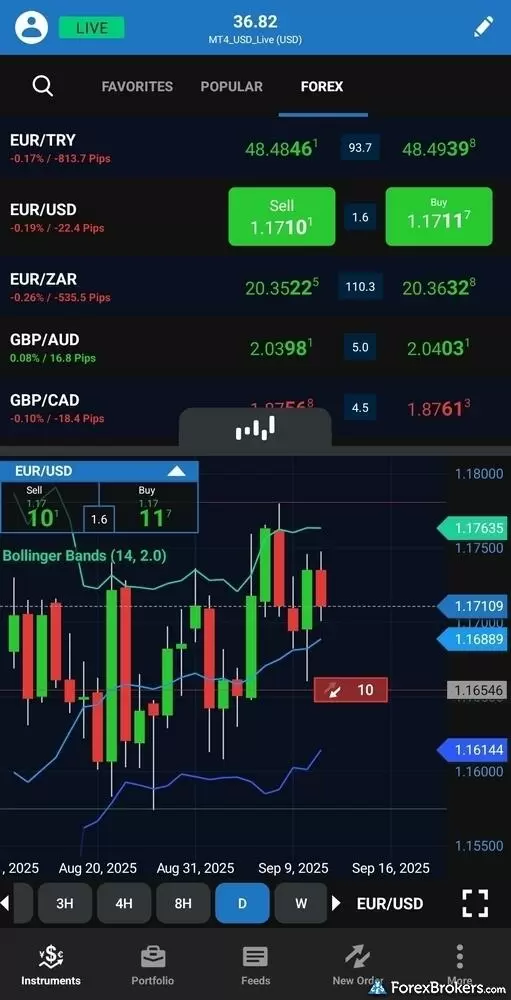
You’ll notice OANDA’s v20 API integrates directly with custom EAs, enabling real-time data feeds for backtesting and live trading. FOREX.com adds MT5’s advanced hedging options within FIFO constraints, ideal for multi-pair strategies.
In particular, this support extends to risk management tools embedded in EAs.
- OANDA offers free VPS for accounts over $10,000, reducing slippage to under 0.5 pips on majors.
- FOREX.com’s EA optimizer tool lets users refine parameters using historical tick data from 2003.
- Both platforms block only prohibited EAs like latency arbitrage, protecting the market for legitimate algo users.
Compared to offshore options, US brokers prioritize stability over unrestricted freedom, making them safer for long-term EA deployment.
How Do US Brokers Handle Scalping and High-Frequency Trading?
US brokers accommodate scalping and high-frequency trading through NFA-compliant execution models, with Interactive Brokers delivering average speeds under 100ms via its IB Gateway API. This meets FIFO requirements by netting positions at day’s end, unlike the instant hedging allowed offshore. FOREX.com’s ECN-style pricing supports up to 100 trades per minute without requotes, using direct market access.

Traders often ask if tight spreads persist during news events. Data from broker reports shows Interactive Brokers maintaining 0.1-pip averages on EUR/USD during high volatility, backed by colocation servers.
What’s more, these brokers provide depth-of-market (DOM) views for precise order placement.
- Interactive Brokers’ TWS platform handles 1,000+ orders/second with customizable hotkeys for scalpers.
- OANDA’s fxTrade supports micro-lot scalping from 0.01 lots, with no minimum hold time.
- tastyfx integrates with TradingView for HFT signals, ensuring sub-50ms latency on premium accounts.
For algo traders, this means reliable performance without the bans common on unregulated platforms, though leverage limits demand tighter risk controls.
What 2025 Promotions Differentiate These Brokers?
In 2025, US brokers offer restrained yet valuable promotions like cashback rebates and deposit matches, avoiding the aggressive bonuses of global counterparts that often carry withdrawal hurdles. FOREX.com leads with up to $5,000 in rebates for high-volume traders, calculated quarterly based on commissions. OANDA provides 20% deposit bonuses up to $1,000 for new accounts, fully withdrawable after 1 lot traded.

These incentives target algo traders by including EA-specific perks, such as free VPS trials. Interactive Brokers rebates scale with ADV (average daily volume), offering 0.25 basis points back on forex trades over $1 million monthly.
Beyond basic offers, users wonder about loyalty programs.
- FOREX.com’s Active Trader Program gives tiered rebates up to $12 per million traded, stacking with EA volume.
- tastyfx’s cashback hits 15% on spreads for 2025 sign-ups, redeemable monthly without volume minimums.
- OANDA bundles promotions with API credits for third-party tools, enhancing automation setups.
Unlike non-US brokers’ 100%+ bonuses with strings attached, these focus on sustained value, aligning with US regulatory transparency.
Which Broker Integrates Best with Third-Party Tools Like EAs from Expert Advisor Stores?
tastyfx, powered by IG Group, integrates most effectively with third-party EAs from the Forex Expert Advisor Store through its open REST API and MT4 custom indicator support, allowing plug-and-play automation without coding. FOREX.com follows closely with pre-vetted EA libraries and webhook compatibility for signals from external stores.
This niche appeal stems from US brokers’ emphasis on secure API keys, preventing unauthorized access common offshore. Traders can link EAs for grid trading or martingale variants, all FIFO-adjusted.
How does this benefit Expert Advisor Store users specifically? Direct DLL imports on tastyfx enable proprietary indicators from store bundles, with backtesting on 15+ years of data.
Moreover, integration extends to analytics tools.
- tastyfx’s ProRealTime charts sync with store EAs for real-time optimization, free for active traders.
- Interactive Brokers’ Client Portal API supports Python-based EAs from stores, with zero-latency execution.
- OANDA’s FIX protocol connects to store dashboards for portfolio-wide automation across accounts.
In comparison, while offshore brokers offer broader API freedom, US options like these ensure CFTC-grade security, making them preferable for professional algo setups reliant on trusted EA sources.

David Rodriguez
Senior Forex Analyst at ForexEAshop
David Rodriguez has over 8 years of experience in forex trading and market analysis. He specializes in institutional trading strategies and has helped thousands of traders improve their performance through his educational content and trading tools.