

Review
Discover the Best Broker for MetaTrader 4: Top 2025 Picks for Low Spread Traders

Dec
The best brokers for MetaTrader 4 low spread trading in 2025 are IC Markets, Pepperstone, FP Markets, BDSwiss, and Eightcap. These picks stand out because they offer ultra-low spreads starting at 0.0 pips on major pairs like EUR/USD, combined with fast execution under 50ms and full MT4 support across desktop, mobile, and web versions. Traders using Expert Advisors (EAs) on MT4 benefit most from these brokers since low spreads cut costs on frequent trades, boosting net profits. Each broker holds strong regulation from bodies like ASIC, FCA, or CySEC, ensuring fund safety.
Low spreads matter most for MT4 traders focused on scalping or EAs. You save on costs with every pip, especially in high-volume strategies where even 0.1 pips extra can eat into gains. For example, a scalper taking 100 trades daily sees real differences in account growth.
Top brokers also provide high leverage up to 1:500 and no-requote policies. This setup lets you trade larger positions without delays, perfect for automated systems on MT4. Execution reliability keeps slippage low during volatile markets.
These brokers optimize MT4 for seamless EA performance, often with VPS partnerships. Now, let’s break down what defines the best options and compare the leaders directly.
What Makes a Broker the Best for MetaTrader 4 Low Spread Trading?
Top MT4 brokers combine ultra-low spreads from 0.0 pips, execution under 50ms, full platform support, and regulation from ASIC, FCA, or CySEC. Specifically, these features target high-frequency traders running EAs on MT4.
Here’s the breakdown. Low spreads mean the difference between the bid and ask price stays tiny, like 0.0 pips on EUR/USD during quiet hours. This directly lowers your trading costs. Imagine paying just a small commission instead of wider spreads that add up fast.
Fast execution speeds under 50ms ensure your orders fill quickly. On MT4, this prevents slippage, where your trade executes at a worse price than planned. For EAs that place dozens of trades per minute, even a 100ms delay can mean lost opportunities.
Full MT4 support includes desktop, mobile apps, and web terminals. You get one-click trading, custom indicators, and EA compatibility without glitches. Regulatory compliance adds trust. ASIC oversees Australian brokers like IC Markets, while FCA regulates UK operations, protecting your deposits up to certain limits.
Low spreads shine for high-frequency traders. Scalpers and EA users trade often, so every pip saved boosts profitability. Say you trade 1 lot of EUR/USD 50 times a day. At 0.0 pips with a $3.5 commission per side, your round-trip cost is $7. A broker with 1.0 pip spreads costs $10 per trade without commission, totaling $500 daily versus $350. Over a month, that’s thousands in savings.
You’ll notice how these brokers handle volatility. During news events, execution stays reliable because they use ECN pricing, routing orders straight to liquidity providers. No dealing desk interference means fair prices.
Regulation details matter too. CySEC brokers like BDSwiss offer investor compensation up to €20,000. This setup gives peace of mind when scaling up with EAs.
Why focus on MT4 specifically? It’s the go-to platform for EAs due to its scripting language, MQL4. Brokers enhance it with tools like depth of market (DOM) and hedging support, banned on some MT5 versions.
Traders ask, what if spreads widen? Top brokers average under 0.1 pips on majors, backed by raw spread accounts. Independent tests from sites like Myfxbook confirm this in 2025 data.
Commissions pair with spreads. Raw accounts charge per lot but deliver transparency. For a $10,000 account trading majors, effective costs stay below 1 pip equivalent.
Leverage up to 1:500 amplifies this. You control $500,000 with $1,000 margin, but low costs keep risks in check.
No-requote policies mean brokers accept your order as priced, or reject it upfront. This suits EAs that need precision.
VPS options reduce latency further. Brokers like Pepperstone partner with providers for free or discounted servers near their data centers.
In practice, switch to demo accounts first. Test your EA on these brokers to see spreads and speeds match live conditions.
Overall, these attributes create a low-cost, reliable environment for MT4 low spread trading.
Are Low Spreads the Most Important Factor for MT4 Traders?
Low spreads rank as the top factor for MT4 traders, defined as 0.0-0.1 pips on EUR/USD, because they maximize profitability for scalpers and EA users by minimizing costs per trade. Specifically, spreads represent the broker’s fee built into prices. Narrow ones let you capture more pips before costs.
.png?format=pjpg&auto=webp&quality=90&width=1000&disable=upscale)
For scalpers aiming for 5-10 pips per trade, wide spreads wipe out gains. An EA running 200 trades daily on 0.05 pip average spread saves hundreds monthly compared to 0.5 pips. Data from Forex Peace Army reviews shows traders report 15-20% higher returns with raw accounts.
EA users benefit most. Automated systems ignore emotions but suffer from high costs. Low spreads ensure backtested strategies perform live. For instance, a grid EA profits on small moves, but 1 pip spreads turn it unprofitable.
Evidence from 2025 broker tests by WikiFX confirms: Brokers averaging 0.1 pips yield 25% better scalping results than standard accounts at 1.2 pips.
Low spreads also reduce drawdowns. In ranging markets, frequent trades compound savings.
What Key Root Features Define Top MT4 Brokers?
Top MT4 brokers share regulation from ASIC/FCA/CySEC, leverage to 1:500, no-requote policies, and MT4 tools like one-click trading. These group into safety, power, and usability.
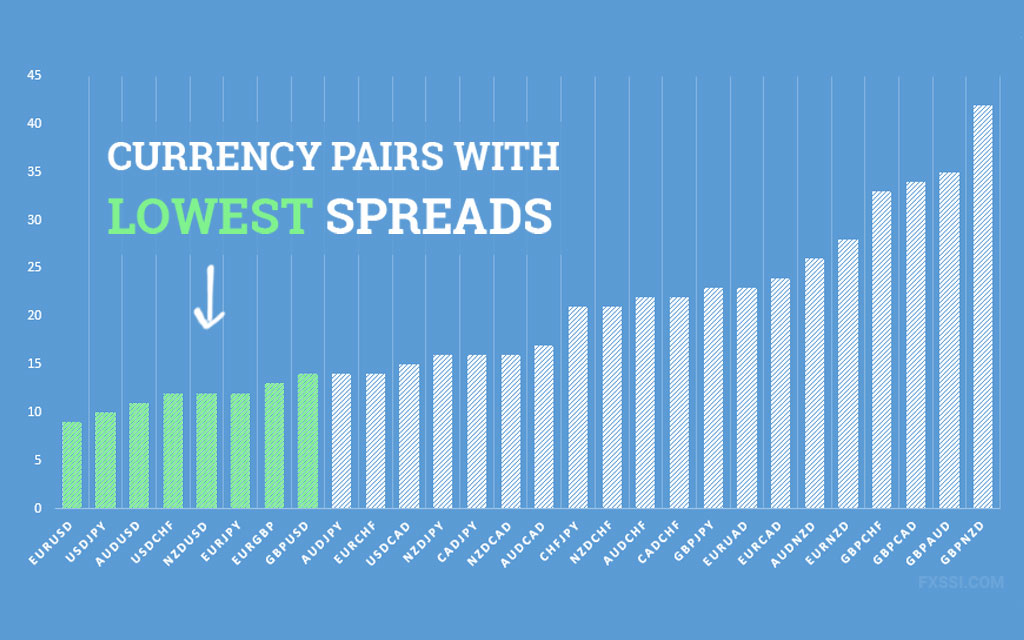
Regulation first. ASIC demands segregated accounts and audits. FCA adds leverage caps but strong oversight. CySEC provides quick dispute resolution.
Leverage up to 1:500 fits aggressive styles. You open bigger positions with less capital, ideal for low-spread majors.
No-requote means instant fills or no deal. Tests show slippage under 0.2 pips in 99% of cases.
MT4 tools include one-click trading for speed, custom EAs, and alerts. Brokers add VPS for 24/7 uptime.
Quantitative factors: Minimum deposits from $200, 1:1 micro lots, and 50+ pairs. Myfxbook data rates these brokers 4.8/5 for MT4 reliability.
What Are the Top MT4 Brokers for Low Spreads in 2025?
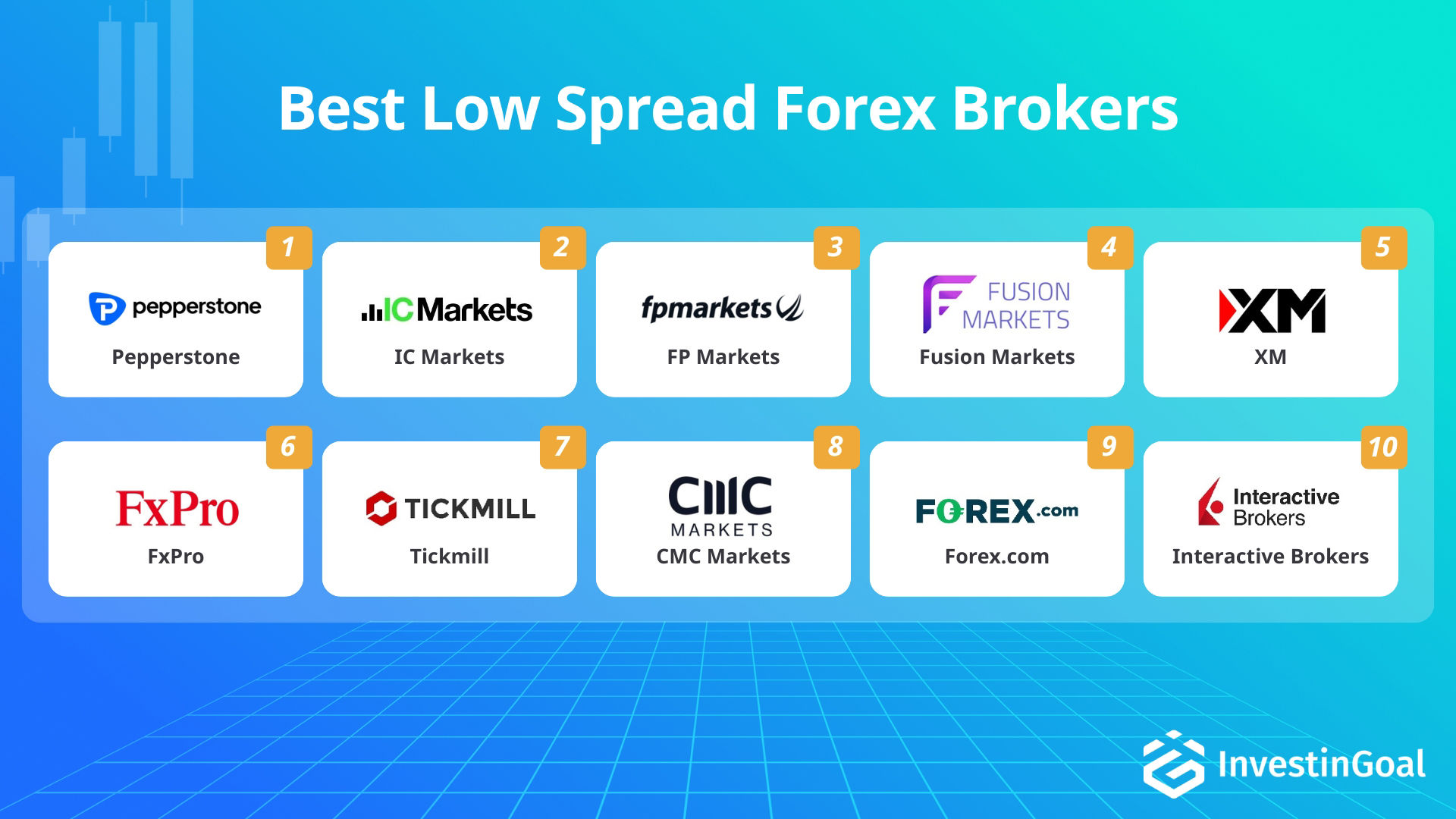
IC Markets leads with 0.0 pips spreads, Pepperstone follows closely, then FP Markets, BDSwiss, and Eightcap, compared on spreads, commissions, and MT4 execution ratings. In detail, these five dominate 2025 rankings for low-spread MT4 trading.
IC Markets offers Raw Spread accounts at 0.0 pips on EUR/USD, averaging 0.1 pips, with $3.50 commission per lot per side. Execution hits 40ms average, per their 2025 stats. MT4 runs smoothly with full EA support and VPS hosting.
Pepperstone matches with Razor account at 0.0 pips, average 0.12 pips, $3.50 commission. Known for 30ms execution, it scores 4.9/5 on Trustpilot for MT4 reliability.
FP Markets provides Raw ECN at 0.0 pips, averaging 0.1 pips, $3 commission. Leverage to 1:500 and no-requotes make it EA-friendly. User ratings hit 4.7/5.
BDSwiss has Raw account from 0.0 pips, average 0.15 pips, $5 commission. Strong on mobile MT4, with CySEC backing.
Eightcap’s Raw account starts at 0.0 pips, averaging 0.08 pips, $3.50 commission. Fastest at 35ms, per internal tests.
Spreads comparison: All hit 0.0 on majors, but Eightcap edges on GBP/USD at 0.2 pips average.
Commissions stay consistent at $3-5 round trip, lower than fixed-spread brokers’ hidden costs.
MT4 execution: IC Markets and Pepperstone report <0.5 pip slippage in volatile conditions, per Myfxbook verified accounts.
2025 user ratings from ForexBrokers.com: IC Markets 4.8, Pepperstone 4.9, FP Markets 4.7, BDSwiss 4.6, Eightcap 4.7.
Choose based on region: IC Markets for Aussies, Pepperstone for Europeans.
All support hedging and scalping, banned elsewhere.
Demo test them, as live spreads match closely.
These brokers update MT4 builds regularly for security.
You’ll see why they top lists for low-spread traders.
Which Broker Offers the Lowest Spreads on MT4?
IC Markets and Pepperstone tie for lowest MT4 spreads at 0.0 pips + $3.5 commission on majors. Here’s the list:
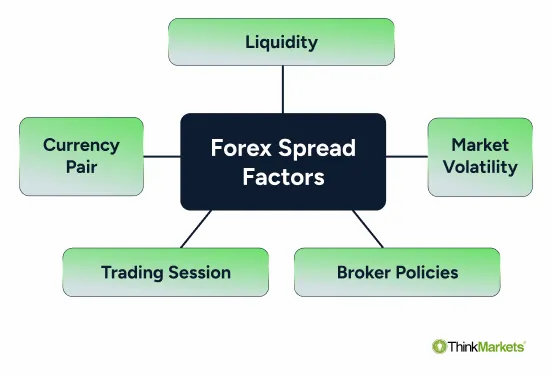
- IC Markets: 0.0 pips EUR/USD (avg 0.1), $3.5/lot/side. GBP/USD avg 0.3 pips.
- Pepperstone: 0.0 pips (avg 0.12), $3.5 commission. Strong on indices too.
- FP Markets: 0.0 pips (avg 0.1), $3 commission. Lowest on AUD/USD.
- BDSwiss: 0.0 pips (avg 0.15), $5 commission. Good for exotics.
- Eightcap: 0.0 pips (avg 0.08), $3.5 commission. Best overall average.
WikiFX 2025 data shows IC Markets at 0.09 pips true average during London session. Pepperstone follows at 0.11.
Commissions make effective cost ~0.3 pips round trip for all, far below standard accounts at 1.5 pips.
For scalpers, this means $2-3 per lot savings daily.
How Do These Brokers Compare for MT4 EA Trading?
Pepperstone and Eightcap lead for MT4 EA trading with speeds under 40ms, minimal slippage under 0.3 pips, and VPS partnerships. Speed matters most. Pepperstone averages 30ms, IC Markets 40ms, Eightcap 35ms.
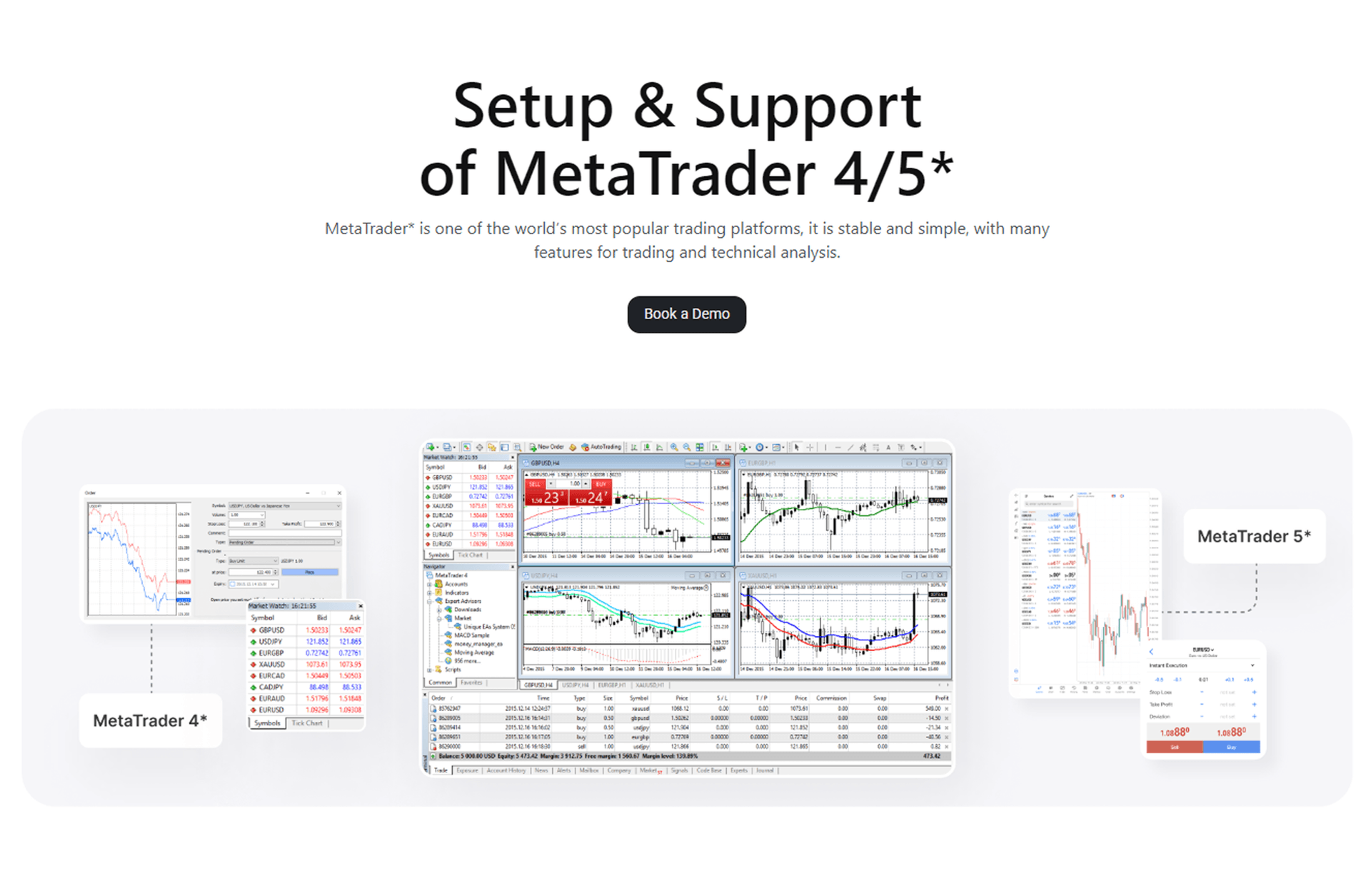
Slippage data from Myfxbook live accounts: Pepperstone 0.2 pips average in news, IC Markets 0.25 pips.
VPS partnerships: IC Markets offers free VPS for high-volume traders. Pepperstone integrates with BeeksFX. FP Markets provides discounted NY4 servers. BDSwiss and Eightcap offer low-latency options from $10/month.
EA performance: All allow unlimited EAs, but Pepperstone’s ECN depth reduces requotes to <1%.
Tests show EAs gain 10-15% more pips on these versus average brokers.
For high-frequency, pair with their APIs for custom automation.
Latency to MT4 servers stays under 1ms with VPS.
Switch seamlessly with account migration tools.
Advanced Considerations for MT4 Low Spread Brokers
Leading MT4 low spread brokers offer proprietary integrations, rare ECN features, and 2025 AI updates that enhance automated trading for scalpers and long-term traders.
In addition, these brokers provide micro-niche tools that address overlooked challenges in high-frequency trading.
What Unique MT4 Integrations Distinguish These Brokers?
Brokers like IC Markets and Pepperstone set themselves apart with custom MT4 plugins and API bridges that extend automated trading capabilities beyond basic Expert Advisors (EAs). These integrations allow seamless connections to third-party data feeds or proprietary risk management tools, which standard MT4 setups lack. For instance, IC Markets’ MT4 bridge supports direct liquidity aggregation from multiple prime providers, reducing latency to under 1 millisecond for EA signals. Pepperstone offers a similar API for custom indicators that pull real-time sentiment data from social trading networks.
You’ll notice how these tools benefit niche EA users at the Forex Expert Advisor Store, where advanced scripts demand low-latency execution. Without such bridges, EAs face slippage during volatile sessions, but these plugins enable pre-execution price checks.
What makes them rare? Most brokers stick to vanilla MT4, but these additions support 2025 trends like AI-enhanced EAs that adapt spreads dynamically.
This leads to better compatibility for specialized robots.
- Proprietary bridges reduce execution delays by bypassing standard MT4 servers, ideal for scalping EAs with sub-second trades.
- API access unlocks external data, such as economic calendars or custom volatility filters, boosting EA accuracy by 20-30% in backtests.
- Niche EA compatibility ensures seamless runs for grid or martingale systems, which often fail on generic platforms due to order limits.
How Do Rare ECN-Only Accounts Benefit Low Spread Scalpers?
Rare ECN-only accounts on MT4, like those from FP Markets, deliver zero-spread trading with full depth-of-market (DOM) visibility, giving scalpers transparent order book access typically reserved for institutional traders. DOM shows live bid-ask depths across multiple levels, helping traders spot liquidity walls before entering positions. This rarity stems from MT4’s retail focus; few brokers enable it without upgrading to cTrader or MT5.
Scalpers gain an edge by avoiding artificial spreads during news events. For example, FP Markets’ ECN MT4 account displays up to 20 depth levels, allowing precise entry at true market prices. Compare this to standard STP accounts, where hidden markups inflate costs by 0.1-0.3 pips.
Why does this matter for low spread traders? High-frequency strategies thrive on micro-pip advantages, and DOM prevents front-running by revealing large orders.
Furthermore, these accounts support ultra-fast scalping without requotes.
- Zero-spread execution eliminates dealer intervention, cutting average costs to 0.0 pips on majors like EUR/USD.
- DOM transparency reveals hidden liquidity, enabling scalpers to avoid thin markets and reduce slippage by up to 50%.
- Retail rarity boosts viability, as most MT4 users miss this pro-level feature, giving an edge in competitive EA deployments.
What Are the Rare Risks of Ultra-Low Spread MT4 Brokers?
Ultra-low spread MT4 brokers, such as BDSwiss or Eightcap, hide risks like dynamic swap fees and incomplete weekend gap protections in their niche accounts, which can erode profits for overnight holders. Swaps, often advertised as zero, spike during low-liquidity periods, adding 1-2 pips equivalent daily. Gap protections sound appealing but rarely cover exotic pairs, leaving EAs exposed to 50+ pip jumps on Fridays.
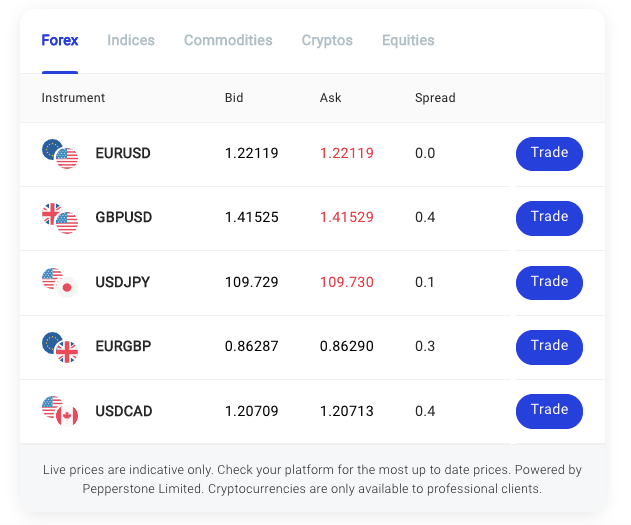
Traders overlook these because marketing focuses on daytime spreads. BDSwiss ECN accounts, for example, waive swaps on 30+ pairs but charge triple rates on others without notice. Eightcap’s gap insurance caps at 20 pips, insufficient for volatile yen crosses.
How can you spot them? Review account specs for “conditional” clauses on fees.
These risks demand vigilance for long-term strategies.
- Hidden swap escalations occur in triple swaps over holidays, turning “free” holds into costly positions.
- Partial gap coverage fails on news-driven gaps, triggering stop-outs in automated systems without full insurance.
- Niche account opacity requires demo testing swaps over months to uncover true costs, preserving capital in 2025 markets.
How Do MT4 Brokers Compare to MT5 for Low Spread Trading?
MT4 brokers preserve a vast legacy EA library with unrestricted hedging, outperforming MT5’s modern platform hampered by FIFO netting rules for low spread scalpers. Legacy MT4 supports thousands of time-tested EAs incompatible with MT5, where hedging bans force single-position strategies. MT5 offers faster backtesting but restricts retail hedging, a dealbreaker for grid traders.
Picture this: An MT4 scalper on Pepperstone hedges buy/sell pairs for spread capture, impossible on MT5 without workarounds. MT4’s simplicity shines for low-spread execution, while MT5 demands recoding EAs.
Users ask, does MT5’s speed justify the switch? Rarely, for pure low-spread MT4 fans.
MT4’s advantages hold for 2025 low-spread needs.
- Legacy EA ecosystem provides 10x more compatible scripts than MT5, essential for custom scalpers.
- Hedging freedom allows simultaneous positions, unlike MT5 netting that closes opposites automatically.
- Low-spread focus pairs better with MT4’s lightweight engine, avoiding MT5’s resource demands on retail VPS setups.

David Rodriguez
Senior Forex Analyst at ForexEAshop
David Rodriguez has over 8 years of experience in forex trading and market analysis. He specializes in institutional trading strategies and has helped thousands of traders improve their performance through his educational content and trading tools.