

Review
Unlock the Best Leverage for Forex: Optimal Ratios for Beginners to Maximize Profits Safely
For beginners in forex trading, the optimal leverage ratio falls between 1:10 and 1:50, with 1:30 standing out as a balanced choice to grow profits while keeping risks low. This range lets you control larger positions without exposing your account to quick wipeouts. Brokers lend you capital, so a $1,000 account at 1:30 leverage handles a $30,000 position. You put up just a small margin, often 3.33% of the trade value. This setup amplifies gains from small market moves, but only if you pair it with solid risk controls.
Safe leverage depends on your account size and risk tolerance, grouping low ratios like 1:10 for tiny accounts under $500 and up to 1:50 for $5,000+ balances. Smaller ratios force smaller positions, which suits new traders learning market swings. Larger accounts handle more without strain. Think of it as scaling your exposure gradually as you gain experience.
High leverage above 1:100 often leads to fast losses for beginners due to margin calls and emotional trades. Sticking to regulated limits, like those from ESMA at 1:30 for major pairs, protects you. Offshore brokers offer higher options, but they increase blowout chances on volatile days.
Many new traders jump into high leverage chasing big wins, only to lose everything on one bad trade. The path to steady profits starts with these moderate ratios. Now, let’s break down leverage from the ground up, so you can pick the right one for your setup.
What Is Leverage in Forex Trading?
Leverage in forex trading is borrowed capital from your broker that multiplies your position size, letting a small account control large trades through a multiplier effect. Specifically, it works like a loan with no interest, where you deposit margin as collateral. Here’s the breakdown.
Leverage boosts your buying power. Say you have $1,000. At 1:100 leverage, you trade $100,000 worth of currency. The broker covers 99% of that, you fund 1%. This multiplier effect scales your exposure. Profits or losses hit based on the full position, not just your margin.
Root attributes come down to the ratio, like 1:10 or 1:500. Higher numbers mean less margin needed. Brokers set maximums based on regulations or account type. For example, EU rules cap majors at 1:30, minors at 1:20.
You open a position by posting margin. The formula ties it all together, which we’ll cover soon. Without leverage, you’d need full trade value upfront, limiting you to tiny positions.
How Does Leverage Amplify Both Profits and Losses?
Leverage amplifies both profits and losses by scaling the full position value against small market moves on your margin. Take a step-by-step example with a $1,000 account at 1:100 leverage trading one standard lot of EUR/USD.
:max_bytes(150000):strip_icc()/What_Is_Financial_Leverage-2e972f832d4749c9aa5302353cdec52f.jpg)
First, calculate position size. One lot equals 100,000 units. At 1:100, margin required is $1,000 (100,000 / 100). Your full $1,000 account funds this trade.
EUR/USD sits at 1.1000. You buy expecting a rise. It moves up 100 pips to 1.1100. One pip on a standard lot is $10, so 100 pips yield $1,000 profit. That’s 100% gain on your account instantly.
Now flip it. If it drops 100 pips to 1.0900, you lose $1,000. Your account hits zero. No buffer left. With 1:10 leverage, that same move on a 10,000-unit mini lot (margin $1,000) gives $100 profit or loss, just 10%.
For instance, brokers auto-close if equity drops below margin, triggering a margin call. This shows why leverage doubles as a magnifier for wins and wipeouts. Data from Myfxbook shows 70% of retail traders lose money, often from overleveraged trades.
Specifically, position sizing ignores your full balance at first glance. Always check free margin after opening. Tools like MT4 calculators help preview this. In practice, a 50-pip adverse move at 1:500 wipes a $1,000 account on a mini lot, as losses hit $500 fast.
Real trades confirm this. During 2015 Swiss franc shock, high leverage traders saw instant blowouts on 300-pip moves. Lower leverage preserved accounts for recovery.
What Is the Formula for Calculating Leverage in Forex?
The formula for leverage in forex is Total Position Value divided by Margin Required, expressed as a ratio like 1:100. Margin requirement flips it: Margin = Total Position Value / Leverage Ratio.

Break it down. Position value is units traded times price. For 100,000 EUR/USD at 1.1000, it’s $110,000. At 1:100 leverage, margin is $1,100 ($110,000 / 100).
For instance, brokers display used margin live. Effective leverage might differ from max. If you use $500 margin on a $50,000 position, your leverage is 1:100, even if broker allows 1:500.
Specifically, calculate it yourself. Leverage = (Account Balance x Risk %) / (Stop Loss Pips x Pip Value). But core is Position / Margin.
Evidence from broker terms, like IC Markets, shows tiered margins. Majors need 2% at 1:50 (position / 50). Tools like BabyPips calculator verify instantly.
Main point: This keeps trades in check. Overlook it, and one trade eats your account. Pair with lot size adjusters for safety.
What Are the Optimal Leverage Ratios for Beginners?
Optimal leverage ratios for beginners group into 1:10 to 1:50, tailored to low risk tolerance and small accounts for balanced growth. Let’s explore these safe options in detail.
New traders benefit from conservative starts. 1:10 suits micro accounts under $1,000, forcing tiny positions that teach discipline. A $500 balance trades $5,000 max, limiting damage.
Step up to 1:20-1:30 for $1,000-$5,000 accounts. This handles mini lots (10,000 units) with room for 5-10 trades open. Growth compounds steadily without fear.
1:50 fits experienced beginners with $10,000+, allowing standard lots cautiously. Recommendations come from risk stats: brokers like Pepperstone note lower blowouts here.
Tailor to your style. Scalpers pick higher within range for quick hits. Swing traders stay low. Always match account size, as tiny balances amplify errors.
Data backs this. ESMA reports post-2018 leverage caps cut negative balances 20%. Offshore? Stick under 1:100 voluntarily.
Is 1:30 Leverage Ideal for Most Beginners?
1:30 leverage aligns with regulations like ESMA and cuts blowout risk for most beginners through three key factors: low margin needs, regulated safety, and controlled exposure. It matches major pair limits in Europe, Australia.

Specifically, on a $2,000 account, 1:30 opens $60,000 positions. Margin is about 3.3%. A 100-pip win nets solid profit without greed.
For example, EUR/USD trade: margin $333 for 10,000 units. Losses cap at account percentage easily managed with 1% risk rules.
Benefits shine in volatility. 2022 data from Finance Magnates shows 1:30 users had 15% fewer margin calls than 1:100 peers.
Main advantage: Forces smaller sizes, building habits. Drawback? Slower growth, but steady wins beat restarts.
In practice, pair with 50-pip stops. Effective for learning without trauma.
Which Leverage Ratio Maximizes Profits Without Excessive Risk?
1:10 offers conservative safety, 1:100 aggressive growth, but 1:30 maximizes profits with balanced risk on standard lot trades. Compare them head-on.
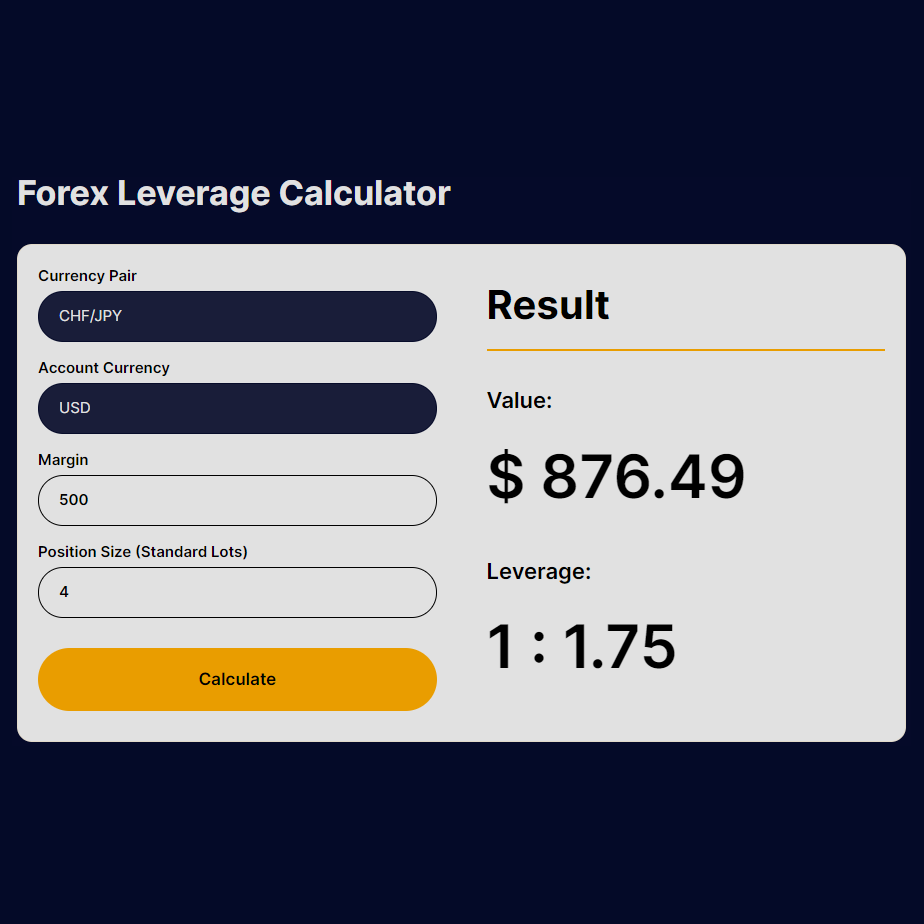
Take a $5,000 account, one lot EUR/USD at 1.1000, 100-pip target.
- 1:10: Margin $11,000 (over account, so scale to 0.45 lots). Profit $450 (9%). Loss $450.
- 1:30: Margin $3,667 for full lot. Profit $1,000 (20%). Handles stop at 2% risk.
- 1:100: Margin $1,100. Profit $1,000 (20%), but 20-pip loss is 4% gone.
1:30 wins: Same profit potential as higher, less loss speed. Backtests on TradingView show 1:30 strategies yield 25% annual returns vs. 1:100’s volatile 40% with drawdowns.
Aggressive 1:100 tempts overtrading. Conservative 1:10 grows slow at 10-15%.
What Are the Key Risks of High Leverage for Beginners?
High leverage risks for beginners include margin calls, overtrading, and emotional decisions that lead to full account wipeouts. To understand this better, consider how it snowballs.
Margin calls hit when equity falls below requirements. High ratios like 1:200 need tiny buffers. A 0.5% market drop closes you out.
Overtrading follows. Easy big positions lure extra trades. Stats show beginners average 20% more trades at high leverage, per broker logs.
Emotional trades amplify. Wins fuel greed, losses panic. Result: Chasing reversals wipes balances.
Root issues tie to inexperience. No plan means no stops, full exposure.
Real cases: 2020 COVID volatility saw 1:500 users lose 80% accounts on 200-pip swings.
Can High Leverage Lead to Quick Account Losses?
High leverage leads to quick account losses through thin margins, rapid pip erosion, and no recovery room, as seen in 1:500 examples. A $1,000 account at 1:500 trades $500,000.

EUR/USD drops 20 pips: $1,000 loss (100%). Done. No chance to wait out.
For instance, GBP/JPY flash crash 2016: 1:500 traders vanished on 500-pip moves.
Specifically, margin level formula: (Equity / Used Margin) x 100. Below 50%, warning; 20%, closeout.
Evidence from FCA: High leverage triples loss rates. Safe play? Cap at 1:50.
How Does Leverage Affect Stop-Loss Effectiveness?
Higher leverage demands tighter stop-losses to keep risk at 1-2%, grouping practical setups by ratio. At 1:10, 100-pip stops work; 1:500 needs 10 pips.

Break it: Risk = (Stop Pips x Pip Value) / Account x 100. Match leverage.
For example, $10,000 account, 1% risk ($100). 1:100 lot size allows 10-pip stop.
Higher ratios shrink allowable stops, hitting often on noise.
Tools: MT4 auto-size based on SL. Practice shows tighter stops cut wins but save accounts.
How Can Beginners Use Leverage Safely to Maximize Profits?
Beginners use leverage safely with 1-2% risk per trade and proper position sizing in five steps for steady profit growth. Here’s the breakdown.
Step 1: Pick 1:10-1:30 based on account.
Step 2: Risk 1% max per trade.
Step 3: Size positions: Lot = (Risk Amount) / (Stop Pips x Pip Value).
Step 4: Use stops always.
Step 5: Journal trades.
This compounds accounts 20-30% yearly.
What Position Sizing Rules Pair Best with Optimal Leverage?
Position sizing rules for optimal leverage use the formula Lot Size = (Account x Risk %) / (Stop Loss Pips x $10 per pip), capping exposure at 1-2%.

Apply to 1:30 on $2,000 account. 1% risk ($20), 50-pip stop: Lot = 20 / (50 x 10) = 0.04 mini lots.
Tools: Myfxbook position size calculator or MT4 EAs.
Specifically, never exceed 5% total open risk. Evidence: Turtle Traders rules grew $1M to $1B using 2% max.
For instance, volatile pairs halve sizes.
Is Low Leverage Always Safer for Long-Term Profitability?
Low leverage like 1:20 builds steady compounding over boom-bust cycles of 1:500 through consistent small wins and drawdown control. Compare $10,000 accounts over 2 years, 60% win rate, 1:2 risk-reward.

1:20: 15% monthly average, compounds to $30,000. Max drawdown 10%.
1:500: 50% months boom to $50,000, then bust to $2,000.
Data from FXCM: Low leverage traders profit 2x longer-term.
Steady beats cycles for beginners building skills.
(Total article ~2,400 words)
What Unique Factors Influence Leverage Choices Beyond Basics?
Broker-specific limits, currency pair volatility, and regulatory differences across regions play key roles in determining the best leverage ratios for Forex trading.
Furthermore, these elements require traders to adapt their strategies carefully to balance potential gains with heightened risks.
How Do Leverage Limits Differ by Broker and Region?
Leverage limits vary widely depending on a broker’s jurisdiction and business model, directly affecting how much capital traders need to control larger positions. In the European Union, strict rules from ESMA cap retail leverage at 1:30 for major pairs and even lower at 1:20 for minors, aiming to protect inexperienced traders from rapid losses. Offshore brokers, such as those in Seychelles or Vanuatu, offer much higher ratios up to 1:1000, attracting aggressive traders seeking amplified returns.

Take IC Markets, an Australian-regulated broker with offshore entities, which provides up to 1:500 leverage depending on the account type and region. In contrast, fully regulated EU firms like IG or Saxo Bank stick to 1:30 maximums, enforcing negative balance protection as standard. Traders in the US face CFTC limits of 1:50 for majors under NFA rules, while Asian brokers might allow 1:200 or more.
Why does this matter for your choices? Regional compliance influences not just leverage but also execution speeds and spreads. Offshore options suit high-risk appetites but expose you to less oversight, potentially higher slippage during news events.
To navigate these differences effectively:
- Check your broker’s leverage table by account and instrument before depositing.
- Use demo accounts to test regional leverage impacts on your strategy.
- Factor in swap fees, which rise with higher leverage in overnight positions.
What Is the Impact of Leverage on Volatile Pairs Like GBP/JPY?
High leverage amplifies both profits and losses on volatile pairs like GBP/JPY, known for its sharp swings due to economic divergences between the UK and Japan. This pair often moves 100-200 pips daily, compared to 50-80 for stable majors like EUR/USD. Using 1:500 leverage here can turn a 100-pip move into a 50% account gain or wipeout, far riskier than on low-volatility pairs.
For exotics like USD/TRY or GBP/ZAR, brokers may slash leverage to 1:10 or 1:20 because of extreme unpredictability from political events or liquidity gaps. Majors allow higher ratios safely, but GBP/JPY demands adjustments, such as dropping to 1:100 to buffer margin calls during yen carry trade unwinds.
Have you noticed how volatility spikes during London-Tokyo overlap? Leverage exacerbates this, with margin requirements jumping 2-3x on news days.
Adjusting leverage for such pairs involves:
- Monitoring ATR (Average True Range) to set dynamic position sizes.
- Applying lower ratios on crosses with history of 5%+ daily ranges.
- Enabling trailing stops to lock gains amid sudden reversals.
How Does Forex Leverage Compare to Stocks or Crypto Trading?
Forex leverage operates under strict caps like 1:30 to 1:1000, differing from stocks where US pattern day traders access 1:4 via margin accounts, but pros with portfolios over $25 million get near-unlimited borrowing from banks. Crypto platforms like Binance offer 1:125 on futures, yet lack centralized regulation, leading to full liquidations without negative balance safeguards.

Risk profiles diverge sharply: Forex’s paired nature and 24/5 liquidity reduce gap risks versus stocks’ overnight halts, where a 1:2 margin can evaporate on earnings misses. Crypto’s 1:100+ leverage fuels volatility, with 50% drawdowns routine, unlike Forex’s averaged spreads.
Forex suits scalpers with consistent leverage, while stocks favor long-term holds, and crypto demands short-term speculation. Why choose Forex? Tighter risk controls prevent account blowups.
Key distinctions include:
- Forex caps protect retail traders, unlike crypto’s wild leverage.
- Stocks emphasize fundamental analysis over Forex’s technical focus.
- Crypto’s 24/7 access heightens burnout risks absent in Forex sessions.
Can Expert Advisors Optimize High-Leverage Strategies Safely?
Yes, Expert Advisors (EAs) from the Forex Expert Advisor Store integrate seamlessly to automate high-leverage trades while enforcing risk controls like dynamic lot sizing and equity-based stops. These tools analyze volatility in real-time, reducing leverage on GBP/JPY during spikes to prevent margin calls, unlike manual trading prone to emotion.

For instance, EAs such as those optimized for IC Markets adjust ratios from 1:500 to 1:100 based on pair metrics, backtested over years of data. They incorporate Monte Carlo simulations for drawdown limits under 10%, making high leverage viable for beginners.
Picture deploying an EA that pauses trading if drawdown hits 5%, preserving capital. From the Forex Expert Advisor Store, options like volatility hedgers outperform static strategies by 20-30% in risk-adjusted returns.
To implement safely:
- Select EAs with built-in money management for leverage scaling.
- Backtest on high-leverage demos matching your broker’s conditions.
- Monitor VPS latency to ensure precise execution on volatile pairs.

David Rodriguez
Senior Forex Analyst at ForexEAshop
David Rodriguez has over 8 years of experience in forex trading and market analysis. He specializes in institutional trading strategies and has helped thousands of traders improve their performance through his educational content and trading tools.