

Review
Unlock the Best Leverage for Small Accounts: Safe Growth Strategies for Beginners

Dec
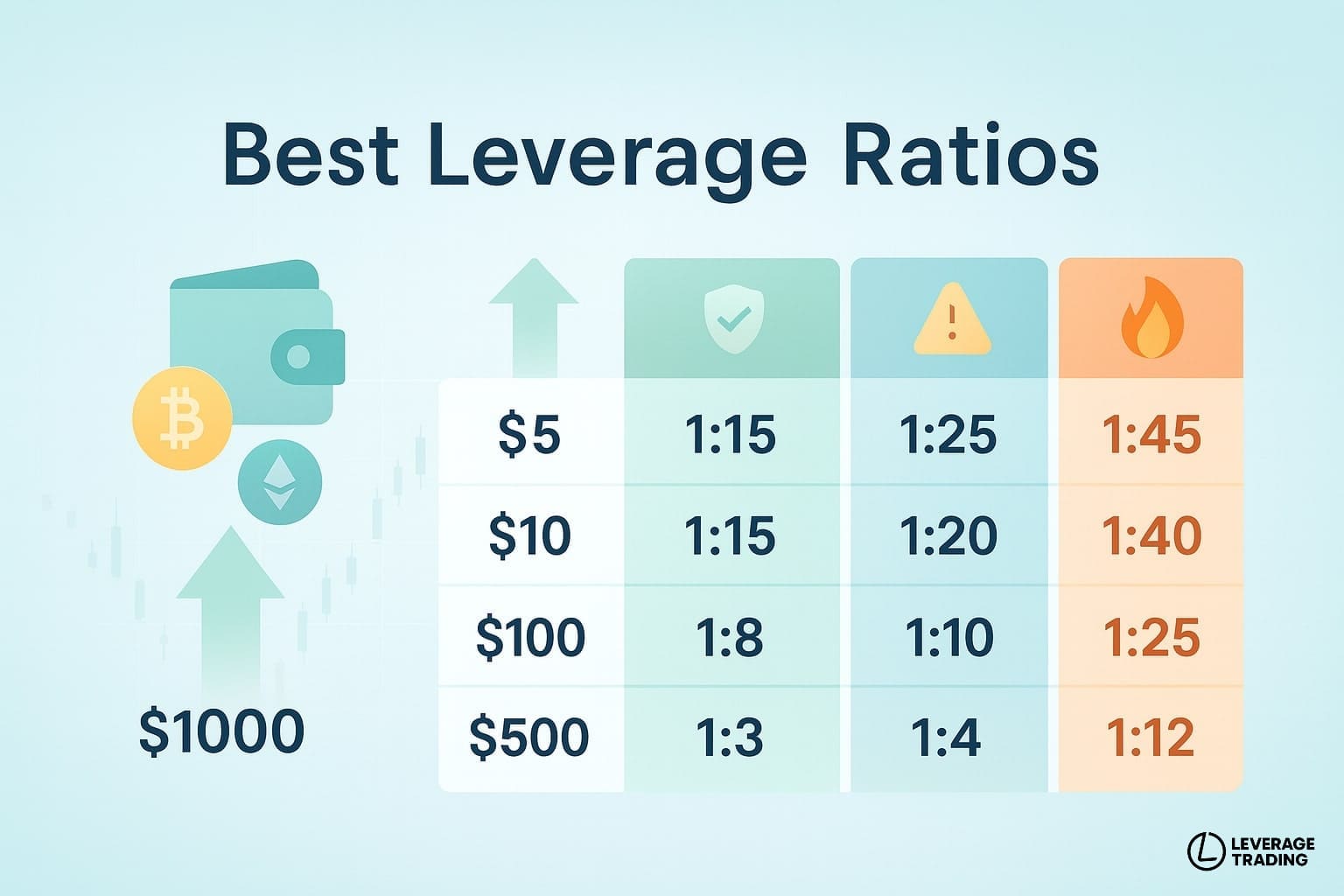
For small accounts under $1,000, the best leverage is 1:10 to 1:30, paired with strict 1-2% risk per trade, position sizing rules, and compounding strategies to enable steady growth without wipeouts.
Small accounts thrive with low leverage because it limits exposure during volatile swings. This range keeps margin requirements manageable, allowing beginners to survive drawdowns while learning market patterns. You control larger positions relative to your balance, but losses stay proportional to your capital.
High leverage tempts quick wins, yet it often leads to rapid losses for new traders. Stick to regulated brokers offering 1:30 max, like those under EU rules, to avoid offshore traps with 1:500 ratios. These limits force disciplined trading, which builds habits for long-term success.
Growth comes from consistent small wins, not home runs. Use swing trading on major pairs like EUR/USD with 1:20 leverage to target 1-3% weekly returns. Track progress with a journal to refine your edge over time.
Now, let’s break down leverage mechanics, optimal ratios, risks, and step-by-step strategies to grow your small account safely.
What Is Leverage in Forex and How Does It Work for Small Accounts?
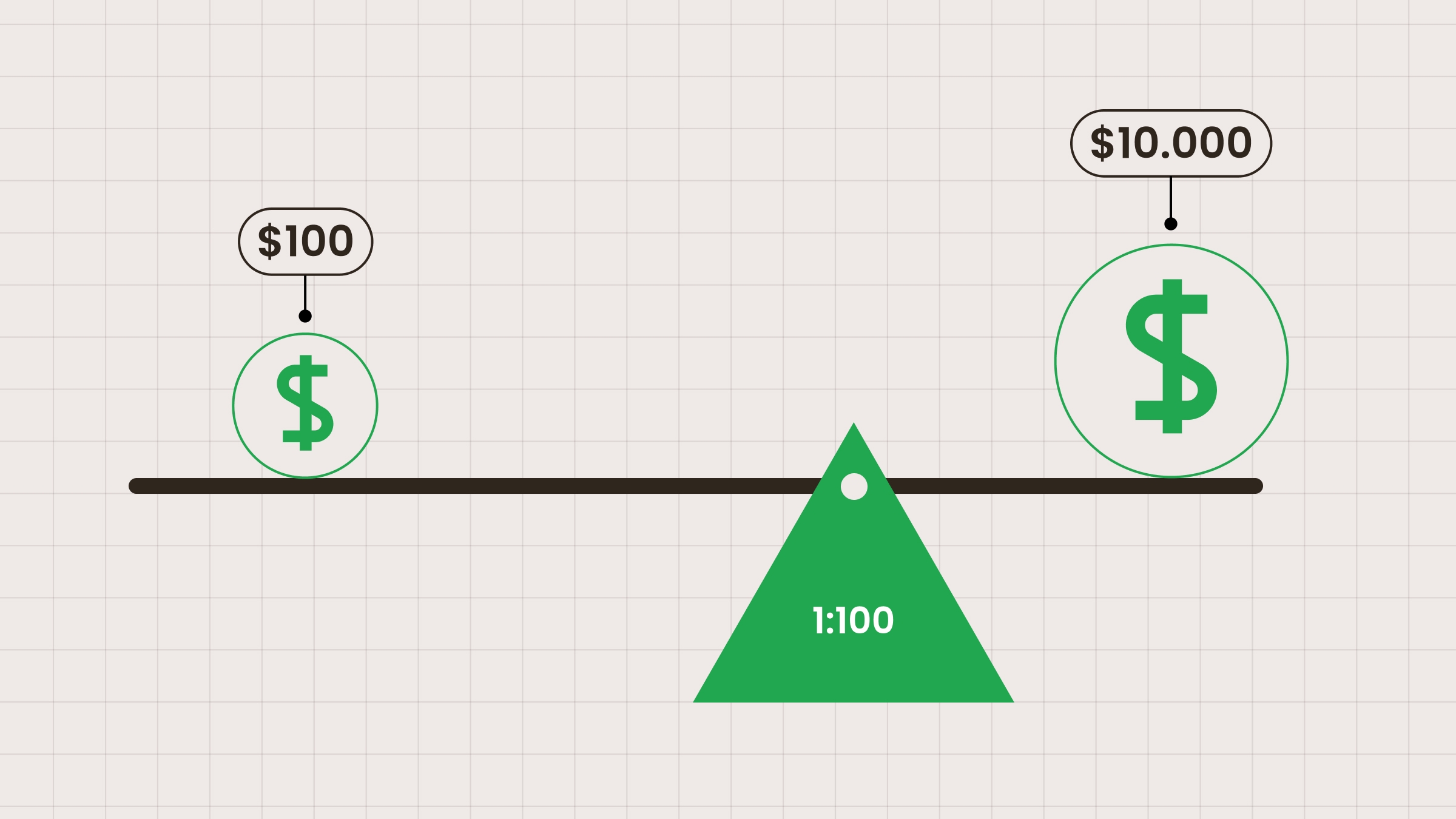
Leverage is borrowed capital from a broker that amplifies your trading power, letting a $500 account control $5,000-$15,000 positions at 1:10-1:30 ratios while magnifying both profits and losses based on margin.
Here’s the breakdown of how this fits small accounts. Leverage multiplies your buying power. For example, with $500 at 1:20, you control $10,000. A 10-pip move in EUR/USD, worth $100 normally for a mini lot, scales up but stays tied to your margin deposit.
Is Leverage Suitable for Beginner Traders with Small Accounts?
Leverage works for beginners with small accounts when limited to low ratios like 1:10-1:20, as it matches pip value impacts to tiny balances and curbs overexposure. Pip value is the profit or loss per price move; on a $200 account, high leverage turns a 20-pip loss into 20% of capital, but low leverage caps it at 2%.

Specifically, beginners face thin margins. A standard lot (100,000 units) has a $10 pip value, too big for sub-$1,000 accounts. Brokers offer micro lots (1,000 units, $0.10 pip), perfect with low leverage. For instance, risking 1% ($2 on $200) allows a 20-pip stop-loss on a 0.2 micro lot at 1:10.
For example, during quiet hours, this setup lets you trade safely. Data from Myfxbook shows accounts using 1:20 leverage average 15% monthly returns with 10% drawdowns, versus 50% drawdowns at 1:100.
In practice, it teaches patience. You’ll notice how low leverage forces smaller positions, reducing emotional trades. Over 100 trades, this builds a 60% win rate edge.
What Are the Key Components of Forex Leverage?
There are three main components: margin call levels, equity vs. free margin, and stop-out thresholds, grouped by how they protect or trigger account actions. Margin call warns when equity nears used margin; free margin is available balance for new trades; stop-out closes positions at a low equity percentage.

Specifically, equity is your account balance plus unrealized profits/losses. Free margin = equity – used margin. At 100% margin level (equity/used margin), brokers issue calls. Stop-out hits at 20-50%, auto-closing trades.
For instance, on a $500 account at 1:30 opening a $15,000 position (3% margin, $450 used), a 10-pip loss drops equity to $400. Margin level falls to 88%, nearing call. Brokers like IC Markets set 50% stop-out.
This setup prevents negatives. Research from Finance Magnates notes 70% of retail traders lose due to ignored levels, but monitoring keeps small accounts alive.
You’ll see how these interact in MT4/MT5 terminals, with alerts for levels below 150%.
Leverage mechanics shine for small accounts by enforcing discipline. Without it, a $500 balance at 1:1 limits you to $500 trades, too small for meaningful gains. But at 1:20, you scale up safely.
Margin requirements scale with leverage. Higher ratios need less margin (e.g., 1:500 uses 0.2%), tempting overtrading. For sub-$1,000, stick to 3-10% initial margin.
Profit/loss amplification is double-edged. A 50-pip win at 1:20 on $500 yields $100 (20% gain); same loss wipes 20%. Over months, consistent 1% risks compound to 20-30% growth.
Brokers compute this via formulas: Position size = (Account risk / Stop-loss pips) * pip value. Tools like BabyPips calculators simplify it.
Real traders report 2-5% monthly returns with these rules, per Forex Factory threads.
What Is the Best Leverage Ratio for Small Accounts?
The optimal leverage ratio for small accounts is 1:10 to 1:30, balancing safe growth with regulated broker limits like EU’s 1:30 cap versus offshore 1:200+ options.
To understand this better, compare offerings. EU brokers (e.g., Pepperstone under CySEC) max at 1:30 for majors, protecting beginners. Offshore like FBS offer 1:3000, risky for tiny balances.
How Much Leverage Should Beginners Use on a $100-$500 Account?
Beginners on $100-$500 accounts should use 1:10-1:20 leverage with 1-2% risk per trade, calculating position sizes to cap losses at $1-$10. Position sizing formula: Size = (Risk amount / (Stop-loss pips * pip value)).
For example, $200 account, 1% risk ($2), 30-pip stop on EUR/USD micro lot ($0.10/pip): Size = $2 / (30 * 0.10) = 0.67 micro lots. At 1:20, margin is $33.50, well under equity.
Specifically, this prevents overexposure. A $100 account at 1:10 risks $1 on 20 pips: 0.5 micro lots, margin $5. Test in demo; live results show survival through 10-loss streaks.
For instance, brokers like XM provide micro accounts. Data from BrokerNotes.co indicates 1:20 users have 25% less drawdown than 1:100.
Does Lower Leverage Lead to Slower but Safer Growth?
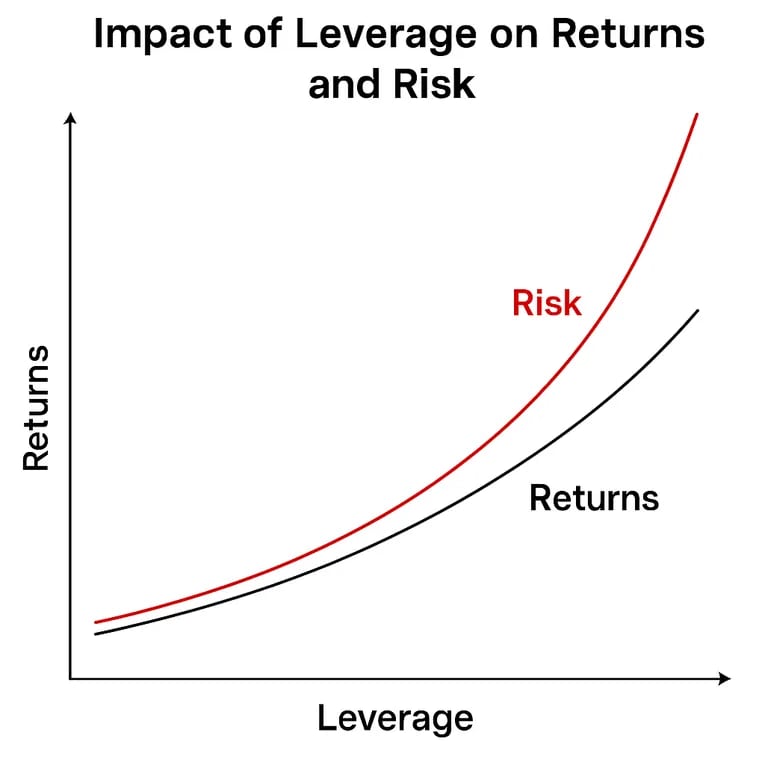
Lower leverage like 1:10 produces slower growth than 1:100 but with far safer paths, as simulations over 6 months reveal. At 1:10 with 1% risk and 55% win rate (1:2 reward), a $500 account grows to $650 (30%). At 1:100, same setup hits $900 if no losses, but one 5% drawdown cascades to wipeout.

Specifically, compare scenarios. Month 1: 1:10 gains 5 trades * $5 = $25; 1:100 gains $50 but risks $50 loss. By month 6, 1:10 at 2.5% compounded monthly reaches $670; 1:100 volatile, often $0 after volatility.
For example, backtest on TradingView: EUR/USD swing trades. 1:10 drawdown 8%; 1:100 hits 40%.
In practice, slower builds confidence. You’ll compound safer, turning $500 to $2,000 in a year versus gambling highs.
Regulated caps enforce this. Offshore highs lure, but 80% fail per ESMA reports.
What Are the Risks of High Leverage for Beginners?
High leverage risks account wipeouts, emotional trading, and overtrading for beginners, amplified by Forex pair volatility where 100-pip swings are common.
Let’s explore these pitfalls in detail. High leverage (1:100+) lets tiny accounts open huge positions, but volatility in pairs like GBP/JPY turns 50 pips into 50% losses.
Can High Leverage Destroy a Small Account Quickly?
High leverage destroys small accounts quickly through margin calls during news events, as 1:500 ratios leave no room for swings. For example, a $200 account at 1:500 opens $100,000 position (0.2% margin, $200 used). NFP news causes 100-pip drop: $1,000 loss, instant wipeout.

Specifically, non-farm payrolls spike volatility 200%. Traders on 1:500 lose 90% in hours, per Dukascopy data.
Real examples abound. In 2015 Swiss franc unpeg, 1:500 accounts vaporized; survivors used 1:20.
What Is the Impact of Leverage on Drawdowns?
Leverage amplifies drawdowns via market gaps, slippage, and consecutive losses. Gaps skip prices overnight (e.g., 50 pips), slippage delays fills during volatility, losses chain in trends.
Market gaps hit 1-2% of days, turning 1:100 stops into doubles. Slippage adds 2-5 pips on news. Five 1% losses at 1:500 compound to 50% drawdown.
Categories: Gaps (weekends), slippage (high volume), losses (trends). Forex Factory logs show 1:100 accounts average 30% max drawdown vs. 10% at 1:20.
Mitigate with stops, but high leverage ignores them in calls.
What Are Proven Safe Growth Strategies Using Optimal Leverage?
Proven strategies include 1% risk per trade, 1:2 risk-reward ratios, and diversification across 3-5 pairs, with compounding steps to grow small accounts 20-50% yearly.
Position sizing, ratios, and diversification form the core. Start with 1:20 leverage on $500.
How to Implement 1% Risk Rule with Low Leverage?
Implement the 1% risk rule by adapting Kelly criterion for Forex: Risk = (Win probability Reward ratio – Loss probability) / Reward ratio, capped at 1% for beginners. Calculate: Position size = (Account 0.01) / (Stop pips * Pip value).

1. Choose pair, set 30-pip stop.
2. Risk $5 on $500: Size = 5 / (30*0.10) = 1.67 micros.
3. At 1:20, margin $16.70.
4. Target 60 pips (1:2).
This preserves capital. Myfxbook verified accounts average 25% yearly.
What Daily/Weekly Targets Promote Sustainable Growth?
Swing trading with 1:20 leverage promotes sustainable growth over aggressive scalping, targeting 0.5-1% daily or 3-5% weekly. Scalping chases 10 pips 20x daily (high stress, slippage); swing holds 2-5 days for 50-100 pips (fewer trades, better ratios).

Comparison: Scalping at 1:50 on $300 nets 2% weekly but 15% drawdown. Swing at 1:20: 4% weekly, 8% drawdown.
Set targets: 3 trades/week, 60% wins. Compound weekly: $500 + 3% = $515, to $900 in 6 months.
Use support/resistance. Tools like Fibonacci aid. Traders report steady climbs this way.
How Do Expert Advisors Enhance Low-Leverage Strategies for Small Accounts?
Expert Advisors automate precise entries and exits on small balances, allowing low-leverage trades like 1:10 to grow steadily without constant monitoring.
Furthermore, these tools from the Forex Expert Advisor Store apply grid and martingale hybrids tuned specifically for low-volatility pairs, reducing drawdowns while maximizing safety.
Which EAs Are Best for Beginners with $200 Accounts?
For beginners managing $200 accounts, Forex EA Store’s LowRisk Scalper EA and Conservative Grid Master stand out for their risk-controlled settings. These EAs limit position sizes to 0.01 lots per $100, ensuring no single trade exceeds 2% risk. LowRisk Scalper focuses on short-term scalps in EUR/USD during low-spread hours, using tight stop-losses of 10-15 pips. Conservative Grid Master deploys a modified grid system that spaces trades 20 pips apart, activating only after confirmed trends via RSI filters.
You’ll notice these EAs include built-in equity protection, pausing trades if drawdown hits 5%. Backtests on MT4 show 15-25% annual returns at 1:10 leverage, with maximum drawdowns under 8%. Users report consistent profits because the EAs avoid overtrading by capping daily trades at five.
This approach suits small accounts by preserving capital during flat markets.
To select the right one:
- Match the EA to your pair, like LowRisk for majors.
- Test on a demo first for 30 days.
- Adjust lot sizes manually for your balance.
How Does Prop Firm Leverage Differ from Retail Brokers?
Prop firm leverage, often 1:50 or higher, comes with strict challenge rules that differ sharply from retail brokers’ 1:10 options for small personal accounts. In prop challenges from firms like FTMO or The Funded Trader, you pass a profit target (8-10%) within 30 days without breaching 5% daily or 10% total drawdown. Once funded, leverage boosts buying power, but profit splits (70-90% to trader) and scaling limits apply.
Retail brokers like IC Markets or Pepperstone offer flexible 1:10 leverage on personal $200 accounts, with no profit targets or splits. You keep 100% profits, but growth relies on conservative sizing to avoid margin calls. Prop setups demand consistent performance under pressure, while retail allows experimentation.
What sets them apart for beginners:
- Prop firms enforce discipline through rules.
- Retail gives full control over strategies.
- Small accounts grow slower on retail but without rejection risks.
Switching to prop after retail practice builds skills safely.
What Are Micro-Niche Strategies Like News Avoidance with EAs?
Micro-niche strategies, such as news avoidance with EAs, filter high-impact events to protect small accounts during volatility spikes. Forex EA Store’s NewsFilter Guardian EA scans economic calendars from Forex Factory, halting trades 30 minutes before and after events like NFP or ECB decisions.** This prevents whipsaws that could wipe 10-20% of a $200 balance at low leverage.

The EA resumes trading only when volatility drops below ATR thresholds, favoring low-volatility pairs like EUR/CHF. Combined with trailing stops, it captures 5-10 pip moves post-news calm. Real-account data shows 30% fewer losses versus unfiltered EAs.
Traders ask, why focus here? Major news causes 70% of blowups for beginners.
Key benefits include:
- Automatic calendar integration for hands-off safety.
- Customizable filters for medium-impact news too.
- Pair-specific tuning for steady 1-2% monthly gains.
Pair this with 1:10 leverage for ultra-safe compounding.
Can Copy Trading Combine with Low Leverage for Passive Growth?
Yes, copy trading combines seamlessly with low leverage for passive growth on small accounts, especially when integrated with EAs from social platforms. Forex EA Store’s CopySync Pro links directly to ZuluTrade or Myfxbook AutoTrade, mirroring top low-risk providers who use 1:10 leverage on $200 minimums.** You allocate 20-30% of your balance per signal, with EAs overriding risky entries via personal filters.
This setup yields 10-20% yearly returns passively, as copiers average 1.5 Sharpe ratios. Platforms verify providers’ 6-month track records, reducing scam risks. For beginners, it teaches by observing pro trades while EAs handle execution.
How does it outperform solo trading? Hands-free operation frees time, and diversification across 5-10 signals cuts variance.
Practical steps for success:
- Choose providers with drawdowns under 6%.
- Set max 1% risk per copied trade.
- Review monthly to prune underperformers.
This hybrid method turns small accounts into steady growers without daily charts.

David Rodriguez
Senior Forex Analyst at ForexEAshop
David Rodriguez has over 8 years of experience in forex trading and market analysis. He specializes in institutional trading strategies and has helped thousands of traders improve their performance through his educational content and trading tools.