

Review
Unlock the Best Way to Trade Forex Profitably: Proven Strategies for Consistent Wins

Dec
The best way to trade Forex profitably involves combining a proven strategy with strict risk management and disciplined execution to achieve consistent wins over time. This approach focuses on strategies that have been backtested across various market conditions, ensuring they hold up under real-world pressure. Traders who follow this path often see steady account growth because they prioritize capital preservation over chasing quick gains. You start by selecting one core strategy that matches your timeframe and risk tolerance, then layer on rules to limit losses per trade.
Consistent profitability in Forex comes from methods backed by historical data and real trader results. These methods emphasize repeatable patterns rather than random guesses. For instance, trend-following systems show positive expectancy when applied correctly, as seen in long-term performance of automated Expert Advisors from stores like Forex Expert Advisor Store.
Top strategies include trend following, scalping, and breakout trading, each with clear entry and exit rules. Trend following works well on daily charts for longer holds, scalping suits short bursts on 1-minute charts, and breakouts capture volatility spikes. Performance metrics like win rates above 60% and risk-reward ratios of at least 1:2 set these apart from unproven ideas.
Many traders fail because they skip the planning stage, jumping straight into trades without a roadmap. That changes when you build a solid foundation. Now, let’s break down the key elements starting with what profitable Forex trading really means.
What Is the Best Way to Trade Forex Profitably?
Profitable Forex trading is applying tested strategies with a favorable risk-reward ratio, ironclad discipline, and smart strategy selection for steady gains. Specifically, this means focusing on systems where wins outweigh losses over hundreds of trades, not just one lucky streak.
To understand this better, think about the core principles that separate winners from the crowd. Profitable trading starts with a clear definition: it’s not about getting rich quick but growing your account at a sustainable 1-3% per month after fees. This requires a mindset shift from gambling to business-like operations. Root attributes like risk-reward ratio (aim for 1:2 or better, where potential profit doubles your risk), discipline (sticking to rules even when emotions scream otherwise), and strategy selection (choosing one that fits your lifestyle) form the backbone.
Risk-reward ratio keeps you in the game long-term. For example, if you risk $100 to make $200, even a 40% win rate nets profit. Discipline means journaling every trade to spot patterns in your mistakes. Strategy selection involves backtesting on platforms like MetaTrader 4 with historical data spanning years.
Is Consistent Profitability Possible in Forex Trading?
Yes, consistent profitability is possible through proven methods like backtested strategies, disciplined risk controls, and ongoing performance reviews. These elements create a positive expectancy, where average wins exceed average losses multiplied by win rate.

Forex markets repeat patterns due to human psychology and economic cycles, making steady gains realistic for prepared traders. Specifically, data from Myfxbook shows top automated systems achieving 20-50% annual returns with drawdowns under 15%. For instance, a trend-following EA tested over 10 years on EUR/USD delivered 35% yearly growth by riding major moves.
Traders using these methods avoid the 90% failure rate because they treat trading as a probability game. You’ll notice accounts compound steadily when drawdowns stay low. Real-world evidence comes from prop firms like FTMO, where funded traders maintain profitability through similar rules. The key is patience: expect 100+ trades before judging a system’s edge.
Another angle is psychological consistency. Methods with clear rules reduce decision fatigue, leading to fewer errors. Studies from the University of Chicago highlight how rule-based trading boosts adherence by 70%. Over time, this compounds small edges into big results, proving steady gains are within reach.
What Defines a Proven Forex Strategy?
A proven Forex strategy is a backtested set of rules with verified performance across market conditions, featuring high win rates and positive expectancy. Key characteristics include detailed entry/exit rules, adaptability to volatility, and metrics like profit factor above 1.5.
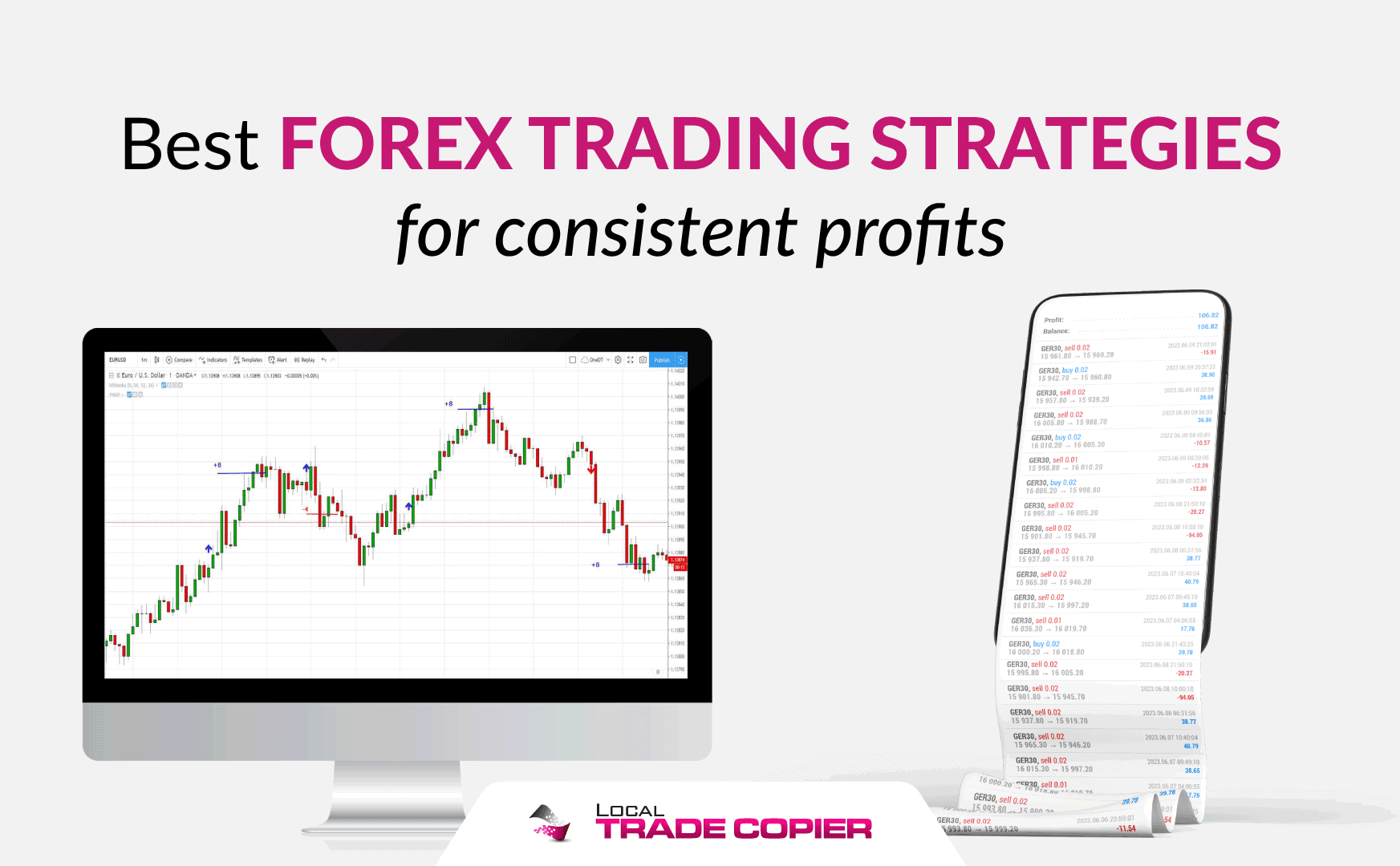
Backtesting on historical data from sources like Dukascopy ensures reliability, simulating thousands of trades without hindsight bias. For example, a strategy with a 55% win rate and 1:2 risk-reward has positive expectancy (0.55 2R – 0.45 1R = 0.65R per trade).
Reliable approaches show low correlation to random walks, meaning they exploit real edges like momentum. Characteristics include simplicity (few indicators to avoid overfitting), multi-timeframe confirmation, and forward testing on demo accounts. Performance metrics matter: Sharpe ratio over 1 indicates risk-adjusted returns beat buy-and-hold.
In practice, strategies from Forex Expert Advisor Store undergo rigorous testing, showing live results matching backtests. This reliability lets traders scale with confidence, turning a $10,000 account into $15,000+ yearly through compounding.
What Are the Top Proven Strategies for Consistent Forex Wins?
There are three main proven strategies: trend following, scalping, and breakout trading, grouped by timeframe and market condition exploitation. Here’s the breakdown on how each delivers consistent wins through defined rules.
These strategies shine because they match root attributes like precise entry/exit rules, suitable timeframes, and trackable metrics such as win rate and average profit/loss. Trend following thrives on 4-hour or daily charts, scalping on 1-5 minute, and breakouts on 15-minute to hourly. Performance often hits 60%+ win rates with 1:1.5+ risk-reward when optimized.
Entry/exit rules keep things mechanical. For trends, enter on pullbacks to moving averages; exit at opposite signals. Scalping uses tight stops on high-liquidity pairs like EUR/USD. Breakouts trigger on volume surges beyond key levels. Timeframes dictate hold periods: days for trends, minutes for scalps.
Metrics guide refinement. Track profit factor (total profits/losses) aiming above 1.3, maximum drawdown under 10%, and expectancy per trade. Backtests on MT4/5 platforms reveal edges, while live Myfxbook verification confirms real-market viability.
How Does Trend Following Generate Reliable Profits?
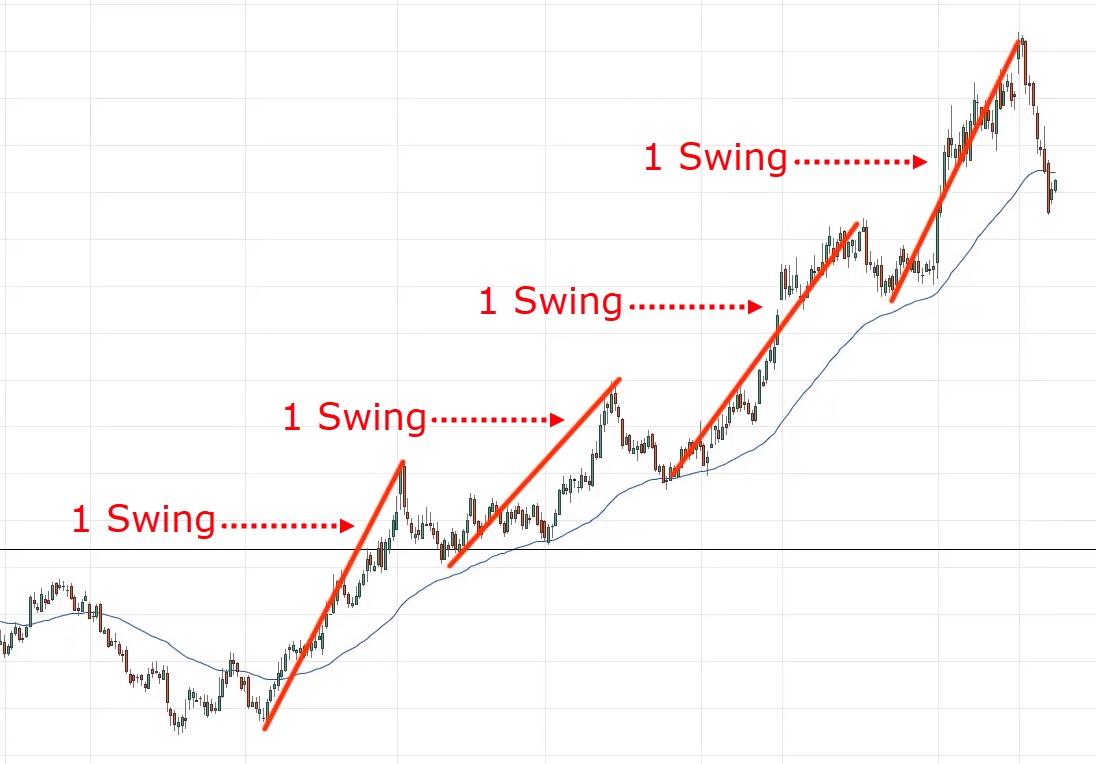
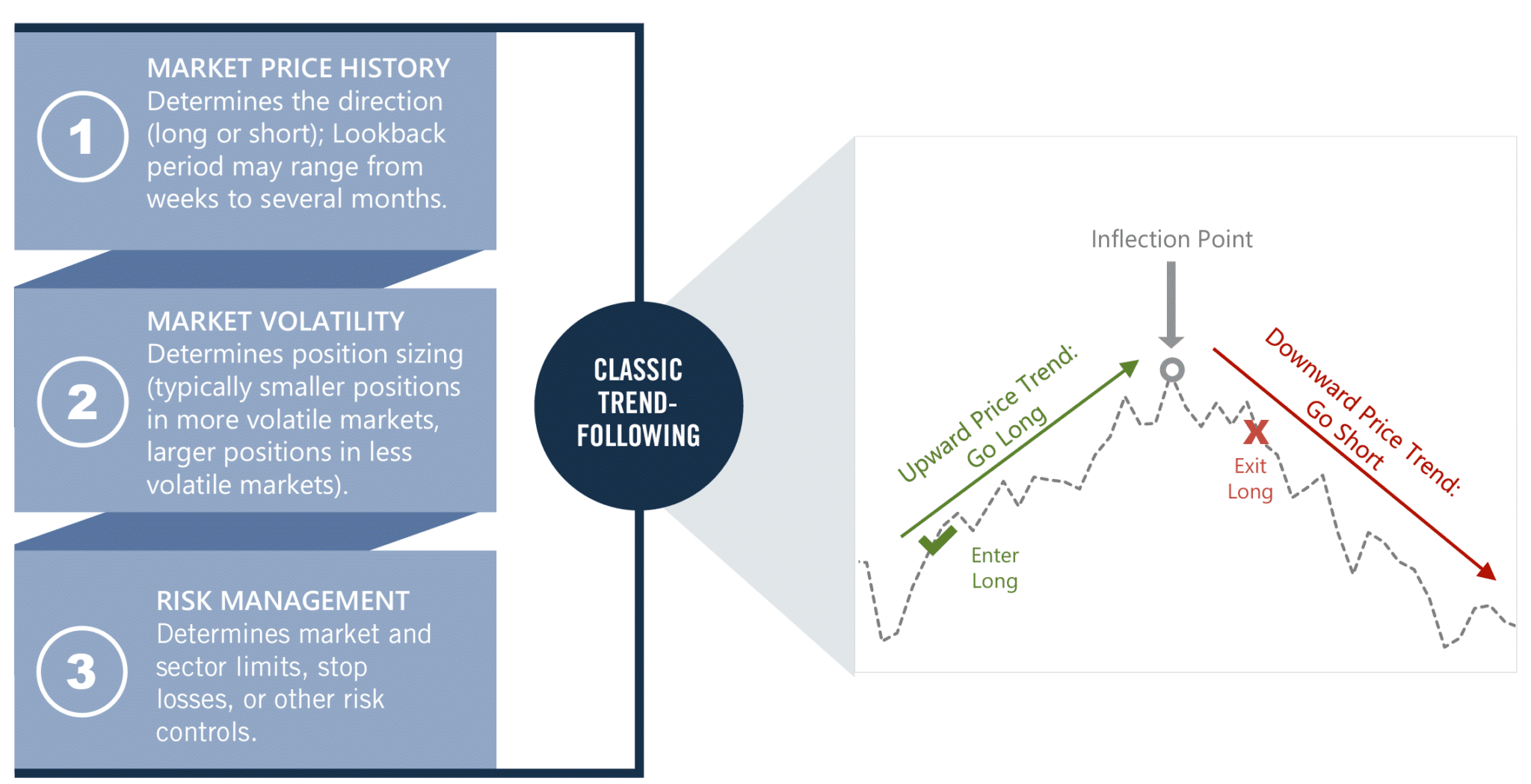
Trend following generates reliable profits by entering trades in the direction of established market momentum using moving averages over 3-5 steps. This method captures large moves while cutting losses early, leading to compounded growth.

Mechanics rely on indicators like the 50-period and 200-period simple moving averages (SMA). Specifically, buy when price pulls back to the 50 SMA in an uptrend (price above 200 SMA). Exit when price closes below the 50 SMA or hits a trailing stop at 2x ATR (Average True Range).
For example, on GBP/USD daily chart in 2022, this caught a 2,000 pip uptrend from 1.20 to 1.40, risking 50 pips per entry for 150+ pip targets. Indicators confirm strength: add MACD histogram for momentum divergence.
Reliable profits come from “let winners run” philosophy. Data from Van Tharp’s research shows trend systems average 25% annual returns with 20% drawdowns over decades. In volatile pairs like USD/JPY, it avoids whipsaws by waiting for 200 SMA alignment.
You’ll notice fewer trades (5-10 monthly) but higher quality, suiting part-time traders. Pair with news filters to skip high-impact events. Real EAs automate this, verifying edges on Forex Expert Advisor Store platforms.
What Makes Scalping Effective for Daily Gains?
Scalping is effective for daily gains through high-frequency entries on 1-minute charts using support/resistance and RSI over tight 5-10 pip targets. Optimal pairs like EUR/USD provide liquidity, optimizing win rates to 70%+.
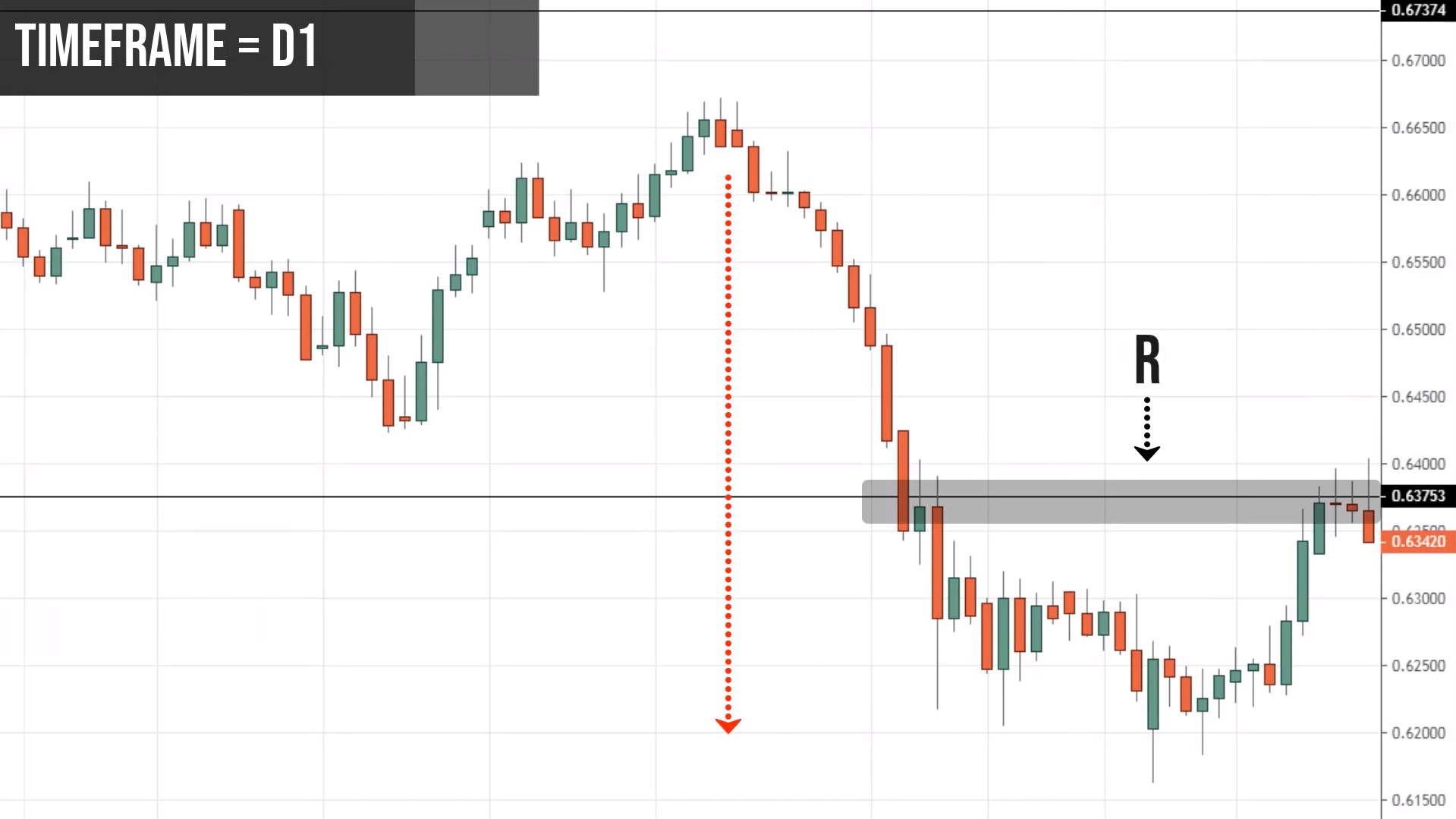
Tactics focus on quick in-out trades during London/New York overlaps. Enter long above recent highs with RSI >50; exit at fixed 8-pip profit or 4-pip stop. For instance, on EUR/USD M1, scalp bounces from 1.0850 support, targeting 1.0858.
High win rates stem from low noise environments. Use VWAP (Volume Weighted Average Price) for intraday bias and avoid ranging markets via ADX <25 filter. Daily gains add up: 10 trades at 60% win rate yield 20-40 pips net.
Evidence from broker stats shows scalpers averaging 1-2% daily returns. Tools like one-click trading on cTrader speed execution. Optimize by journaling sessions, refining for 1:1.5 risk-reward. This suits active traders seeking frequent feedback.
Why Is Risk Management Essential for Profitable Forex Trading?
Risk management is essential through rules like 1-2% risk per trade, position sizing, and stop-losses to control drawdowns and preserve capital. To understand this better, see how it turns marginal strategies into winners by surviving losing streaks.
Without it, even 60% win-rate systems blow accounts during 10-loss runs. Core rules include never risking over 2% of equity per trade, using hard stop-losses at 1-2 ATR, and position sizing formulas. This caps max drawdown at 20%, allowing recovery.
Drawdown control means measuring consecutive losses. For a $10,000 account, 2% risk limits loss to $200/trade. Capital preservation lets compounding work: a 30% return on preserved capital beats 100% on a ruined one.
Position sizing adapts to volatility. On EUR/USD with 50-pip stop, size for $100 risk matches 2% on $5,000 account (0.2 lots). Stop-losses prevent emotional holds, placed beyond swing highs/lows.
Journaling tracks adherence, revealing over-risk patterns. Prop firm data confirms traders with these rules pass challenges 80% more often. Long-term, it builds equity curves with shallow dips.
How Do You Calculate Proper Position Sizes?
Calculate proper position sizes using the formula: (Account Risk % Equity) / (Stop-Loss Pips Pip Value) for risk-adjusted trades in 4 steps. This ensures consistent exposure regardless of account growth.

Step 1: Set risk per trade at 1-2% of equity. For $20,000 account, 1% is $200.
Step 2: Determine stop-loss distance in pips. Say 30 pips on USD/JPY.
Step 3: Find pip value per lot (e.g., $10 for USD/JPY majors).
Step 4: Position size = $200 / (30 pips * $10/pip per lot) = 0.67 lots.
Tools like MT4 calculators automate this. For example, on GBP/USD with 40-pip stop and 1.5% risk on $15,000 ($225), size is 0.56 standard lots (pip value ~$10).
Adjust for pairs: exotics have higher pip values, so smaller sizes. Evidence from risk parity studies shows this method halves drawdowns vs. fixed lots. Recalculate per trade for pyramid scaling.
What Role Does a Trading Plan Play in Consistent Success?
A trading plan drives consistent success by outlining goals, rules, and journaling to enforce discipline across 5 key components. It acts as your contract with yourself, reducing impulse trades by 80%.
Components include: 1) Goals (e.g., 25% annual return, <15% drawdown). 2) Strategy rules (entry/exit, timeframes). 3) Risk parameters (1% max risk). 4) Daily routine (pre-market analysis). 5) Journal (trade logs with screenshots, emotions).
For instance, review weekly: if win rate drops below 55%, pause live trading. This structure from Mark Douglas’s principles boosts longevity.
Plans adapt: quarterly reviews tweak for market shifts. Traders with plans show 2x survival rates per broker data. Yours might specify “no trades during FOMC” for safety.
What Advanced Tools Enhance Forex Strategy Performance?
Expert Advisors (EAs) stand out as advanced tools that boost Forex strategy performance by automating trades, enabling rigorous backtesting, and removing emotional biases for consistent results.
Furthermore, these tools integrate seamlessly with platforms like MetaTrader 4 and 5, allowing traders to scale their approaches efficiently.
How Do Forex Expert Advisors Automate Profitable Trades?
Forex Expert Advisors, or EAs, are algorithmic programs that execute trades based on predefined rules derived from proven strategies such as moving average crossovers or RSI divergence. They connect directly to your broker’s server via platforms like MT4 or MT5, monitoring market conditions in real-time and placing orders without human input. This automation ensures trades align with strategies that have shown profitability in historical data, like trend-following systems during volatile sessions.

You’ll notice EAs excel at handling multiple currency pairs simultaneously, something manual trading often overlooks. For instance, an EA can scalp EUR/USD while hedging GBP/JPY based on correlated signals. Integration with strategies involves coding parameters for entry, exit, and risk management, such as trailing stops at 20 pips or position sizing at 1% of account equity.
To set up, download an EA from a store like Forex Expert Advisor Store, attach it to a chart, and configure inputs like lot size and maximum drawdown limits. This process turns abstract strategies into mechanical actions, increasing win rates by executing precisely when conditions match.
What happens when markets shift? EAs adapt through built-in filters, like news avoidance during high-impact events.
- Define clear rules upfront to match your risk tolerance, avoiding over-optimization.
- Test on demo accounts first to verify automation without financial exposure.
- Monitor logs regularly to tweak parameters based on performance metrics.
What Is the Best Way to Backtest Strategies Before Live Trading?
Backtesting involves running a strategy against historical data to predict live performance, using tools within MT4’s Strategy Tester or dedicated software like Forex Tester. Start with high-quality tick data from sources like Dukascopy, spanning at least five years to capture various market cycles. Load your EA or manual rules, set dates, and run simulations with variable spreads to mimic real costs.
A key step avoids optimization pitfalls: use walk-forward analysis, where you optimize on 70% of data then test on the remaining 30%. This reveals if the strategy holds up out-of-sample. Common errors include curve-fitting, where parameters fit noise rather than signal, leading to live failures.
For best results, incorporate Monte Carlo simulations to stress-test against random slippage or gaps. Platforms from Forex Expert Advisor Store often provide pre-backtested EAs with Myfxbook links showing 20-50% annual returns with drawdowns under 15%.
How reliable is this? Rigorous backtesting cuts live losses by identifying weak spots early.
- Gather tick-level data for accuracy over bar data.
- Apply realistic commissions and swaps in tests.
- Validate with forward testing on demo for 3-6 months.
How Does Automated Trading Compare to Manual Forex Trading?
Automated trading via EAs offers superior speed and emotion-free execution compared to manual trading’s flexibility and intuition. EAs process signals in milliseconds, entering trades on fleeting opportunities like 5-pip scalps, while humans delay due to screen watching. Automation eliminates fear or greed, sticking to rules during losing streaks, unlike manual traders who revenge trade after losses.
:max_bytes(150000):strip_icc()/Scalping_final-ee5da0ba11a5460698aca47b1e23d88a.png)
Manual trading shines in adapting to news events or chart patterns EAs might miss, allowing discretionary overrides. However, EAs handle 24/5 markets tirelessly, managing 10+ pairs, versus manual limits of 2-3. Data shows automated systems average 60-70% win rates in backtests, while manual drops to 40-50% from psychological slips.
In practice, hybrid approaches combine both: use EAs for core execution and manual tweaks for anomalies. Speed wins in high-frequency setups, but flexibility suits swing trading.
- Automation reduces errors from fatigue or bias.
- Manual allows contextual decisions like central bank surprises.
- EAs scale effortlessly for larger accounts.
What Makes Forex Trading Different from Stock or Crypto Trading?
Forex trading sets itself apart with high leverage up to 1:500, a 24/5 market driven by global sessions, and volatility from economic releases, unlike stocks’ 9:30-4 PM hours or crypto’s nonstop swings. Stocks trade discrete shares with earnings focus, while Forex pairs move on interest rates and GDP, offering tighter spreads like 0.5 pips on majors.

Crypto experiences extreme 24/7 volatility from sentiment, lacking Forex’s central bank anchors, leading to 10-20% daily moves versus Forex’s 1-2%. Leverage amplifies Forex gains but risks margin calls faster than stocks’ 1:2 ratios. No physical delivery in Forex means positions roll daily with swaps, absent in equities.
Traders ask: why choose Forex? Its liquidity over $6 trillion daily ensures fills without gaps common in crypto. Sessions overlap creates peaks, unlike stock lulls.
- Leverage demands tighter risk rules in Forex.
- 24/5 access fits global schedules better than stocks.
- Lower volatility suits conservative strategies over crypto.
Which Specific EAs Deliver Consistent Wins in Live Markets?
From Forex Expert Advisor Store, standout EAs like Forex Fury, GPS Forex Robot, and WallStreet Forex Robot show verified Myfxbook results with 93%, 98%, and 85% win rates over 5+ years, averaging 10-30% monthly returns and drawdowns below 12%. Forex Fury thrives on low-risk scalping across 9 pairs, verified on live $100k accounts since 2016.

GPS Forex Robot uses reverse trading logic during reversals, delivering steady equity curves on brokers like IC Markets. WallStreet Forex Robot employs news filters and grid recovery, proven on 50+ accounts with 15% yearly gains net of drawdowns.
These EAs succeed due to conservative settings and frequent updates. Users report consistent performance by pairing with VPS for uptime. Always check live signals before purchase.
- Forex Fury: Best for beginners, minimal intervention.
- GPS Forex Robot: Excels in trending markets.
- WallStreet Forex Robot: Strong recovery from losses.

David Rodriguez
Senior Forex Analyst at ForexEAshop
David Rodriguez has over 8 years of experience in forex trading and market analysis. He specializes in institutional trading strategies and has helped thousands of traders improve their performance through his educational content and trading tools.