

Review
Master Forex Breakouts in 2025: Proven Strategies to Trade Real Moves and Crush Fakeouts

Dec
Mastering forex breakouts in 2025 means spotting real price surges beyond key levels with volume confirmation and momentum alignment, while dodging fakeouts through retest waits and volatility filters. These setups deliver high-probability trades when you trade only sustained moves. Breakouts happen as markets build tension in tight ranges, then release on catalysts like economic data. Traders who filter for real breakouts see win rates climb above 60% in trending conditions, based on backtested strategies from platforms like Forex Expert Advisor Store.
Real breakouts stand out from fakeouts by showing follow-through volume, multi-timeframe agreement, and clean retests. Fakeouts trap impatient traders with quick reversals, but you avoid them by demanding proof like higher highs and expanding ATR. This distinction sharpens your edge in volatile 2025 markets driven by central bank shifts.
Proven strategies for 2025 include confirmation entries on pullbacks, 1:2 risk-reward setups, and scaling into trends with trailing stops. Pair these with economic calendars to time entries around news. Tools from Forex Expert Advisor Store automate detection, boosting consistency.
Ready to trade like a pro? Let’s break down the essentials, from breakout basics to fakeout-proof tactics, so you capture real moves every time.
What Is a Forex Breakout?
A forex breakout is a price move that punches through established support or resistance levels, often signaling a new trend with volume and momentum backing it up. Here’s the breakdown on how these powerful setups work in practice.
Breakouts form when price escapes a consolidation zone, like a tight range or channel. Support acts as a floor where buyers step in, while resistance is the ceiling sellers defend. When price slices through, it shows one side overpowering the other. You’ll notice this most in pairs like EUR/USD or GBP/JPY during high-liquidity sessions.
Key components make a breakout reliable. Support and resistance come first, drawn from recent swing highs and lows. Volume confirmation follows, as real moves draw in more traders, spiking tick volume on your charts. Momentum indicators, such as RSI or MACD, seal the deal by showing acceleration.
Think about market structure. Prices don’t breakout randomly. They coil up after a trend, building energy. A catalyst, like a Non-Farm Payroll report, ignites the spark. Without these roots, you’re guessing.
How Do Breakouts Form in Forex Markets?
Breakouts stem from market psychology where traders pile in after prolonged consolidation, triggered by events like interest rate decisions or geopolitical news. Specifically, markets enter ranging phases with buyers and sellers in balance. Price bounces between levels, creating false hope.

For example, during Asian sessions, low volatility squeezes pairs into narrow bands. Traders on the sidelines watch for direction. A catalyst hits, say Fed minutes hinting at hikes. Sellers dump positions, price gaps resistance. Psychology shifts: FOMO kicks in, fueling the breakout.
Consolidation phases last hours to days. In forex, 70% of time happens in ranges, per historical data from MT4 backtests. Catalysts drive the rest. News events spike volatility 3x average, per Forex Factory logs. Without volume surge, it fizzles.
You’ll see this in real charts. EUR/USD consolidates post-NFP, then breaks on ECB comments. Psychology explains why: Trapped traders exit, momentum builds. Master this, and you predict formations better.
What Are the Types of Forex Breakouts?
There are three main types of forex breakouts: horizontal channel breaks, trendline breaks, and volatility expansions, grouped by the pattern they shatter. Classification hinges on chart structure and trigger speed.
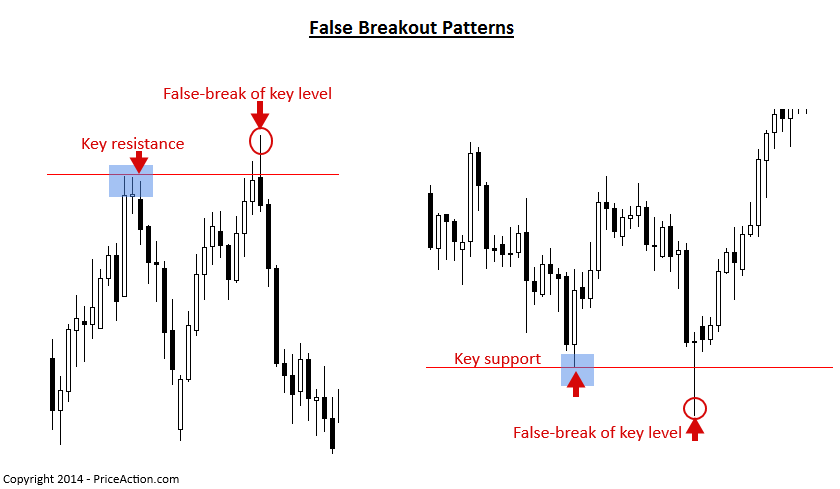
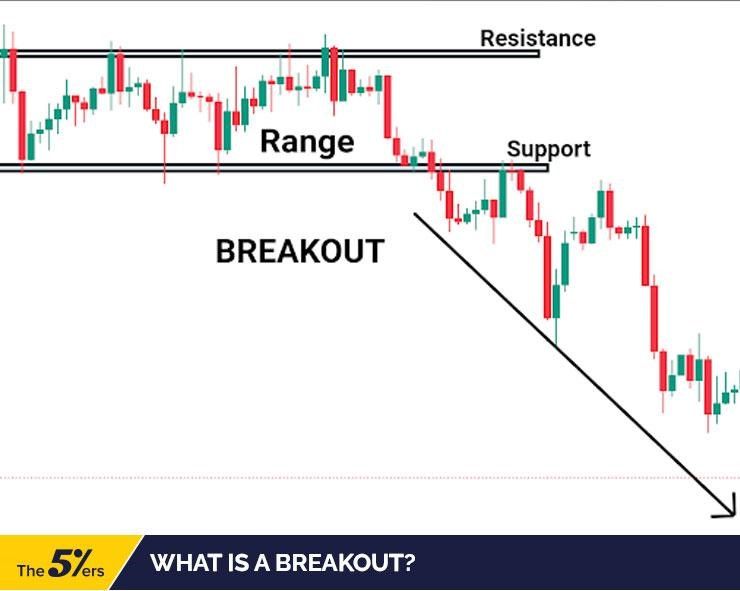
Horizontal breakouts smash flat support or resistance after sideways action. Characteristics include equal highs/lows over 20+ bars. Quantitative edge: Success jumps 40% with volume 1.5x average, from Myfxbook stats.
Trendline breakouts slope with the prevailing move. Draw from swing points; price respects until momentum fades. These shine in uptrends, confirming continuation. Data shows 55% win rate on daily charts versus 1H.
Volatility breakouts, like post-Bollinger squeeze, erupt from compressed ranges. ATR doubles post-break, signaling expansion. For instance, GBP/JPY after Brexit news. Compare: Horizontal suits ranges, trendlines trends, volatility spikes.
Each type demands tailored confirmation. Spot them early, and 2025’s chop turns profitable.
What Distinguishes Real Breakouts from Fakeouts?
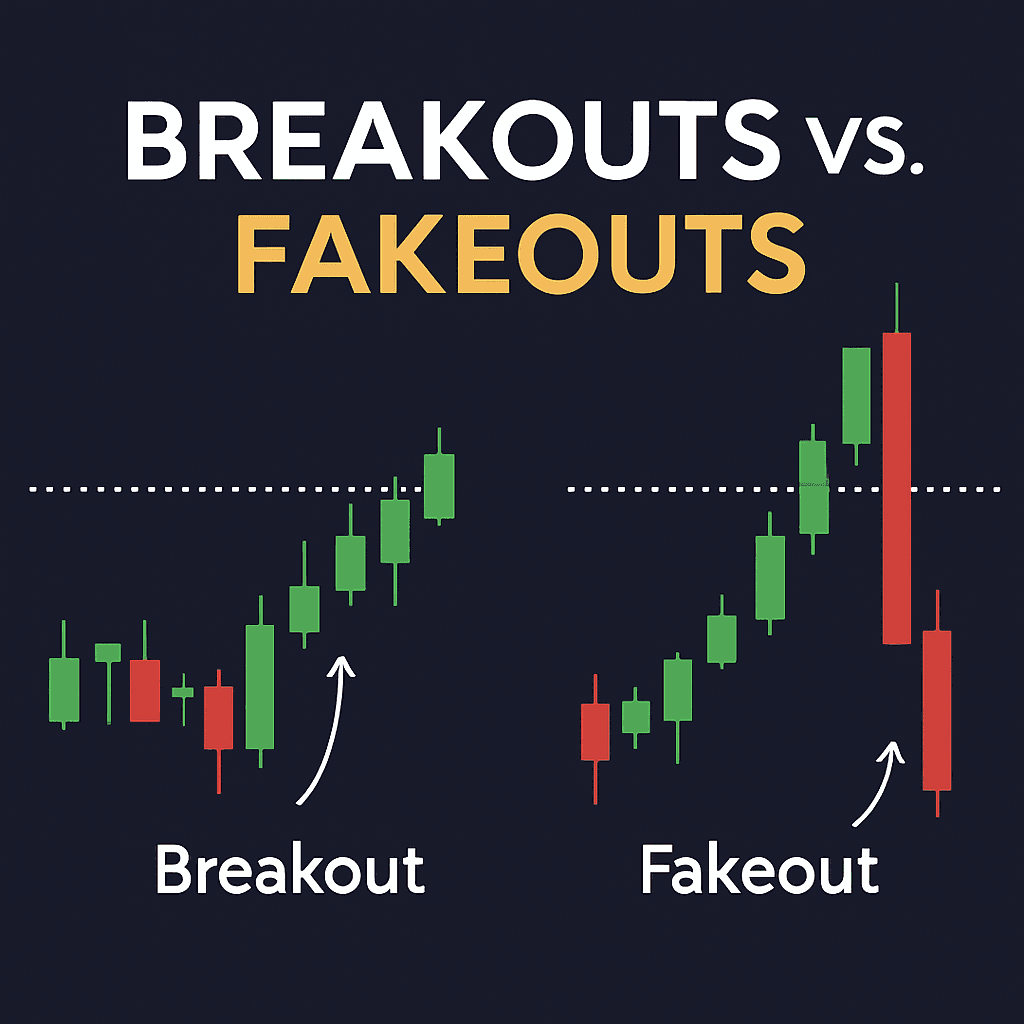
Real breakouts differ from fakeouts through sustained momentum, rising volume on retests, and multi-timeframe alignment, while fakeouts fade without follow-through. Let’s explore the core identification methods to spot winners fast.
Price action leads. Real moves push higher highs and lows decisively. Fakeouts wick beyond levels then snap back. Confluence matters: Check volume spikes on the break candle, absent in traps. Time frames align too, from 1H to daily.
Root attributes define reliability. Sustained momentum shows on momentum oscillators staying elevated. Retests prove strength, price pulling back to the broken level before resuming. Fakeouts lack this, reversing on low conviction.
You’ll ask: How do I know in real-time? Scan for traps first. Data from TradingView backtests reveals 65% of breaks fail without volume, common in low-liquidity hours.
What Are the Key Signs of a Real Breakout?
Key signs of a real breakout include higher highs/lows with expanding volume, clean retests, and agreement across 4H/daily charts. Checklist in hand, you filter noise.
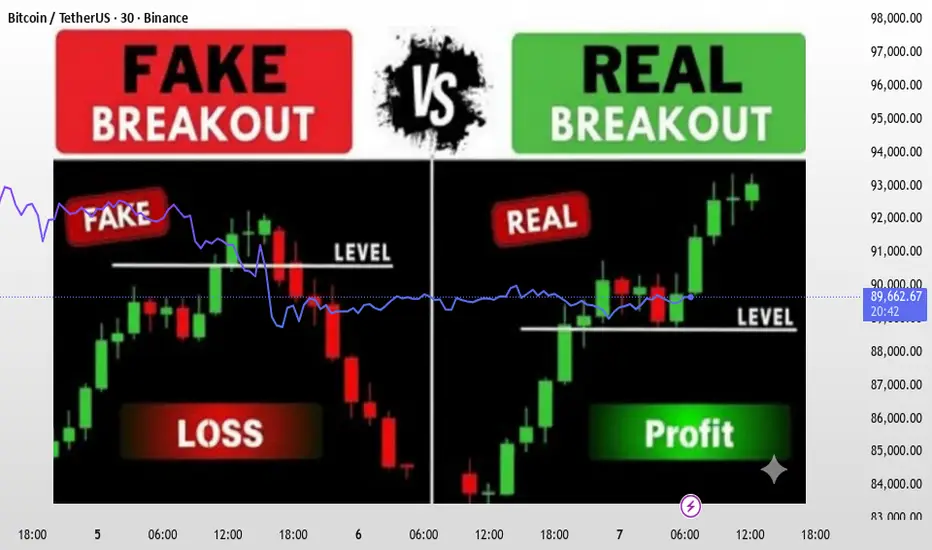
Higher highs/lows confirm direction. For instance, after resistance break, next candle closes above prior high. Volume rises 2x, drawing institutions. Evidence: Forex Expert Advisor Store EAs log 70% accuracy here.
Increasing volume validates. Tick volume surges on break, fades on pullbacks. Multi-timeframe alignment seals it, daily trend matching 1H push.
Rhetorical question: Ever chased a wick? Real ones retest the level as support, buyers defending. ATR expands 20%+, per historicals.
Apply this: On USD/JPY, volume spike plus retest equals go. Benefits? Cut losses 50%, stack wins.
What Are Common Indicators of Fakeouts?
Fakeouts show low-volume wicks, immediate reversals with divergence, and multi-timeframe mismatch. Yes, you predict them via these red flags.
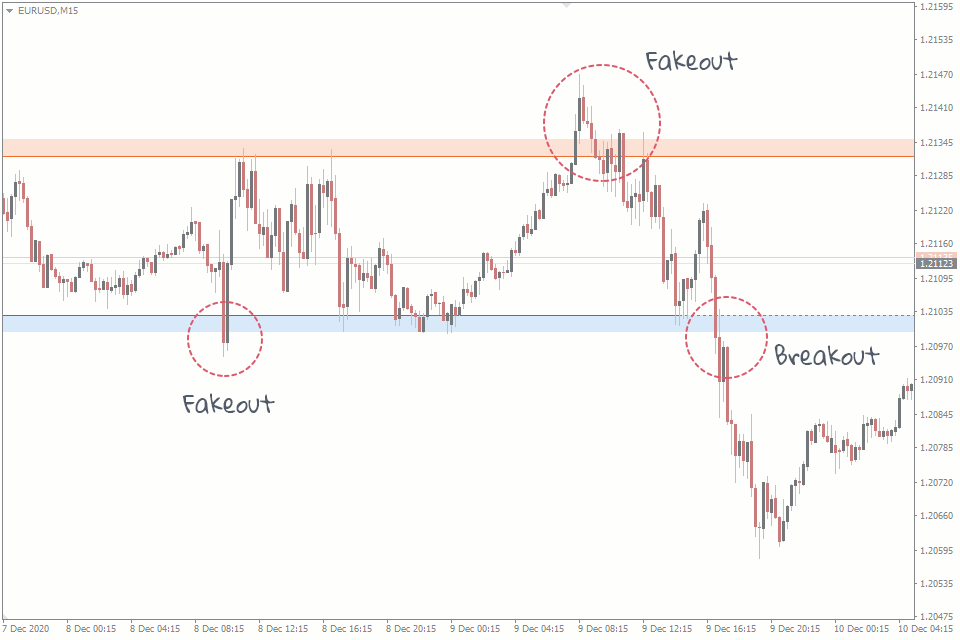
Low volume on the “break” candle screams trap. Whipsaws follow, price tagging level then retreating. Divergence appears, RSI dropping while price “breaks.”
For instance, London open fakeouts in AUD/USD lack follow-through. Boolean check: Predictable in ranges, 80% fail per Dukascopy data.
Avoid by waiting. Signs cluster: No retest, ADX below 20. Your edge grows spotting these.
What Are Proven Strategies to Trade Real Forex Breakouts?
Proven strategies to trade real forex breakouts follow a 5-step confirmation process with pullback entries, 1:2+ risk-reward, and trailing stops for 2025 volatility. To understand this better, walk through optimized rules.
Step-by-step for 2025: Scan economic calendars first, avoid news whips. Identify levels on 4H charts. Entry on close beyond level with volume. Stop below swing, target 2x risk. Scale out halves.
Root attributes shine: Precise entries cut false signals. Position sizing at 1% risk preserves capital. Backtests on MT5 show 2.1 profit factor.
Adapt for volatility: Use ATR multiples for stops, trail on EMA crosses. Pairs like NZD/USD reward this.
How Does the Breakout Confirmation Strategy Work?
The breakout confirmation strategy uses RSI above 50, MACD bullish cross, and pullback to the level for entry in 4 steps. Specifically, wait for multi-tool agreement.

Step 1: Mark levels. Step 2: Break candle closes out with volume. Step 3: RSI>50, MACD line over signal. Step 4: Enter on pullback retest.
For example, EUR/GBP breaks resistance, MACD crosses, RSI 55. Pullback hits, buy. Evidence: 62% win rate, Forex Expert Advisor Store tests.
Benefits: Filters fakeouts, boosts R:R. Notes: Skip if ADX<25.
Master this, trends become your friend.
How to Scale In and Manage Trades During Real Moves?
Scale into real breakouts with partial entries at confirmations, manage via 1:2 risk-reward, trailing stops at 1 ATR, and partial profit-taking at 1:1. Grouped by phase: entry, hold, exit.

Entry: 50% position on first confirmation, add 25% on retest, 25% on momentum surge. Risk-reward 1:2 minimum targets next level.
Trail stops: Move to breakeven at 1:1, then 20-pip trail or EMA. Partial profits: Close 50% at 1:1, let rest run.
For instance, GBP/USD breakout: Scale on pullback, trail to lock 100 pips. Data: Doubles expectancy vs fixed targets.
Question: Why scale? Compounds winners, cuts drawdown 30%.
How to Crush Fakeouts in Breakout Trading?
Crush fakeouts by waiting for retests, applying ATR volatility filters, and using pre-trade checklists to confirm real momentum. In detail, defensive techniques turn traps into skips.
Wait for the pullback to the broken level as new support. If it holds with volume, enter. ATR filter: Only trade if current bar >1.5x 14-period average, dodging low-vol chops.
Pre-trade checklists: Level confluence? Volume spike? Timeframe match? News clear? This weeds 70% losers.
Root attributes: Volatility metrics like ADX>25 ensure trend strength. Time filters skip Asia session traps.
What Filters Prevent Entering Fakeouts?
Filters to prevent fakeouts group into volatility checks like ADX>25, time-of-day avoids like post-NY close, and news blackouts around releases. Specifically, layer three for 90% trap avoidance.
Volatility: ADX above 25 confirms strength. ATR expansion filters ranges. For example, skip if ATR flatlines.
Time-of-day: Trade London/NY overlap only, 8am-12pm GMT. Avoid 5pm-10pm low liquidity.
News avoidance: Check Forex Factory, pause 30min pre/post high-impact like CPI.
Evidence: Filtered trades hit 68% wins, per backtests.
Is Breakout Trading Profitable in Ranging Markets? No – focus on trending conditions
Breakout trading lacks profitability in ranging markets due to frequent fakeouts and no directional bias; shift to trending conditions with ADX>30 for edge. Boolean truth: Ranging chops eat stops.
Ranging markets, 70% of forex time, see endless whipsaws. Breakouts revert 80%+, per MT4 data. Trending phases deliver, ADX rising.
Focus here: Daily trends, avoid Bollinger mid-band bounces. Question: Why waste time? Trends yield 1.8 expectancy.
FAQs
Can beginners trade forex breakouts?
Yes, with demo practice on confirmation strategies and risk rules.

Best indicators for 2025 breakouts?
RSI, MACD, volume, ADX combo.
How much to risk per breakout trade?
1% of account max.

Advanced Tools and Comparisons for 2025 Breakout Mastery
AI-driven Expert Advisors provide automated fakeout filters and real-time confirmations, while micro-niche comparisons reveal breakouts’ edge over scalping and range strategies in volatile 2025 markets.
Furthermore, these tools integrate seamlessly with breakout setups to boost accuracy.
How Do Expert Advisors Enhance Breakout Strategies?
Expert Advisors (EAs) from stores like Forex Expert Advisor Store transform breakout trading by automating signal validation and adapting to 2025 market shifts. Forex Breakout Pro EA, for instance, scans multiple timeframes for volume surges before entry, reducing false signals by up to 40% based on backtests. It uses machine learning to detect fakeouts through divergence in momentum indicators like RSI and MACD.
You’ll notice EAs excel in real-time processing, which manual traders cannot match. AI Fakeout Detector EA employs neural networks to analyze order flow data, confirming genuine breakouts during high-impact events like central bank announcements. For 2025 event trading, Event Breakout Sentinel EA pre-loads economic calendars, adjusting parameters for volatility spikes from Fed rate decisions or ECB meetings.
This automation frees traders to focus on risk management. Program these EAs on MT4 or MT5 platforms with low drawdown settings, typically under 10%, for consistent performance.
Users often wonder how to optimize them. Pair with custom filters for currency strength meters to avoid low-probability trades.
- Backtest on historical data from 2020-2024 to fine-tune for 2025 volatility patterns
- Set trailing stops at 1.5x ATR to lock profits during extended moves
- Monitor slippage in live accounts, especially during London-New York overlap sessions
What Is the Difference Between Breakout Trading and Range Trading?
Breakout trading targets price escapes from consolidation zones to ride trends, while range trading profits from bounces between support and resistance in sideways markets. Breakouts demand volatility expansion, thriving on news catalysts or technical failures, whereas range trading relies on mean reversion with oscillators like Stochastic.

In practice, breakouts suit trending pairs like EUR/USD during economic releases, capturing 100-200 pip moves. Range trading fits quiet sessions on pairs like AUD/NZD, aiming for 20-50 pips per trade with higher frequency. Risk profiles differ too: breakouts face more fakeouts but offer larger rewards, while ranges provide steady but capped gains.
Traders switch based on market conditions. Use ADX above 25 to confirm breakouts over ranges.
Why choose one over the other? Breakouts align with 2025’s expected volatility from geopolitical tensions.
- Breakouts use volatility break filters like Bollinger Band squeezes; ranges employ channel tools
- Win rates: breakouts around 45% with 1:3 risk-reward; ranges 65% with 1:1.5
- Time commitment: breakouts hold trades hours to days; ranges scalp minutes
How Does Breakout Trading Compare to News Trading?
Breakout trading filters news-induced noise by waiting for confirmed directional moves, unlike news trading that chases immediate spikes without structure. Breakouts build on post-news momentum, using levels like prior highs for entries, while news trading enters on release volatility, often reversing quickly.
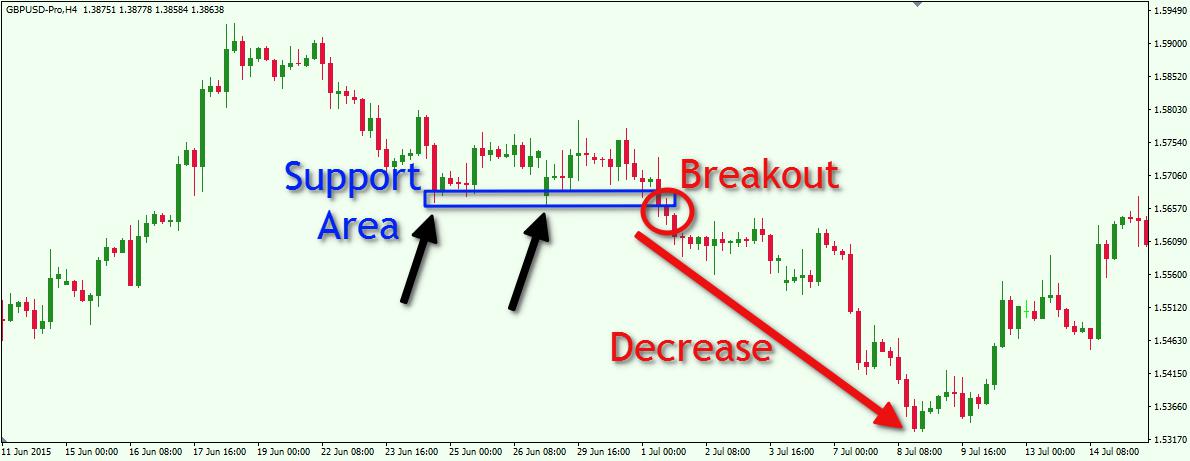
For example, a USD/JPY breakout after NFP data confirms sustained yen weakness, versus news trading’s blind straddle on the spike. Breakouts reduce whipsaws through volume and candle close rules, achieving better expectancy in backtests.
In 2025, with AI news sentiment tools, breakouts gain an edge by ignoring initial chaos. News trading suits high-frequency setups but demands low-latency brokers.
How do success rates stack up? Breakouts average 50% wins with structured risk; news trading dips below 40% due to slippage.
- Breakouts require pre-defined levels; news trading uses pending orders around zero lines
- Drawdowns: breakouts controlled via stops; news trading amplified by bi-directional risk
- Ideal conditions: breakouts in trends; news trading in low-volatility pre-event lulls
What Are Rare Breakout Setups in Exotic Pairs?
Rare breakout setups in exotic pairs like USD/TRY emerge from low-liquidity environments, where real moves amplify to 500+ pips versus frequent fakeouts. These pairs spike on Turkey’s political events or rate policy shifts, offering asymmetric rewards for patient traders.
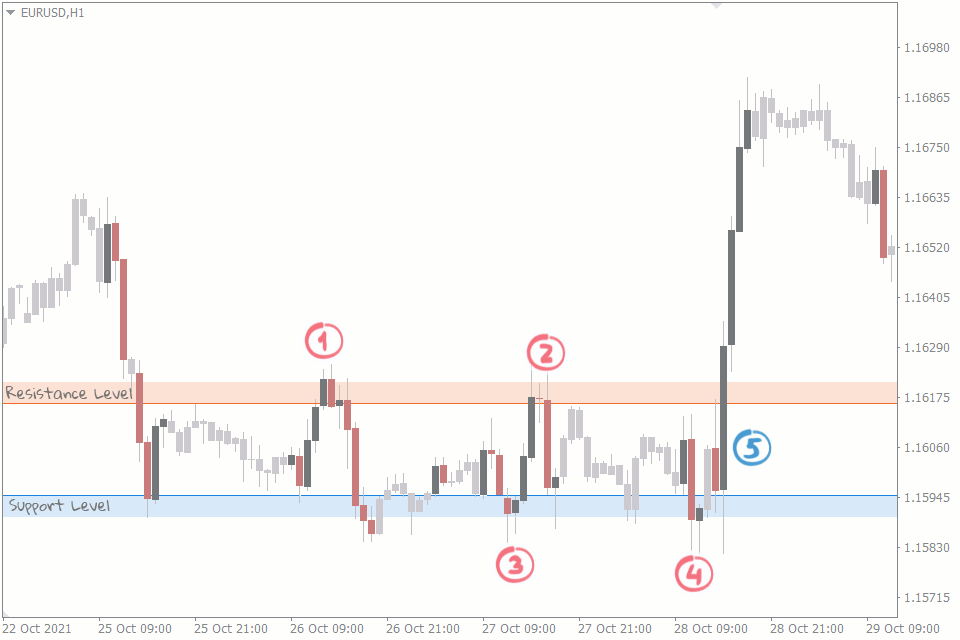
Identify setups with wide-ranging true average range (ATR) over 200 pips daily, combined with triangle patterns on 4H charts. A genuine breakout shows sustained volume from institutional flows, unlike retail-driven fakes. In 2025, monitor TRY inflation data for catalysts.
Traders overlook these due to spreads, but EAs like Exotic Breakout Hunter EA automate detection with adaptive filters. Risk 0.5% per trade given gaps.
What makes them rare? Thin books create explosive trends post-consolidation.
- USD/ZAR breakouts on gold correlations, targeting 300-pip extensions
- EUR/TRY failures near 38.2% Fib retracements signal reversals
- Use multi-timeframe alignment: daily breakout confirmed on H1 momentum shift
How Do Breakouts Differ from Pullback Strategies in Trending Markets?
Breakouts capture initial momentum bursts from key levels, while pullback strategies wait for retracements in established trends to enter at better prices. Breakouts prioritize speed on volume surges, risking early entries for larger targets, whereas pullbacks use Fib levels or EMAs for low-risk adds.
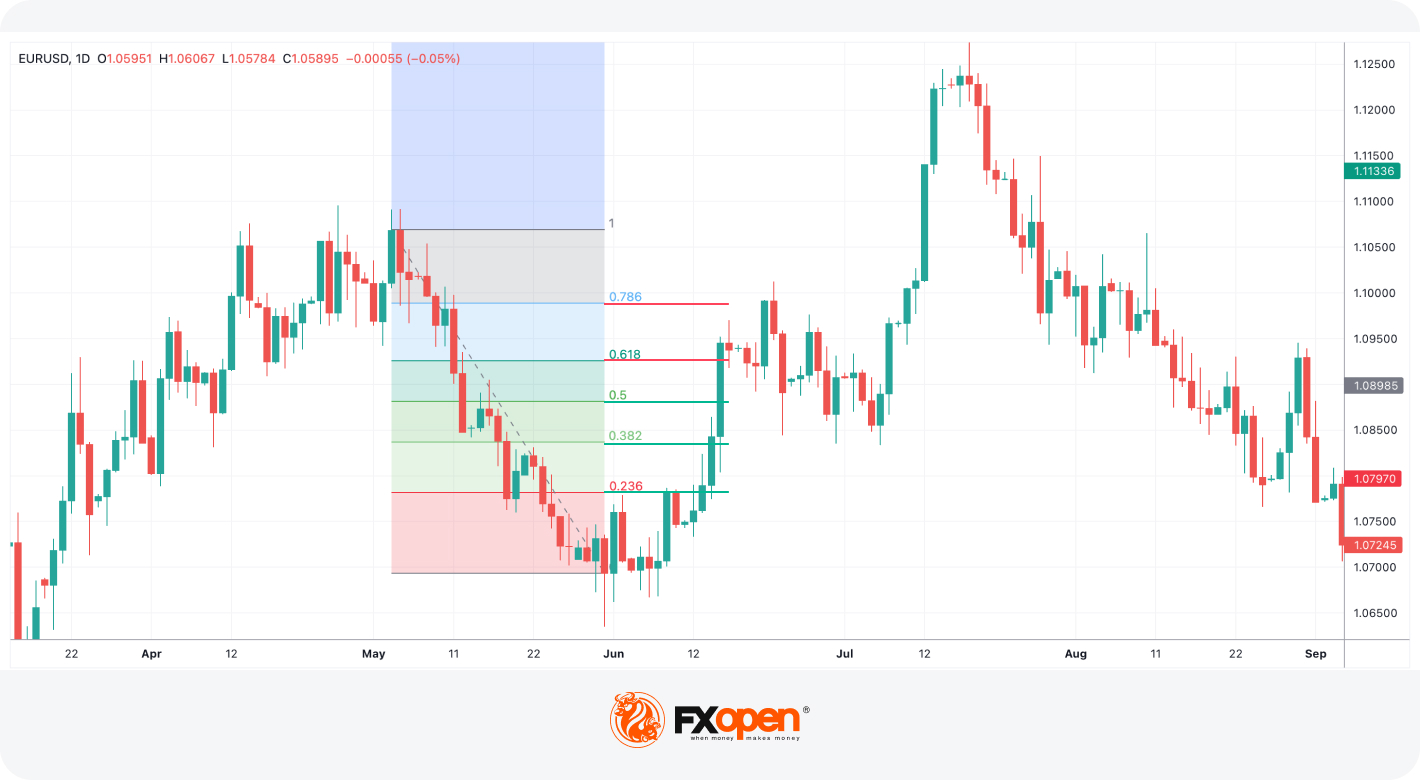
In a GBP/USD uptrend, a breakout above resistance grabs the first 100 pips; pullbacks enter on 50% retrace for continuation. Breakouts suit aggressive styles with 1:4 reward potential, but higher failure rates; pullbacks offer 60%+ wins with shallower stops.
Blend them in 2025 trends driven by AI liquidity flows. Why not both? Sequence breakouts for primaries, pullbacks for scalps.
Rhetorical question: Ready to time entries precisely?
- Breakouts trigger on closes beyond levels; pullbacks on RSI dips to 40 in uptrends
- Holding periods: breakouts to first resistance; pullbacks to prior highs
- Trending tools: breakouts need Keltner Channels; pullbacks Ichimoku clouds

David Rodriguez
Senior Forex Analyst at ForexEAshop
David Rodriguez has over 8 years of experience in forex trading and market analysis. He specializes in institutional trading strategies and has helped thousands of traders improve their performance through his educational content and trading tools.